NEPAL
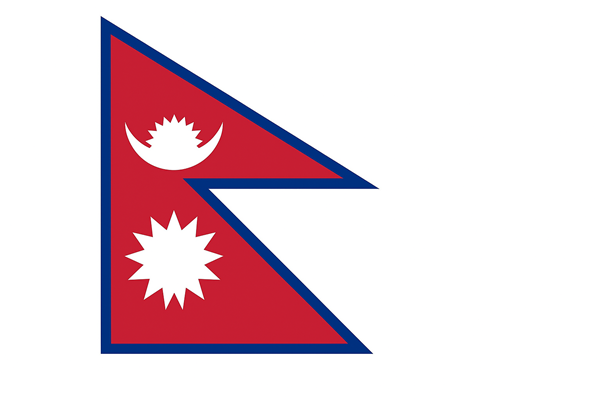
Nepal Flag
The flag of Nepal is unique as the world’s only non-rectangular national flag. It features two triangular shapes stacked vertically, symbolizing the Himalayan mountains and the bravery of the Nepalese people. The crimson red background represents victory in war and is also the country’s national color, while the blue border signifies peace and harmony. The upper triangle contains a white moon, and the lower triangle holds a white sun, representing permanence and the hope that Nepal will last as long as these celestial bodies.
Introduction
Nepal stands as a nation of breathtaking landscapes, diverse culture, and rich history. Located between India and China, the country attracts global attention for its natural wonders and cultural treasures. People know Nepal as the land of the Himalayas, with Mount Everest symbolizing its pride.
Geography and Natural Beauty
Nepal stretches from the lowland Terai plains to the towering peaks of the Himalayas. Travelers admire its unique geography, which allows them to experience tropical forests, hilly terrains, and snow-capped mountains within a short distance. The country protects several national parks and wildlife reserves that conserve endangered species like the Bengal tiger, red panda, and one-horned rhinoceros.
Historical and Cultural Significance
Nepal preserves a deep historical and cultural legacy. People visit ancient cities such as Kathmandu, Patan, and Bhaktapur to explore centuries-old temples and palaces. The country proudly holds Lumbini, the birthplace of Lord Buddha, which attracts Buddhist pilgrims worldwide. Festivals like Dashain, Tihar, and Holi unite communities and showcase Nepal’s cultural vibrancy.
Economy and Development
Nepal depends largely on agriculture, tourism, and remittances from abroad. Farmers cultivate rice, maize, and wheat as staple crops. The government encourages hydroelectric power projects to strengthen the economy. Tourism plays a vital role as mountaineers, trekkers, and spiritual seekers visit Nepal each year. Increasingly, Nepali youth contribute to the economy by working overseas and sending remittances back home.
Society and Lifestyle
Nepali society embraces diversity with more than 100 ethnic groups and numerous languages. People live with strong community bonds and value traditions while adapting to modern changes. The official language, Nepali, unites the population, while Hinduism and Buddhism influence daily life and rituals.
Challenges and Future
Nepal faces challenges like poverty, unemployment, and political instability. However, citizens continue to strive for stability and progress. The younger generation shows determination to build a prosperous nation by embracing education, innovation, and sustainable development. With its natural beauty and rich heritage, Nepal holds great potential to rise as a stronger and more stable country.
Conclusion
Nepal inspires the world with its mountains, culture, and resilience. Tourists, historians, and nature lovers continue to celebrate its charm. As Nepal works toward progress, it promises a bright future while preserving its traditions..