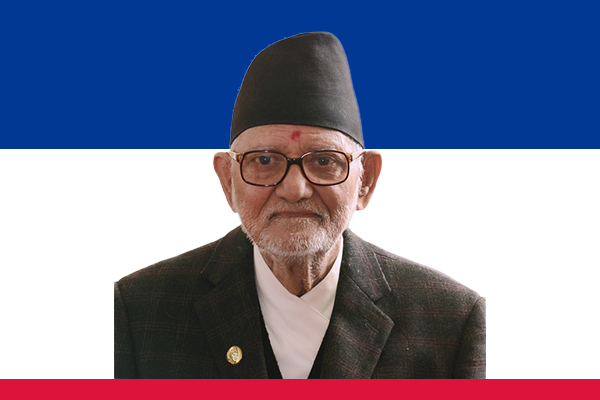
Mr. Sushil Prasad Koirala
In Office: 11 February 2014 – 11 October 2015
Political party: Nepal Congress
Home State: Kathmandu
Lifespan: 1939–2016
Image(A-5) credits available here.
Early Life and Background
Sushil Prasad Koirala was born on 12 August 1939 in Biratnagar, Nepal, into the renowned Koirala political family. He grew up in an environment that strongly influenced his interest in politics. Inspired by the democratic values of his family, he pursued a political path at a young age. His early life reflected simplicity, dedication, and a determination to work for the people of Nepal.
Political Career and Struggles
Koirala entered active politics by joining the Nepali Congress Party. He consistently fought against authoritarian regimes and supported democracy. The government imprisoned him several times during the political struggles of the 1960s and 1970s. Despite hardships, he showed resilience and continued working for democratic reforms. He played a crucial role in mobilizing youth and supporting mass movements that aimed to establish democracy in Nepal.
Rise as a Leader
Sushil Koirala gradually rose within the Nepali Congress ranks due to his loyalty and leadership skills. He became General Secretary of the party in 1996 and later served as Acting President in 2008. In 2010, the party elected him as its President. His leadership emphasized unity, dedication, and service to the nation. He inspired party members with his honest and straightforward lifestyle.
Prime Minister of Nepal
In 2014, Sushil Koirala became the Prime Minister of Nepal. His tenure focused on drafting and promulgating a new constitution, which was achieved in 2015. Despite facing challenges such as political disputes, natural disasters, and economic struggles, he remained committed to strengthening Nepal’s democratic institutions. His government also worked to enhance Nepal’s international relations and support post-earthquake reconstruction.
Legacy and Death
Koirala’s leadership style reflected simplicity, humility, and determination. He chose to live modestly, refusing luxuries even while holding the highest political office. He dedicated his life to democratic values and national unity. On 9 February 2016, he passed away in Kathmandu at the age of 76. His death marked the end of an era in Nepali politics, but his legacy continues to inspire leaders and citizens.
Conclusion
Sushil Prasad Koirala devoted his entire life to democracy, equality, and service to Nepal. From his early political struggles to his role as Prime Minister, he shaped the nation’s political journey with integrity and resilience. His name remains associated with honesty, simplicity, and a lifelong commitment to the people of Nepal.