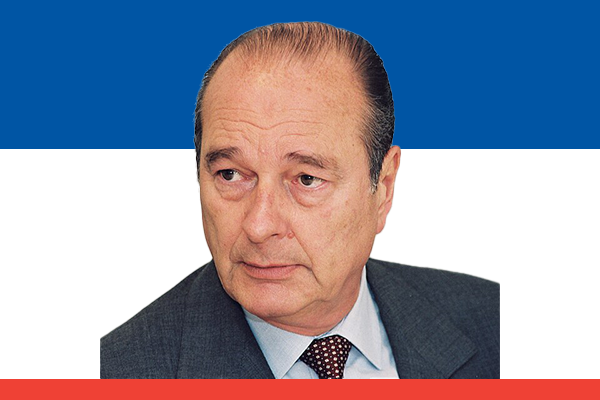
Early Life and Education
Jacques René Chirac was born on November 29, 1932, in Paris, France. His family encouraged him to pursue higher studies, and he developed a keen interest in politics from a young age. He studied at Sciences Po and later attended the prestigious École Nationale d’Administration (ENA), where he gained strong academic credentials and leadership skills. These institutions shaped his political philosophy and prepared him for a lifelong career in public service.
Entry into Politics
Chirac began his political career in the early 1960s. He joined the civil service and soon earned a reputation as a capable administrator. His determination and charisma attracted the attention of then-Prime Minister Georges Pompidou, who mentored him. Chirac became a member of parliament and steadily advanced within the political ranks. By combining practical decision-making with persuasive oratory, he built a loyal following among party members and citizens alike.
Rise to Prime Minister
In 1974, President Valéry Giscard d’Estaing appointed Chirac as Prime Minister. Chirac led the government with energy and decisiveness, though differences with Giscard eventually forced him to resign in 1976. Afterward, he established the Rally for the Republic (RPR), a Gaullist party that became a dominant force in French politics. Through this move, Chirac positioned himself as a central figure in shaping conservative ideology in France.
Presidency of Paris
In 1977, Chirac became the first elected Mayor of Paris. He transformed the city by modernizing infrastructure, improving public services, and championing urban development. His role as mayor strengthened his national profile and highlighted his administrative skills. For nearly two decades, he governed Paris with a strong focus on balancing tradition with modernization.
President of France
After two unsuccessful attempts, Chirac finally won the presidency in 1995. He pledged to address unemployment, reduce social inequalities, and strengthen national unity. During his presidency, he introduced policies that improved healthcare, expanded welfare programs, and enhanced social security.
Chirac also played a prominent role on the international stage. In 2003, he firmly opposed the U.S.-led invasion of Iraq, a decision that showcased his independence and diplomatic vision. His stance earned France global respect and reinforced its influence in world affairs.
Key Achievements and Challenges
Chirac’s presidency brought several achievements, including environmental protection initiatives. He signed the Kyoto Protocol and promoted sustainable development. Domestically, he sought to protect France’s social model and resisted economic reforms that threatened workers’ rights.
However, his presidency also faced challenges. Corruption scandals from his time as Mayor of Paris cast a shadow over his political career. In 2011, a French court convicted him of corruption, though his health prevented him from serving any sentence. Despite this controversy, many citizens continued to admire his charisma and statesmanship.
Legacy and Death
Jacques Chirac left office in 2007, succeeded by Nicolas Sarkozy. He remained a respected elder statesman and continued to comment on national issues occasionally. On September 26, 2019, he passed away at the age of 86. His death prompted tributes from leaders worldwide, who remembered him as a defender of peace, democracy, and cultural pride. Chirac’s legacy endures through his vision of a socially just France, his commitment to European unity, and his defense of international law. He remains one of the most influential French leaders of the late 20th century.