IRAQ
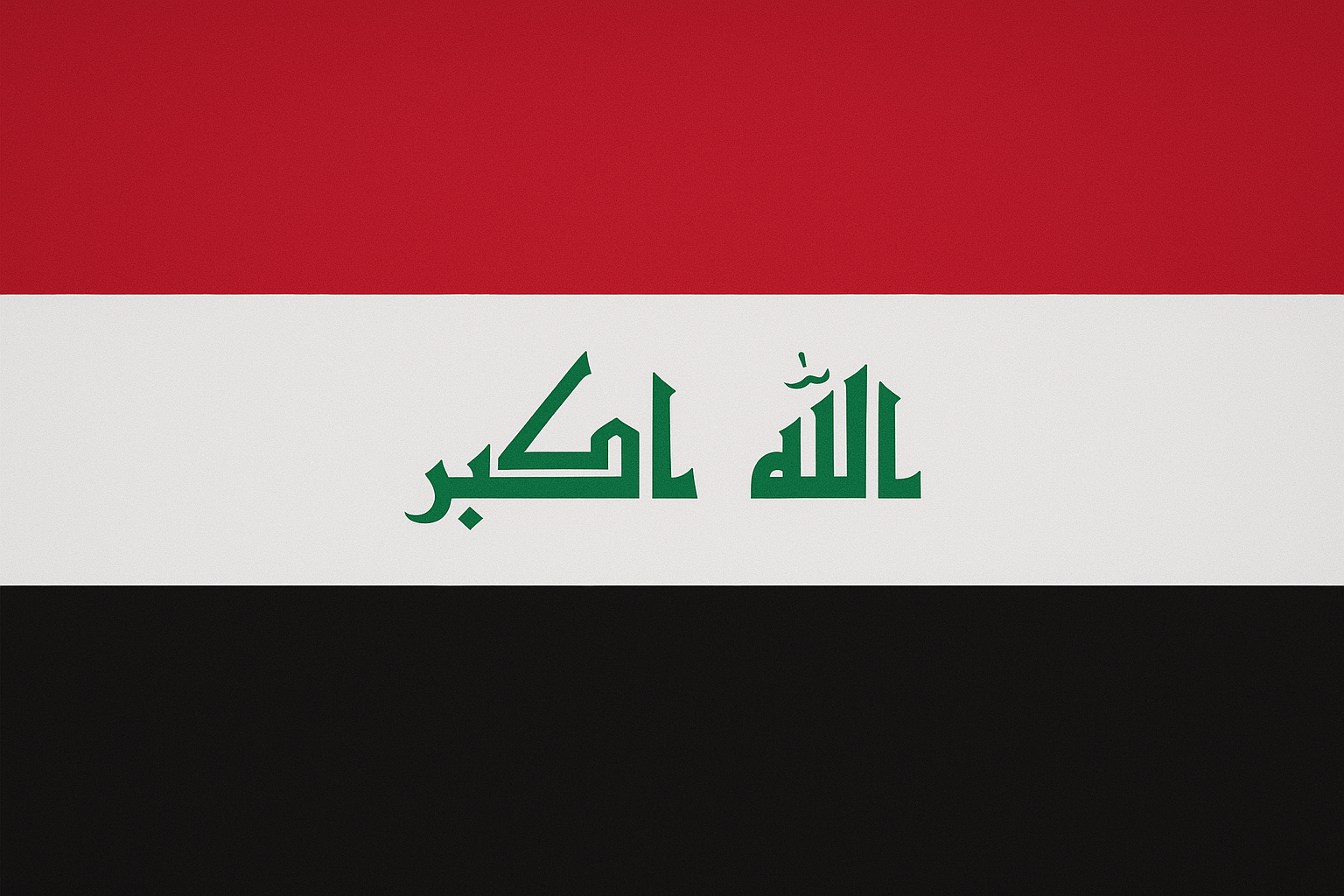
Iraq Flag
The flag of Iraq features three horizontal stripes of red, white, and black, symbolizing courage, peace, and strength. At the center of the white band appears the green Arabic phrase “Allahu Akbar” (God is Great), representing faith and national unity. Adopted in its current form in 2008, the flag reflects Iraq’s Arab identity, Islamic heritage, and long struggle for sovereignty, resilience, and independence amid historical and political challenges.
Overview
Introduction
Iraq is a country located in Western Asia, known as the cradle of civilization. It lies between the Tigris and Euphrates rivers, a region historically called Mesopotamia. Iraq has played a vital role in human history, culture, religion, and politics for thousands of years. Despite facing decades of conflict and instability, Iraq continues to work toward peace, reconstruction, and national unity.
Geography and Population
Iraq shares borders with Turkey, Iran, Kuwait, Saudi Arabia, Jordan, and Syria. The country has diverse landscapes, including fertile river plains, deserts, and mountainous regions in the north. Baghdad is the capital and largest city. Iraq’s population is made up mainly of Arabs and Kurds, along with Turkmen, Assyrians, and other minorities. Islam is the dominant religion, with both Shia and Sunni Muslims forming major communities.
Historical Significance
Iraq is home to some of the world’s earliest civilizations, such as Sumer, Akkad, Babylon, and Assyria. These civilizations introduced writing, law, mathematics, and organized governance. Famous historical sites like Babylon reflect Iraq’s deep cultural legacy. Throughout history, Iraq has been ruled by various empires, including Persian, Greek, Roman, Islamic, and Ottoman powers.
Political System
Iraq is a federal parliamentary republic. The President serves as the head of state, while the Prime Minister is the head of government. After years of dictatorship and war, Iraq adopted a new constitution to establish democratic institutions. However, political instability, corruption, and sectarian divisions have often slowed progress and governance reforms.
Economy and Natural Resources
Iraq’s economy depends heavily on oil, as it holds some of the largest oil reserves in the world. Oil exports provide the main source of government revenue. Agriculture also plays an important role, especially in rural areas. Despite its natural wealth, economic growth has been uneven due to conflict, damaged infrastructure, and unemployment.
Culture and Society
Iraqi culture is rich in literature, poetry, music, and art. The Arabic language and Kurdish language are widely spoken. Traditional hospitality, strong family ties, and respect for elders are central to Iraqi society. Iraqi cuisine, known for dishes like kebabs, rice, and stews, reflects the country’s cultural diversity.
Conclusion
Iraq is a nation shaped by a remarkable past and complex present. While challenges remain, Iraq’s people continue to show resilience and determination. With stability, effective governance, and economic development, Iraq has the potential to build a stronger and more peaceful future.