SYRIA
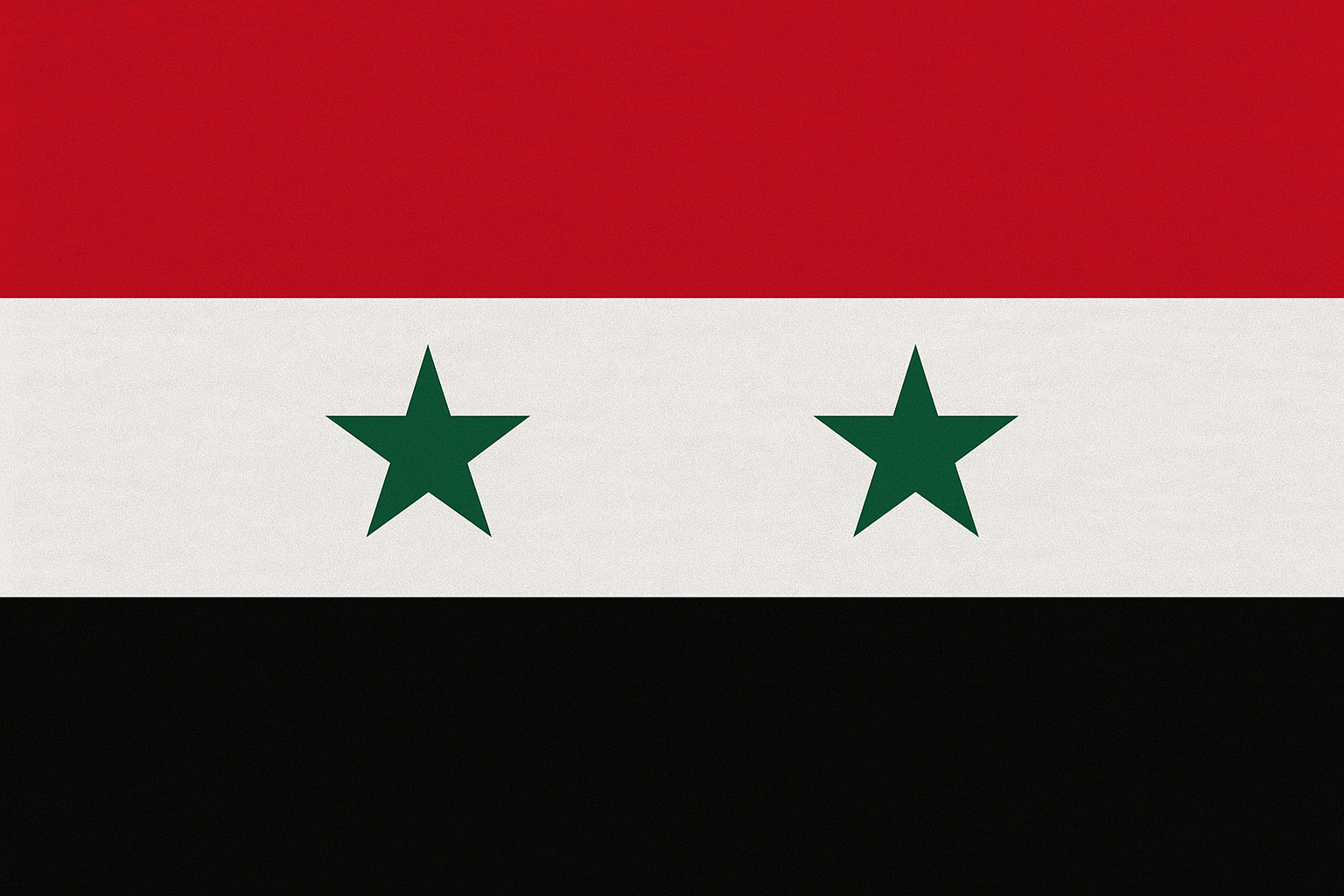
Syria Flag
The flag of Syria features three horizontal stripes of red, white, and black from top to bottom, with two green stars centered on the white stripe. The colors symbolize Arab unity and independence: red for the struggle for freedom, white for peace, and black for oppression overcome. The green stars represent Syria and Egypt, recalling the era of the United Arab Republic. Adopted in 1980, the flag reflects Syria’s national identity, history, and Arab heritage.
Introduction
Syria, officially known as the Syrian Arab Republic, is a country located in Western Asia. Bordered by Turkey to the north, Iraq to the east, Jordan to the south, Israel and Lebanon to the southwest, and the Mediterranean Sea to the west, Syria occupies a strategic location connecting Asia, Europe, and Africa. Its rich history, cultural heritage, and geopolitical significance have made it a key player in the Middle East for centuries.
Historical Background
Syria is one of the oldest continuously inhabited regions in the world. It was home to ancient civilizations such as the Sumerians, Akkadians, and Phoenicians. Throughout history, it was part of the Roman, Byzantine, and Ottoman empires. Damascus, Syria’s capital, is considered one of the oldest cities in the world. The country has been a crossroads for trade, culture, and religion, which is reflected in its diverse heritage, including historic mosques, churches, and archaeological sites.
Geography and Climate
Syria’s landscape is diverse, ranging from fertile plains along the Euphrates River to deserts in the east. The coastal region along the Mediterranean enjoys a mild climate, while the inland areas experience hot summers and cold winters. The country’s rivers, mountains, and plains have historically supported agriculture, which remains an important part of the Syrian economy despite the challenges posed by conflict.
Culture and Society
Syria has a rich cultural tapestry shaped by various ethnic and religious groups, including Arabs, Kurds, Armenians, and Assyrians. Arabic is the official language, and Islam is the predominant religion, alongside Christian minorities. Syrian cuisine, music, dance, and traditional crafts reflect this diversity. Festivals and social gatherings play an essential role in maintaining community ties.
Modern Challenges
In recent years, Syria has faced significant challenges due to political unrest and civil war, which began in 2011. The conflict has led to humanitarian crises, displacement of millions, and widespread destruction. Despite these difficulties, the Syrian people continue to demonstrate resilience and hope for peace and stability. International organizations and regional actors are involved in ongoing efforts to provide aid and mediate solutions.
Economy and Development
Syria’s economy has historically relied on agriculture, oil production, and trade. The conflict has severely impacted these sectors, but reconstruction efforts and international support aim to revive economic activity. Infrastructure rebuilding, healthcare improvement, and educational initiatives remain critical for the country’s development.
Conclusion
Syria stands as a symbol of endurance and cultural richness. Its historical legacy, geographical significance, and diverse society offer a glimpse into a nation that has survived centuries of change and conflict. While challenges persist, the spirit of the Syrian people continues to inspire hope for a peaceful and prosperous future.