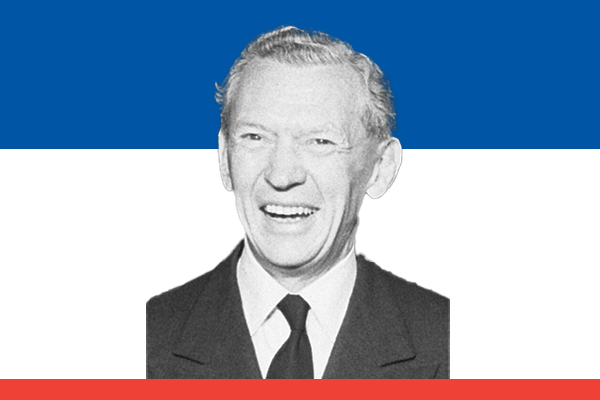
Early Life and Education
Maurice Couve de Murville was born on January 24, 1907, in Reims, France. He grew up in a cultured family that valued education and public service. Murville pursued law and political science at the University of Paris and later entered the École Libre des Sciences Politiques. His strong academic foundation prepared him for a distinguished career in diplomacy and politics.
Entry into Diplomatic Service
Murville joined the French Foreign Service in the 1930s. He actively represented France abroad during turbulent times in Europe. When World War II broke out, he served in various diplomatic missions and took part in negotiations that aimed to safeguard France’s interests. In 1943, he chose to support Charles de Gaulle’s Free French government in Algiers, showing his loyalty to France’s independence.
Role in the Fourth Republic
After the war, he continued to hold key diplomatic posts. He served as Ambassador to Egypt, the United States, and West Germany. His tenure in these countries strengthened France’s global position during the post-war years. He built a reputation as a skilled negotiator who valued stability and diplomacy.
Foreign Minister under Charles de Gaulle
In 1958, Charles de Gaulle appointed Couve de Murville as Minister of Foreign Affairs. He held the position for a decade, one of the longest terms in French history. During this period, he actively pursued an independent foreign policy that distanced France from American dominance while strengthening ties with Europe.
Murville opposed Britain’s entry into the European Economic Community because he believed it would undermine European unity. He also promoted close Franco-German cooperation, which became a cornerstone of European integration. He established relations with China in 1964, making France one of the first Western nations to recognize the People’s Republic of China.
Appointment as Prime Minister
In July 1968, Charles de Gaulle appointed Couve de Murville as Prime Minister after the resignation of Georges Pompidou. He assumed office during a period of political unrest following the May 1968 protests. He worked to stabilize the government, restore public confidence, and manage the nation’s economic challenges.
Leadership and Policies as Prime Minister
As Prime Minister, he prioritized order and stability. He implemented economic reforms to control inflation and boost growth. He supported de Gaulle’s vision of a strong, independent France within Europe. Although his term was short, Murville ensured continuity in government policies and provided France with calm leadership during a transitional phase.
Later Career and Retirement
After Georges Pompidou succeeded de Gaulle as President in 1969, Couve de Murville left the premiership. He later served as a senator and remained active in politics, but he gradually withdrew from the spotlight. He focused on writing and reflecting on his years of service.
Legacy of Maurice Couve de Murville
Maurice Couve de Murville passed away on December 24, 1999, in Paris. Historians remember him as a pragmatic diplomat, a loyal supporter of Charles de Gaulle, and a steady leader during challenging times. His efforts strengthened France’s global influence and reinforced its role in Europe.