Mr. Joseph Ward
In Office: 6 August 1906 – 28 March 1912
10 December 1928 – 28 May 1930
Political party: Liberal
Home State: Melbourne
Lifespan: 1856–1930
Country: New Zealand
Image credits available here.
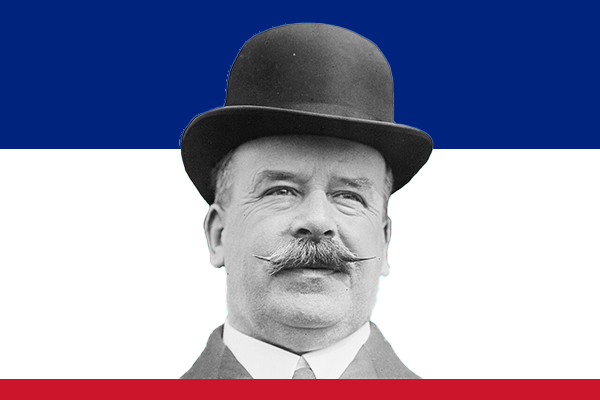
Joseph Ward: Prime Minister of New Zealand
Joseph George Ward (1856–1930) was a prominent New Zealand politician who served as the 17th Prime Minister of New Zealand in two separate terms, from 1906 to 1912 and later from 1928 to 1930. Renowned for his dedication to public service and his economic vision, Ward played a pivotal role in shaping New Zealand’s political and financial landscape during the early 20th century.
Early Life and Career
Joseph Ward was born on 26 July 1856 in Melbourne, Australia, to English parents. He moved to New Zealand during his youth, settling in the Southland region. Ward initially worked in the family business, gaining valuable experience in commerce and finance, which later influenced his economic policies. His engagement with local affairs and dedication to public service laid the foundation for his future political career.
Entry into Politics
Ward entered politics in 1887, winning a seat in the New Zealand House of Representatives for the Awarua electorate. As a member of the Liberal Party, he quickly gained recognition for his practical approach to economic and social issues. Ward championed policies aimed at promoting infrastructure development, agricultural expansion, and financial stability. His eloquence and negotiation skills enabled him to rise steadily within the party ranks.
First Term as Prime Minister (1906–1912)
Ward became Prime Minister in 1906, succeeding Sir William Hall-Jones. During his first term, he focused on improving New Zealand’s financial and trade systems, advocating for sound fiscal management while encouraging economic growth. He supported significant infrastructure projects, including roads, railways, and ports, which facilitated national trade and development.
Ward also prioritized social welfare policies, including initiatives to improve education, healthcare, and workers’ rights. His government aimed to balance economic expansion with the well-being of citizens, reflecting the progressive ideals of the New Zealand Liberal Party at the time.
Leadership Style and Challenges
Ward’s leadership was characterized by pragmatism and a willingness to compromise. While he was respected for his experience and vision, he faced challenges, including internal party divisions and opposition from conservative factions. Despite these obstacles, Ward maintained a reputation as a capable and trustworthy leader who prioritized national interests over political gain.
Second Term as Prime Minister (1928–1930)
After a hiatus from frontline politics, Ward returned to the premiership in 1928 at the age of 72, becoming one of New Zealand’s oldest Prime Ministers. His second term was dominated by economic challenges, including the onset of the Great Depression, which affected trade and employment. Ward focused on stabilizing the economy and supporting recovery through financial measures and government interventions.
Although his health declined during this period, Ward remained committed to his duties, demonstrating resilience and dedication until his resignation due to ill health in 1930.
Legacy
Joseph Ward left a lasting legacy in New Zealand politics. He is remembered for his contributions to economic development, social welfare, and public service. His vision for infrastructure and trade laid the groundwork for New Zealand’s modernization, while his commitment to social policies reflected a compassionate approach to governance. Ward’s career exemplifies the importance of pragmatic leadership and dedication to national progress.
Personal Life
Ward married Ruth Williams in 1880, and they had several children. Known for his approachable personality and dedication to family, he balanced public service with personal commitments. Ward passed away on 8 July 1930, leaving behind a reputation as one of New Zealand’s most respected political figures.