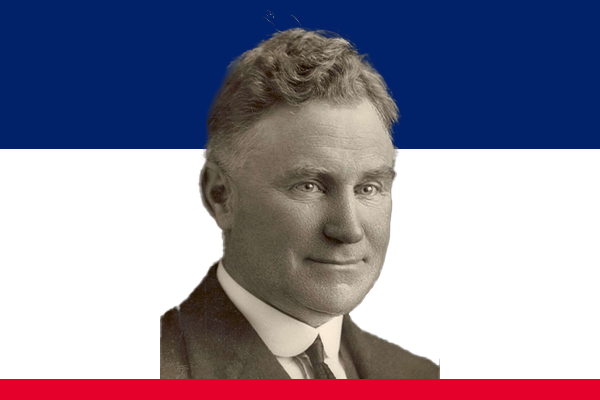
Early Life and Education
Earle Christmas Grafton Page was born on 8 August 1880 in Grafton, New South Wales. He grew up in a large family and developed a strong sense of responsibility. He pursued his education at Sydney Boys High School and later attended the University of Sydney, where he studied medicine. After earning his degree in 1901, he began working as a doctor, building a reputation as a skilled and compassionate medical practitioner.
Entry into Politics
Page shifted his focus from medicine to politics because he wanted to improve rural communities. He saw how government policies often ignored the needs of farmers and country towns. In 1919, he entered the Australian Parliament as the member for Cowper, representing the Country Party. His energy and vision quickly made him a prominent figure in Australian politics.
Leadership of the Country Party
Page played a crucial role in shaping the Country Party into a strong political force. He pushed for better infrastructure, fair treatment for rural industries, and a more balanced economic policy. By forming alliances with other political groups, he secured influence for the Country Party. His leadership emphasized practical solutions and national development, which appealed to both urban and rural voters.
Brief Term as Prime Minister
In 1939, the death of Prime Minister Joseph Lyons created a leadership crisis. As the leader of the Country Party and deputy leader of the coalition, Earle Page stepped in as caretaker Prime Minister. He served from 7 April to 26 April 1939, making him Australia’s 11th Prime Minister. His time in office was short, lasting only 19 days, but it placed him in the ranks of national leaders.
During his brief tenure, Page attempted to guide the government through uncertainty. He strongly opposed Robert Menzies, who later became Prime Minister, and criticized his leadership qualities. This public attack damaged Page’s own reputation and weakened his position in politics.
Contributions to National Development
Although his prime ministership was short, Page left a lasting legacy through his broader political career. He promoted decentralization, arguing that regional areas should receive more investment and attention. He supported the construction of the hydroelectric scheme on the Clarence River, believing it would boost rural prosperity.
He also played a major role in shaping Australia’s health and education systems. Page advocated for medical benefits and hospital funding, drawing from his own background as a doctor. His policies showed his commitment to improving living standards in both city and country communities.
Later Years in Politics
After stepping down as Prime Minister, Page remained active in Parliament. He served in various ministerial positions, including Treasurer and Minister for Health. His long political career, spanning over four decades, made him one of the most enduring figures in Australian politics. Even after controversies, he continued to influence policy and represent the interests of rural Australians.
Death and Legacy
Earle Page died on 20 December 1961, leaving behind a remarkable record of service. He stood out not only as a caretaker Prime Minister but also as a dedicated advocate for rural communities. His efforts helped strengthen the role of the Country Party in Australian politics.
Today, historians remember Page for his passion, his reformist ideas, and his determination to make Australia a more balanced and prosperous nation. Though his time as Prime Minister was brief, his broader contributions left a long-lasting impact.