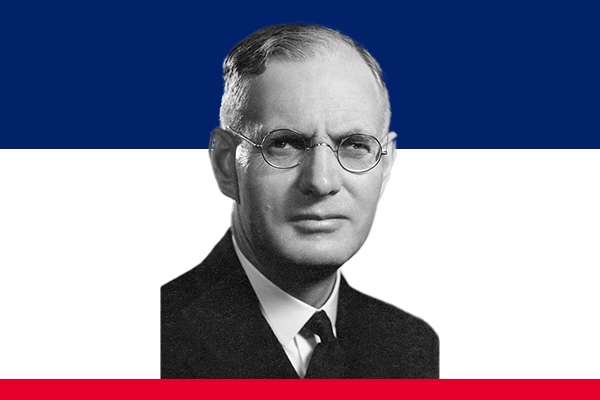
Early Life and Background
John Curtin was born on January 8, 1885, in Creswick, Victoria. He grew up in a working-class family that shaped his values of fairness and community service. Curtin left school early to support his family, but he developed a passion for reading, writing, and politics. He joined the labor movement at a young age and became a strong advocate for workers’ rights. His experiences in factories and labor organizations prepared him for a career in public life.
Entry into Politics
Curtin joined the Australian Labor Party (ALP) and worked as a journalist, where he expressed his ideas on social justice and equality. His eloquence and determination helped him win a seat in the House of Representatives in 1928. Although he lost his seat in the 1931 election during the Great Depression, he continued to play an active role in the Labor movement. In 1935, he returned to Parliament and soon became the Leader of the Opposition.
Becoming Prime Minister
In October 1941, John Curtin became the 14th Prime Minister of Australia after the fall of the United Australia Party government. At that time, Australia was deeply involved in World War II, and Curtin faced immense pressure to protect the country. He showed courage and vision by steering Australia toward self-reliance in defense, moving away from dependence on Britain.
Leadership During World War II
Curtin displayed remarkable leadership during the war. He made a historic decision by aligning Australia more closely with the United States. In a famous statement, he declared that Australia looked to America free of any pangs as to its traditional ties with Britain. This bold move ensured stronger military support from the U.S. and played a key role in defending Australia from Japanese advances.
Curtin also strengthened the home front. He mobilized resources, introduced manpower controls, and encouraged unity among Australians. He inspired the public with his radio broadcasts, which conveyed honesty and determination. Australians trusted his words and respected his integrity during the darkest days of the war.
Economic and Social Measures
Curtin focused not only on military efforts but also on social welfare. He expanded social security programs, supported workers, and promoted fair employment. His government introduced measures to stabilize the economy and ensure that Australians had the resources needed to withstand wartime challenges. By balancing defense needs with social policies, he strengthened national morale.
Personal Struggles
Despite his strong leadership, Curtin faced personal health challenges. The stress of war and the heavy responsibilities of leadership took a toll on him. He suffered from heart problems and exhaustion, yet he continued to serve with dedication. His personal sacrifices highlighted his deep commitment to his nation.
Death and Legacy
John Curtin died in office on July 5, 1945, just weeks before the end of World War II. His passing saddened the entire country, as Australians regarded him as a leader who had guided them through one of their greatest crises.
Curtin’s legacy endures as that of a compassionate and courageous leader. Historians remember him as one of Australia’s greatest prime ministers, a man who placed the safety and unity of his people above all else. His vision of forging a strong partnership with the United States also shaped Australia’s long-term foreign policy.
Conclusion
John Curtin’s life story reflects resilience, duty, and foresight. He transformed Australia’s role in the global war, strengthened its alliances, and inspired confidence in his people. His leadership continues to stand as an example of courage in the face of adversity.