Early Life and Education
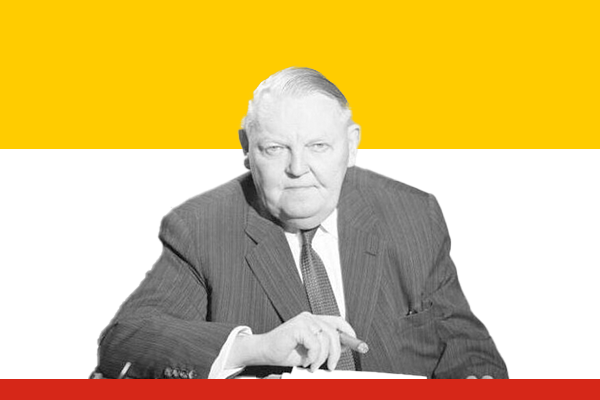
Ludwig Erhard was born on February 4, 1897, in Fürth, Germany. He grew up in a modest family and pursued economics at the University of Frankfurt. His academic focus on monetary theory and public finance prepared him for a career that would intertwine politics and economics. During his studies, Erhard developed a deep belief in free-market principles coupled with social responsibility, a philosophy that later guided his reforms.
Rise in Political Career
Erhard entered politics after World War II, joining the Christian Democratic Union (CDU). He became the Director of Economic Administration in the Bizone (the U.S.- and U.K.-controlled zones of occupied Germany). In 1948, he implemented the currency reform, introducing the Deutsche Mark, which stabilized the economy and curbed hyperinflation. Erhard promoted the social market economy, balancing free-market capitalism with welfare provisions, fostering economic growth while protecting citizens’ welfare.
Economic Reforms and the “Economic Miracle”
As Minister of Economics from 1949 to 1963, Erhard drove policies that accelerated industrial production, reduced unemployment, and expanded exports. He lowered price controls, encouraged competition, and supported small and medium-sized enterprises. His reforms stimulated domestic demand, attracting investment and creating jobs. Erhard’s policies transformed West Germany into one of the world’s leading economies, earning him recognition as the architect of the Economic Miracle.
Term as Chancellor
Erhard became Chancellor in 1963, following Konrad Adenauer’s resignation. During his tenure, he prioritized economic stability, trade expansion, and European cooperation. He strengthened relations with Western nations and promoted Germany’s integration into international economic institutions. Erhard also faced political challenges, including conflicts within his coalition government, which limited his legislative success. Despite these hurdles, he maintained Germany’s economic growth and international reputation.
Challenges and Resignation
Erhard faced growing political opposition during his chancellorship due to disagreements over fiscal policies and economic strategies. Rising inflation and domestic political tensions weakened his position. In 1966, he resigned as Chancellor, ending a relatively short but highly impactful tenure. His resignation, however, did not diminish his contributions to Germany’s economic transformation and global influence.
Legacy and Contributions
Ludwig Erhard left a legacy as a visionary economist and pragmatic politician. He demonstrated that economic growth could coexist with social welfare, establishing the foundation for Germany’s long-term prosperity. His policies influenced generations of policymakers, both in Germany and internationally. Today, Germany’s stable economy, strong industrial base, and social market principles reflect Erhard’s enduring vision.
Conclusion
Ludwig Erhard transformed post-war Germany with bold economic reforms, innovative policies, and a commitment to social responsibility. His leadership as Chancellor and Minister of Economics established the blueprint for modern Germany’s prosperity. Erhard remains celebrated as a pioneer who combined economic expertise with practical governance, ensuring that Germany recovered quickly and flourished in the post-war era.