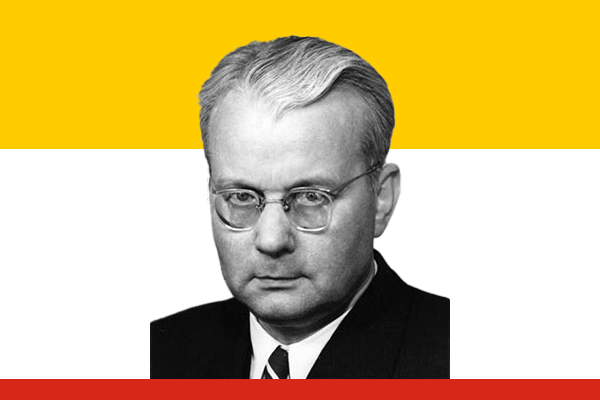
Early Life and Education
Franz Blücher was born on March 24, 1896, in Essen, Germany. He grew up in a middle-class family and developed a strong sense of responsibility and civic duty. He attended local schools and later studied economics and public administration. His early education equipped him with a deep understanding of Germany’s industrial and economic structure, which later guided his political approach.
Entry into Politics
After World War II, Blücher entered politics during a critical period when Germany sought stability and recovery. He joined the Free Democratic Party (FDP), which represented liberal democratic values and economic reform. His pragmatic leadership and commitment to democracy quickly gained him respect among his peers. In 1948, he became one of the founding figures of the FDP, helping to establish it as a key political force in West Germany’s new democratic framework.
Role as Vice Chancellor and Minister
In 1949, when the Federal Republic of Germany was established, Chancellor Konrad Adenauer appointed Franz Blücher as the first Vice Chancellor and Minister for Marshall Plan Affairs. Blücher actively oversaw the implementation of the Marshall Plan, a U.S.-funded initiative designed to rebuild war-torn Europe. He ensured that funds were used efficiently to restore industries, stabilize the economy, and improve living conditions for German citizens.
Blücher’s leadership emphasized transparency and collaboration with Western allies. He helped restore confidence in the German government and promoted economic recovery through sound financial management. His policies encouraged industrial production, which played a central role in Germany’s economic miracle—commonly known as the Wirtschaftswunder.
Economic Reforms and Political Influence
Franz Blücher strongly supported a free-market economy combined with social responsibility. He believed that prosperity should be shared among all citizens while maintaining competitive industries. Under his influence, the FDP promoted liberal economic reforms that encouraged entrepreneurship, reduced state control, and attracted foreign investment.
Blücher also worked to strengthen Germany’s ties with the United States and other European nations. His diplomatic efforts helped integrate West Germany into the global economy and secure its place as a stable democratic state. He was a key advocate for cooperation within the European Recovery Program, promoting unity and mutual development across Western Europe.
Later Career and Achievements
Blücher continued to serve as Vice Chancellor until 1957. During his tenure, he played a vital role in shaping Germany’s post-war political culture. His leadership style reflected honesty, practicality, and optimism. Even after stepping down from the vice-chancellorship, he remained active in public service and contributed to various government committees and advisory boards.
He received several honors for his work in rebuilding Germany and strengthening its democratic institutions. His dedication to economic reform and foreign cooperation left a lasting mark on the nation’s development.
Legacy and Death
Franz Blücher passed away on March 26, 1959, in Bad Godesberg, Germany. His legacy continues to inspire leaders who value democracy, economic integrity, and international cooperation. He is remembered as a statesman who guided Germany through one of its most challenging transformations—from a war-torn nation to a prosperous democracy.