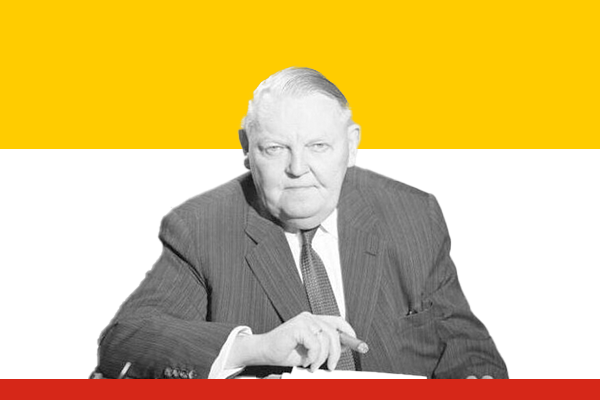
Ludwig Erhard: Architect of Germany’s Economic Miracle
Ludwig Erhard, born on February 4, 1897, in Fürth, Germany, emerged as a pivotal figure in shaping Germany’s post-war economic landscape. He played a central role in rebuilding the nation’s economy and became widely known as the architect of the “Wirtschaftswunder” or Economic Miracle. Erhard’s vision and policies transformed Germany from a devastated nation into an economic powerhouse.
Early Life and Education
Erhard grew up in a modest family and demonstrated exceptional academic ability from a young age. He pursued economics at the University of Frankfurt, where he earned his doctorate. During his studies, Erhard focused on economic theory and policy, which later influenced his practical approaches to economic reform. His academic background equipped him with the analytical skills and insights necessary to address Germany’s post-war challenges.
Role in Post-War Germany
After World War II, Germany faced severe economic instability, including hyperinflation, scarcity of goods, and a crippled industrial sector. The Allied powers divided Germany, and Erhard emerged as a key economic advisor in the American and British-occupied zones. He advocated for free-market principles, believing that economic recovery required deregulation and competition rather than strict government control.
Erhard implemented his vision as Director of Economics in the Bizonal Economic Council. In 1948, he introduced the currency reform that replaced the Reichsmark with the Deutsche Mark. This reform stabilized prices and restored public confidence in the economy. Erhard also abolished many price controls and encouraged entrepreneurship, which revitalized industrial production and trade.
Chancellor of West Germany
Ludwig Erhard became the Federal Chancellor of West Germany in 1963, following Konrad Adenauer’s retirement. As Chancellor, he continued promoting his economic philosophy while addressing social and political issues. Erhard pursued policies aimed at balancing economic growth with social welfare. He supported housing programs, education reforms, and initiatives to expand the social safety net.
Although Erhard enjoyed widespread respect for his economic achievements, he faced political challenges. His attempts to introduce further economic liberalization met resistance within his party and parliament. Despite these obstacles, Erhard maintained a commitment to free-market principles and believed that a prosperous economy would strengthen democracy and social stability.
Economic Philosophy and Legacy
Erhard’s economic philosophy centered on ordoliberalism, emphasizing the role of government in ensuring competition while allowing the market to operate freely. He argued that economic freedom and social responsibility should coexist, creating a dynamic and resilient society.
His leadership during Germany’s recovery laid the foundation for decades of sustained growth. The policies Erhard implemented reduced unemployment, increased industrial output, and improved living standards. The term “Economic Miracle” remains synonymous with his efforts, reflecting his enduring influence on German and global economic thought.
Personal Life and Recognition
Ludwig Erhard married Charlotte Erhard in 1923, and they raised two children. Known for his modesty and integrity, he earned admiration both nationally and internationally. He received numerous accolades for his contributions to economics and politics, cementing his reputation as one of Germany’s most influential post-war leaders.
Erhard passed away on May 5, 1977, leaving behind a legacy defined by economic ingenuity, visionary policymaking, and dedication to democratic principles. His work continues to inspire economists and policymakers worldwide.