Early Life and Education
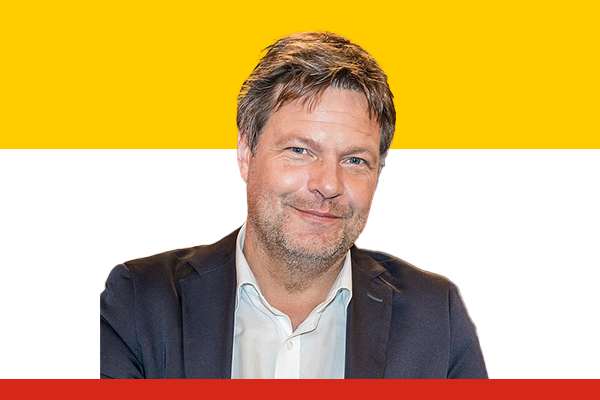
Robert Habeck was born on September 2, 1969, in Lübeck, Germany. He grew up in a family that valued education and civic responsibility, which influenced his later political engagement. Habeck pursued studies in philosophy and German literature at the University of Freiburg, immersing himself in the intellectual foundations that would later guide his political thought. After earning his degree, he worked as a translator and author, publishing several books that reflect his interest in ethics, society, and human behavior.
Entry into Politics
Habeck began his political career by joining the Green Party in the early 2000s. He quickly gained recognition for his analytical skills, public speaking, and ability to connect with a broad range of voters. In 2009, he became a member of the Landtag of Schleswig-Holstein, where he focused on environmental protection, energy transition, and social justice issues. His work in regional politics laid the foundation for his national prominence.
Leadership in the Green Party
In 2012, Robert Habeck was elected as the co-leader of the Green Party in Schleswig-Holstein. During his tenure, he implemented strategies that strengthened the party’s visibility and influence. Habeck emphasized the importance of sustainable energy policies, clean transportation, and climate-conscious economic reforms. His pragmatic approach attracted voters beyond the traditional Green base, increasing the party’s political impact in regional elections.
In 2018, Habeck rose to national prominence when he was elected co-leader of the Green Party alongside Annalena Baerbock. Together, they revitalized the party’s agenda, positioning it as a central force in German politics. Habeck championed policies that balanced environmental protection with economic growth, advocating for renewable energy development, climate legislation, and social equity.
Vice Chancellor and Minister for Economic Affairs and Climate Action
Following the 2021 federal elections, Robert Habeck became Germany’s Vice Chancellor and Minister for Economic Affairs and Climate Action in the coalition government led by Chancellor Olaf Scholz. In these roles, he has actively driven the country’s energy transition, focusing on reducing dependence on fossil fuels and promoting green technology. Habeck has also managed complex negotiations on energy security, international trade, and industrial policy, demonstrating a pragmatic and results-oriented leadership style.
Habeck’s approach emphasizes collaboration across political lines, aiming to balance environmental priorities with economic stability. He frequently engages with business leaders, civil society organizations, and international partners to ensure Germany meets its climate goals while maintaining economic competitiveness.
Public Image and Influence
Robert Habeck has cultivated a public image as an approachable, thoughtful, and principled leader. His communication style combines intellectual depth with practical problem-solving, earning him respect among colleagues and voters alike. Habeck regularly participates in public debates, interviews, and forums, explaining complex policy issues in an accessible manner.
His influence extends beyond Germany, as international observers recognize Habeck as a prominent advocate for sustainable development and climate action. By promoting policies that address global challenges, he has positioned Germany as a leader in environmental innovation and climate diplomacy.
Conclusion
Robert Habeck’s political career reflects his commitment to environmental stewardship, social responsibility, and effective governance. From his early days as a philosopher and author to his current roles as Vice Chancellor and Minister for Economic Affairs and Climate Action, Habeck consistently translates his principles into tangible action. His leadership continues to shape Germany’s political landscape, inspiring both citizens and policymakers worldwide.