RUSSIA
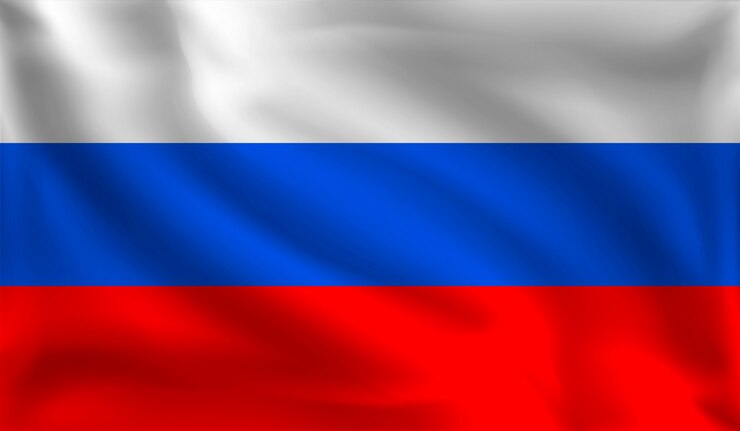
Russia Flag
The national flag of Russia features three equal horizontal stripes of white, blue, and red. Adopted on August 21, 1991, it symbolizes the country’s heritage and unity. The white stripe represents nobility and peace, the blue stands for faith and loyalty, and the red signifies courage and the strength of the Russian people. Originating from the 17th century during Tsar Peter the Great’s reign, the tricolor design reflects Russia’s enduring national identity and pride.
Overview
Russia: The World’s Largest Nation
Russia, the world’s largest country, spans Eastern Europe and Northern Asia, covering eleven time zones and vast natural landscapes. Its capital, Moscow, serves as a major political and cultural hub, while cities like Saint Petersburg showcase artistic and historical richness. Rich in oil, gas, and minerals, Russia holds immense economic power and global influence. As a federal republic with deep cultural traditions, it continues to shape international politics, science, and the arts, blending heritage with modern progress.
Geography and Location
Russia spans over 17 million square kilometers, making it nearly twice the size of Canada, the world’s second-largest nation. It stretches across eleven time zones and shares borders with fourteen countries, including China, Mongolia, Ukraine, and Finland. The country’s landscape features diverse terrains such as the Siberian tundra, the Ural Mountains, dense forests, and expansive plains. Major rivers like the Volga, Lena, and Ob provide important transport routes and contribute to the country’s natural beauty.
Capital and Major Cities
Moscow, the capital city, serves as the political, cultural, and economic center of Russia. It is home to the Kremlin, Red Square, and St. Basil’s Cathedral—symbols of Russian heritage. Saint Petersburg, often called the “Cultural Capital,” reflects Russia’s artistic and historical elegance, known for its palaces, museums, and canals. Other significant cities include Novosibirsk, Yekaterinburg, Kazan, and Vladivostok, each contributing uniquely to Russia’s regional development.
Government and Political System
Russia functions as a federal semi-presidential republic. The President serves as the head of state, while the Prime Minister manages government operations. The country’s political structure emphasizes strong central authority, supported by a network of regional administrations. The Russian Federation Council and the State Duma form the two chambers of the national parliament.
Economy and Natural Resources
Russia possesses one of the world’s richest supplies of natural resources, including oil, natural gas, coal, and minerals. These resources drive its economy and make it a leading energy exporter. Agriculture, manufacturing, and technology also play important roles in national growth. Despite facing global sanctions and economic challenges, Russia continues to sustain a powerful industrial and defense sector.
Culture and Heritage
Russian culture blends traditional customs with modern creativity. The nation has produced world-renowned figures such as Leo Tolstoy, Fyodor Dostoevsky, Pyotr Tchaikovsky, and Anna Pavlova. Russians deeply value literature, ballet, art, and classical music. Festivals, folk dances, and religious traditions remain integral parts of everyday life.
Global Influence
As a permanent member of the United Nations Security Council, Russia exerts significant influence in global politics. Its foreign policy emphasizes sovereignty, strategic independence, and partnerships with countries across Europe and Asia. Russia continues to shape global discussions on security, energy, and technology.
Conclusion
Russia’s vast land, cultural richness, and political strength make it a key global player. Its enduring traditions, natural wealth, and strategic vision continue to define its position as one of the world’s most powerful and fascinating nations.