MONGOLIA
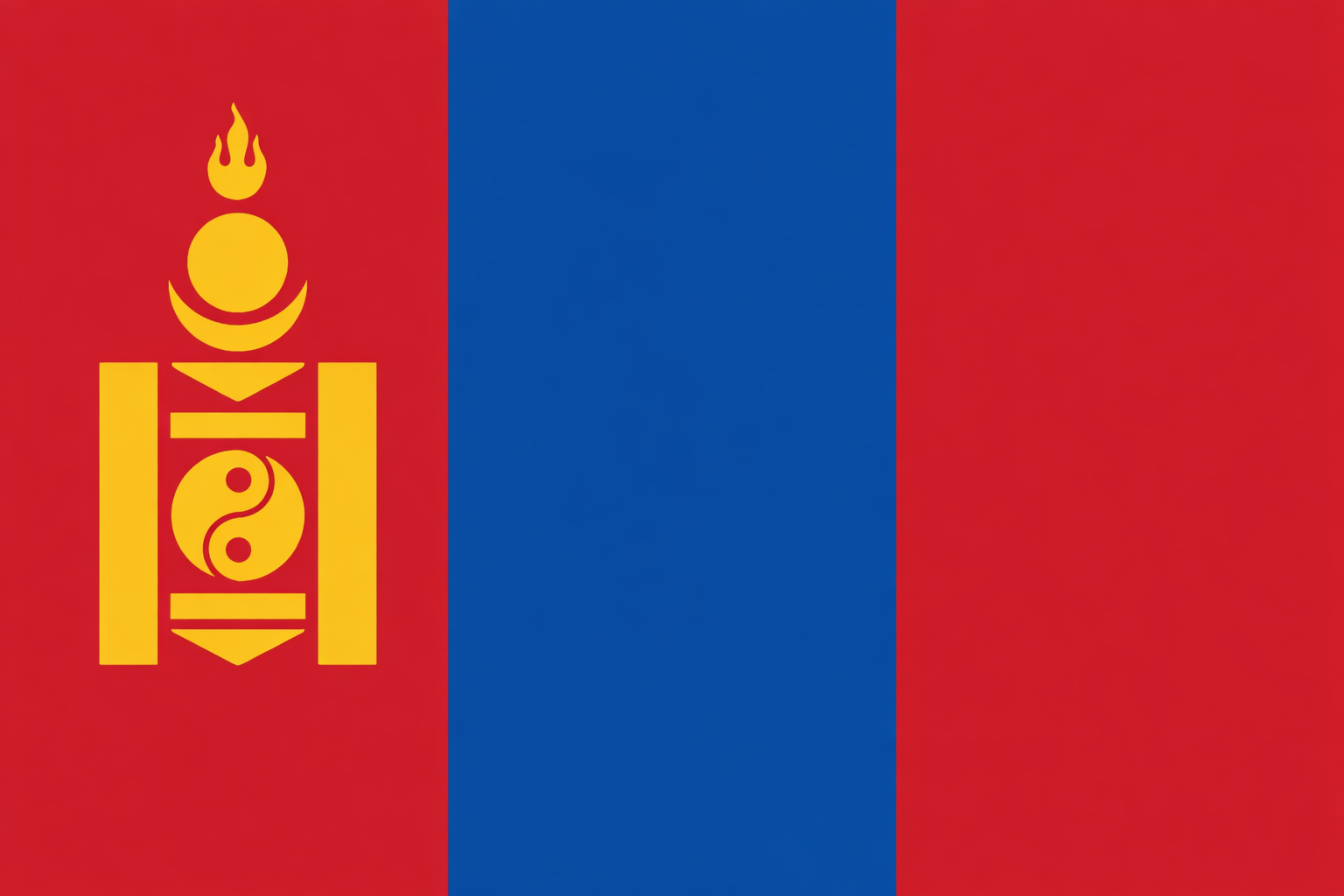
Flag of Mongolia
The flag of Mongolia consists of three vertical stripes: red, blue, and red. The blue center represents the eternal sky, while red symbolizes strength and progress. On the left red stripe, the golden Soyombo symbol shows independence, freedom, and national identity. Adopted in 1992 after democratic changes, the flag reflects Mongolia’s history, culture, and pride. It is an important national emblem displayed during government events and celebrations today and worldwide recognition for its unique design and symbolism and beauty globally.
Overview
Introduction
Mongolia is a large, landlocked country located in East Asia. It lies between China to the south and Russia to the north. Mongolia is known for its vast open steppes, nomadic culture, and rich history. It is one of the least densely populated countries in the world, with a small population compared to its large land area.
Capital and Major Cities
The capital city of Mongolia is Ulaanbaatar, which is also the largest city. It is the political, cultural, and economic center of the country. Many important government offices, universities, and industries are located here. Other cities include Darkhan and Erdenet, which are important industrial centers.
History
Mongolia has a very famous and powerful history. It was once the center of the largest land empire in history, founded by Genghis Khan in the 13th century. He united the Mongol tribes and created a strong empire that stretched across Asia and Europe. After many years, Mongolia came under foreign control and later became a communist country. In 1990, Mongolia peacefully changed to a democratic system.
Geography and Climate
Mongolia has a unique geography that includes mountains, grasslands, and deserts. One of the most famous deserts is the Gobi Desert. The country has very cold winters and warm summers. Winters can be extremely harsh, with temperatures dropping far below freezing.
Culture and Lifestyle
Traditional Mongolian culture is closely connected to nature. Many people still live as nomads, moving from place to place with their animals such as horses, sheep, and camels. They live in portable tents called gers. Mongolians are known for their hospitality and traditional foods like meat and dairy products. Horse riding is an important part of their culture.
Economy
Mongolia’s economy is mainly based on mining, agriculture, and animal husbandry. The country has rich natural resources such as coal, copper, and gold. Livestock farming is also very important. Many families depend on animals for food and income.
Conclusion
In conclusion, Mongolia is a country with a rich history, beautiful landscapes, and unique culture. From the time of Genghis Khan to modern democracy, Mongolia has undergone many changes. Its nomadic traditions, natural beauty, and strong cultural identity make it a special country in the world.