Mr. Djuanda Kartawidjaja
In Office: 9 April 1957 – 9 July 1959
Political Party: Independent
Home State: Tasikmalaya
Lifespan: 1911–1963
Country: Indonesia
Image credits available here.
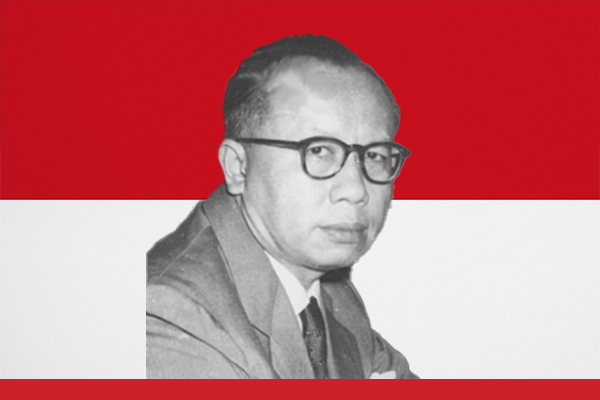
Early Life and Education
Djuanda Kartawidjaja was born on January 14, 1911, in Tasikmalaya, West Java, during the Dutch colonial period. His family valued education, and he grew up with a strong sense of discipline and nationalism. Djuanda studied civil engineering at the Technische Hoogeschool te Bandoeng, now known as the Bandung Institute of Technology (ITB). He graduated as one of the few native Indonesians with a technical education at the time, which gave him a unique perspective on infrastructure and national development.
Early Career and Entry into Government
After graduating, Djuanda worked as a civil engineer for the Dutch colonial administration. He supervised major public works projects, including roads, bridges, and irrigation systems. His efficiency and technical expertise earned him respect among both Indonesians and Dutch officials. After Indonesia proclaimed its independence in 1945, Djuanda offered his skills to the new government. He believed that the nation needed strong infrastructure and administrative systems to stand on its own.
Service Under Early Indonesian Cabinets
Djuanda joined the Indonesian government shortly after independence and served in various ministerial positions. Presidents and prime ministers recognized his integrity and nonpartisan professionalism. Between 1948 and 1957, he held several portfolios, including Communications, Transportation, and Finance. He worked tirelessly to restore the economy, rebuild war-torn infrastructure, and modernize state institutions. His dedication made him one of Indonesia’s most trusted technocrats.
Appointment as Prime Minister
In April 1957, President Sukarno appointed Djuanda Kartawidjaja as Prime Minister of Indonesia. At that time, the country faced political instability and regional rebellions. Djuanda accepted the challenge of leading a nation divided by ideology, geography, and economic hardship. He focused on creating a more unified and effective government. His administration introduced the “Working Cabinet” (Kabinet Karya), which prioritized efficiency over politics.
The Djuanda Declaration: Defining Indonesia’s Maritime Borders
Djuanda’s most significant contribution came through the Djuanda Declaration, announced on December 13, 1957. He declared that Indonesia’s territorial waters encompassed the seas surrounding, between, and connecting its islands. Before this, international law treated the seas between islands as international waters. Djuanda’s declaration redefined Indonesia as an archipelagic state and strengthened its sovereignty. This principle later gained global recognition through the United Nations Convention on the Law of the Sea (UNCLOS). The declaration not only united the islands geographically but also reinforced national identity.
Economic and Infrastructure Development
As Prime Minister, Djuanda emphasized national development through practical measures. He promoted transportation projects, irrigation systems, and energy infrastructure to boost agriculture and industry. He also introduced economic reforms to stabilize the currency and control inflation. His policies reflected his engineering background and his belief that a strong economy required solid physical and administrative foundations.
Relationship with President Sukarno
Djuanda maintained a close working relationship with President Sukarno. While Sukarno promoted political ideology and national unity, Djuanda managed the technical and administrative aspects of governance. He implemented Sukarno’s vision through effective management and planning. Together, they navigated the nation through political tensions and economic difficulties. Djuanda’s calm demeanor and practical leadership complemented Sukarno’s charismatic style.
Final Years and Legacy
Djuanda continued to serve Indonesia with unwavering dedication until his death on November 7, 1963. His passing marked the loss of one of Indonesia’s most capable and honest leaders. The Indonesian people honor him for his integrity, vision, and service. His name lives on in many national institutions, including the Soekarno–Hatta International Airport’s expressway and the Djuanda Forest Park in Bandung.
Lasting Impact
Prime Minister Djuanda Kartawidjaja left an enduring legacy through the Djuanda Declaration, which defined Indonesia’s identity as a maritime nation. He strengthened administrative efficiency, promoted economic development, and set an example of leadership guided by intellect and humility. His vision continues to inspire generations of Indonesians who seek to balance unity, progress, and sovereignty.