Early Life and Education
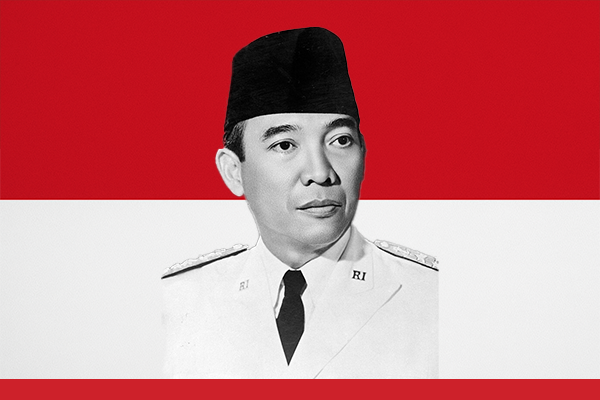
Sukarno was born on June 6, 1901, in Surabaya, Indonesia, during Dutch colonial rule. His father worked as a civil engineer, and his mother came from a prominent Javanese family. Sukarno showed remarkable intelligence and leadership skills from a young age. He studied at local schools before moving to Bandung to attend the Technische Hoogeschool, now known as the Bandung Institute of Technology, where he trained as an engineer.
Early Political Involvement
While studying, Sukarno became deeply involved in nationalist movements. He founded the Indonesian National Party (PNI) in 1927 to unite Indonesians against colonial oppression. Dutch authorities arrested him multiple times for his activism, but these imprisonments only strengthened his resolve. Sukarno’s speeches inspired millions and cemented his reputation as a charismatic leader committed to independence.
Role in Indonesia’s Struggle for Independence
During the Japanese occupation of Indonesia in World War II, Sukarno leveraged his political influence to prepare the nation for independence. He collaborated strategically with Japanese authorities while maintaining his nationalist goals. On August 17, 1945, Sukarno proclaimed Indonesia’s independence alongside Mohammad Hatta. He became the nation’s first Prime Minister and later its first President, taking charge of establishing a sovereign government.
As Prime Minister
As Prime Minister, Sukarno faced the immense challenge of uniting a diverse archipelago with hundreds of ethnic groups and languages. He promoted the principle of Pancasila, a set of five foundational philosophies emphasizing national unity, social justice, democracy, belief in God, and humanitarianism. Sukarno prioritized political stability, national identity, and development, navigating between various political factions and emerging threats.
Diplomatic Achievements
Sukarno worked tirelessly to gain international recognition for Indonesia’s independence. He represented Indonesia at the United Nations and built diplomatic ties with both Western and Eastern bloc countries. He also championed the Non-Aligned Movement, seeking to maintain independence from global superpower conflicts. His vision elevated Indonesia’s status as a respected voice in international affairs.
Domestic Policies and Nation-Building
Domestically, Sukarno launched programs to modernize infrastructure, improve education, and promote economic self-sufficiency. He encouraged industrial development and investment while fostering cultural pride through arts and literature. Sukarno also emphasized mass mobilization, using speeches and public events to unify the people around national goals.
Challenges and Political Struggles
Despite his accomplishments, Sukarno faced significant challenges. Political tensions between communists, nationalists, and military factions threatened stability. Economic hardships, including inflation and shortages, fueled public discontent. Sukarno responded by consolidating power, implementing guided democracy, and seeking to balance competing interests while maintaining his vision for Indonesia.
Legacy as a Leader
Sukarno left an enduring legacy as Indonesia’s founding leader. He inspired generations of Indonesians through his dedication to independence, nationalism, and cultural pride. His vision of Pancasila continues to shape Indonesia’s political philosophy and national identity. Even amid controversies and political struggles, Sukarno’s leadership transformed Indonesia from a colonized territory into a sovereign nation.
Conclusion
Prime Minister Sukarno’s life reflected unwavering commitment, strategic vision, and inspiring leadership. From student activist to founding father, he navigated colonial oppression, global diplomacy, and domestic challenges with remarkable resolve. His contributions continue to resonate, making him one of the most influential figures in Indonesia’s history.