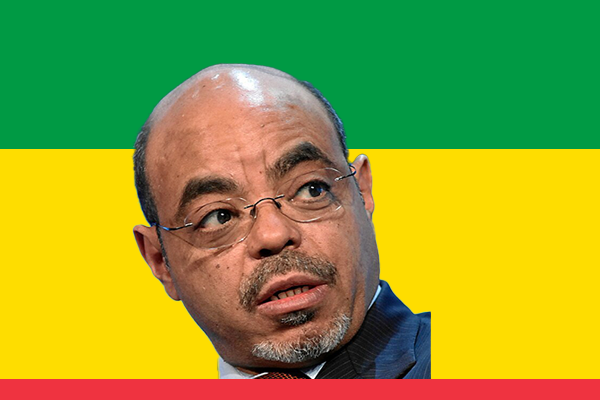
Early Life and Education
Meles Zenawi was born on May 8, 1955, in Adwa, a town in northern Ethiopia. He grew up in a modest family that valued education and discipline. Meles attended Queen of Sheba High School, where he excelled in academics and leadership. Later, he joined Haile Selassie I University (now Addis Ababa University) to study medicine. However, he left his studies in 1975 to join the armed struggle against the Derg military regime, believing that Ethiopia needed political and social transformation.
The Struggle for Liberation
Meles Zenawi played a central role in the Tigray People’s Liberation Front (TPLF), which fought to end the dictatorship of the Derg regime. He demonstrated remarkable intelligence, strategic thinking, and resilience throughout the conflict. Under his leadership, the TPLF grew from a regional resistance group into a national movement that united various ethnic and political forces. In 1989, he became chairman of the Ethiopian People’s Revolutionary Democratic Front (EPRDF), a coalition that led the final offensive against the Derg regime.
Rise to Power
After the fall of the Derg in 1991, Meles Zenawi became the transitional president of Ethiopia. He guided the nation through a difficult post-war reconstruction period. In 1995, Ethiopia adopted a new constitution, and Meles became the first Prime Minister of the Federal Democratic Republic of Ethiopia. His administration focused on peacebuilding, institution-building, and economic recovery.
Economic Reforms and Development
Meles Zenawi championed policies that promoted rapid economic growth and poverty reduction. He implemented a series of reforms that emphasized agriculture-led industrialization and rural development. His government invested heavily in infrastructure, including roads, power, and telecommunications. He encouraged local entrepreneurship and foreign investment, which transformed Ethiopia into one of Africa’s fastest-growing economies.
Meles believed that sustainable development required strong government involvement. He promoted the concept of a “developmental state,” where the state actively guided economic transformation. His vision helped lift millions of Ethiopians out of poverty and reduced dependence on foreign aid.
Role in Regional and International Affairs
Meles Zenawi emerged as a respected African statesman. He played a vital role in promoting peace and cooperation in the Horn of Africa. He led Ethiopia during the conflict with Eritrea from 1998 to 2000 and later worked to maintain regional stability. Internationally, he represented Africa at several global forums, including the G8 and G20 summits. He also served as co-chair of the United Nations Advisory Group on Climate Change and became a leading voice for climate justice and sustainable development in Africa.
Political Challenges and Governance
Despite his achievements, Meles faced criticism for his government’s tight control over political opposition and media. His administration maintained strict limits on dissent to preserve stability and prevent ethnic divisions. He argued that Ethiopia needed unity and strong governance to sustain development. While some viewed his leadership as authoritarian, others credited him for maintaining order and promoting national progress in a diverse and complex society.
Legacy and Death
Meles Zenawi passed away on August 20, 2012, in Brussels, Belgium, after a brief illness. His death marked the end of an era in Ethiopian politics. Millions of Ethiopians mourned him as a visionary leader who transformed their country. Under his leadership, Ethiopia moved from famine and war toward growth and stability.
Meles left behind a legacy of progress, discipline, and national pride. His policies inspired a new generation of African leaders to pursue development through self-reliance and strong governance.
Conclusion
President Meles Zenawi shaped modern Ethiopia with his bold reforms, visionary leadership, and dedication to progress. He turned challenges into opportunities and placed Ethiopia on the path to sustainable growth. His influence continues to inspire African policymakers who strive to balance development, democracy, and national unity.