ETHIOPIA
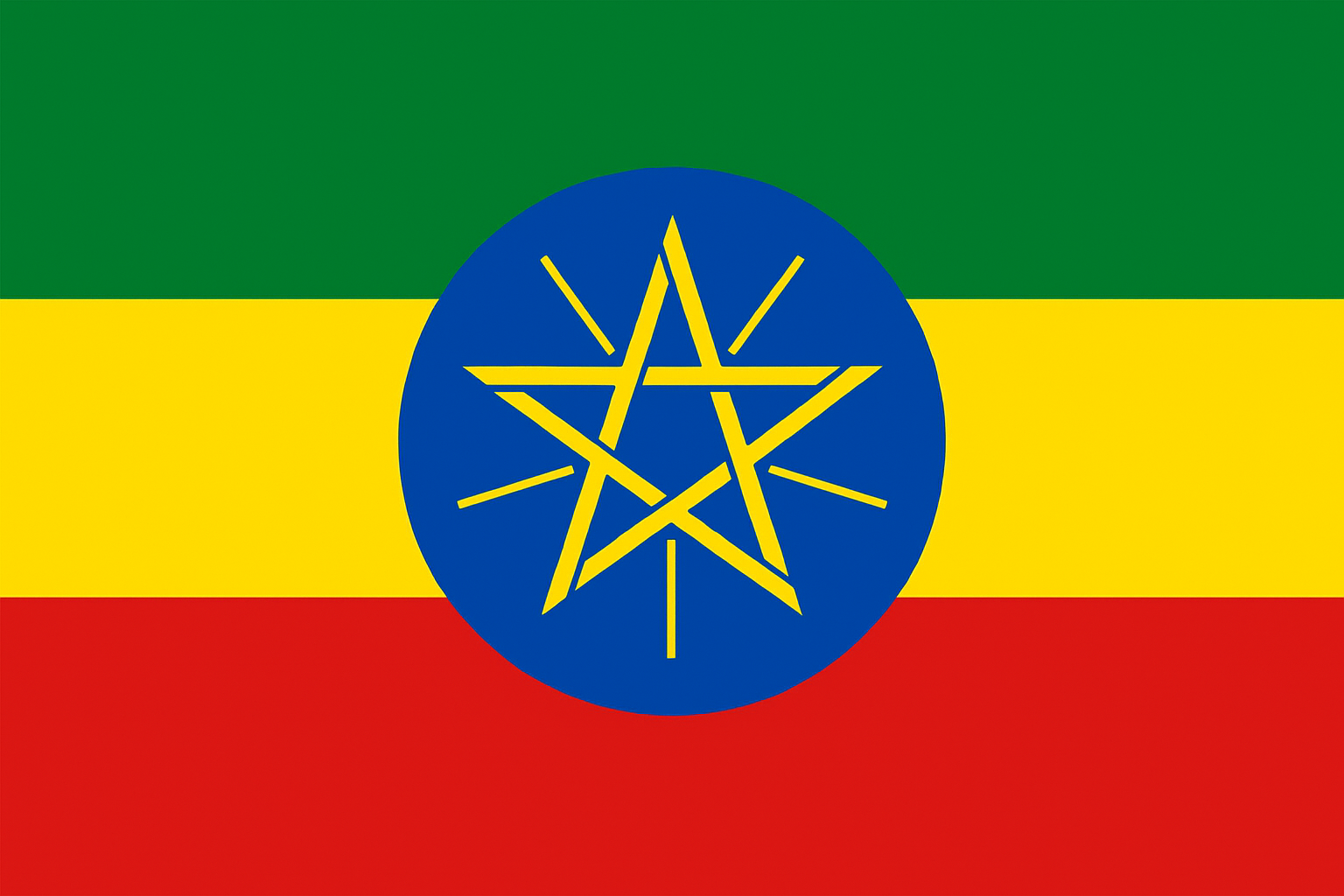
Ethiopia Flag
The flag of Ethiopia features three horizontal stripes of green, yellow, and red, symbolizing hope, peace, and strength respectively. At the center lies a blue circle with a golden star and rays, representing unity, diversity, and a bright future. Adopted on February 6, 1996, the design reflects Ethiopia’s pride as Africa’s oldest independent nation. The colors have also inspired many other African nations’ flags, symbolizing freedom and African unity.
Overview
Introduction
Ethiopia, located in the Horn of Africa, is one of the world’s oldest nations with a history that dates back thousands of years. Known as the cradle of human civilization, Ethiopia’s rich past, diverse cultures, and remarkable landscapes make it a unique country in Africa and beyond. It shares borders with Eritrea, Djibouti, Somalia, Kenya, South Sudan, and Sudan, and its capital city, Addis Ababa, serves as a major diplomatic hub for Africa.
Historical Significance
Ethiopia has a proud and ancient history that distinguishes it from many other African countries. It is the site of the ancient Kingdom of Aksum, one of the great civilizations of the ancient world. Aksum was a powerful trading empire that connected Africa with Asia and Europe. Ethiopia is also noted for being one of the first nations to adopt Christianity in the early 4th century under King Ezana. Unlike most African countries, Ethiopia successfully resisted European colonization, maintaining its independence even during the Scramble for Africa, except for a brief Italian occupation from 1936 to 1941.
Culture and Traditions
Ethiopia’s cultural diversity is reflected in its more than 80 ethnic groups and as many languages. Amharic is the official working language, though other regional languages are widely spoken. The country celebrates a variety of cultural festivals, such as Timkat (Epiphany) and Meskel (Finding of the True Cross), which attract visitors from around the world. Ethiopian cuisine is distinctive, featuring dishes like injera (a spongy flatbread) and doro wat (spicy chicken stew), often eaten communally. The Ethiopian Orthodox Church plays a central role in the nation’s cultural identity, and its ancient rock-hewn churches in Lalibela stand as architectural marvels.
Geography and Economy
Ethiopia’s landscape is diverse, ranging from high mountain ranges and fertile valleys to arid deserts. The Great Rift Valley runs through the country, creating breathtaking natural scenery. The nation’s economy is primarily based on agriculture, with coffee being one of its major exports. Ethiopia is considered the birthplace of coffee, and the drink holds cultural importance in everyday life. In recent years, the country has experienced rapid growth in infrastructure, industry, and tourism, making it one of Africa’s fastest-developing economies.
Conclusion
Ethiopia stands as a symbol of resilience, heritage, and unity. Its ancient civilizations, cultural richness, and natural beauty make it a land of endless fascination. As Ethiopia continues to modernize while preserving its traditions, it remains a vital center of African pride and identity—a bridge between the past and the future.