Mr. Tamrat Layne
In Office: 6 June 1991 – 22 August 1995
Political Party: Independent
Home State: Addis Ababa
Lifespan: born 1955
Country: Ethiopia
Image credits available here.
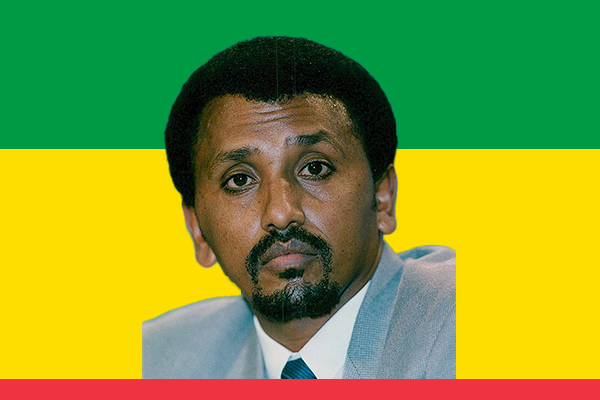
Early Life and Revolutionary Beginnings
Tamrat Layne Wogderess was born in 1955 in Ethiopia. Growing up during a time of social and political unrest, he witnessed the struggles of ordinary citizens under imperial and later military rule. Motivated by a desire for change, he joined the Ethiopian People’s Democratic Movement (EPDM), which became part of the Ethiopian People’s Revolutionary Democratic Front (EPRDF). His revolutionary ideals and leadership skills quickly earned him recognition within the movement.
Rise in the Ethiopian People’s Revolutionary Democratic Front (EPRDF)
During the 1980s, Tamrat Layne played a crucial role in the armed struggle against the Derg regime led by Mengistu Haile Mariam. He emerged as one of the key figures who helped the EPRDF organize its military strategies and coordinate alliances with other rebel groups. His strategic insight and ability to unite diverse factions contributed significantly to the eventual defeat of the Derg regime in 1991.
Becoming Prime Minister of Ethiopia
After the fall of Mengistu in 1991, Tamrat Layne became the first Prime Minister of the transitional government of Ethiopia. As a founding leader of the EPRDF, he worked alongside Meles Zenawi, who served as President during that period. Tamrat took on the challenge of rebuilding a war-torn nation and laying the foundations for democratic governance.
Economic and Political Reforms
As Prime Minister, Tamrat Layne initiated major economic reforms to stabilize Ethiopia’s fragile post-war economy. He encouraged market liberalization, promoted private enterprise, and reduced state control over trade and industry. He aimed to transform Ethiopia from a centrally planned economy into a more open and competitive one.
Politically, he supported the creation of a new constitution that emphasized federalism and regional autonomy. His administration sought to balance the interests of Ethiopia’s diverse ethnic groups by introducing a federal structure based on ethnic regions. This approach aimed to reduce tensions that had long divided the country.
Challenges and Controversies
Despite his reformist agenda, Tamrat Layne faced growing criticism from political opponents and within the EPRDF. Accusations of corruption and abuse of power began to tarnish his image. His leadership style, described by some as assertive and uncompromising, created divisions among Ethiopia’s political elite.
By 1995, his political influence weakened, and Meles Zenawi succeeded him as Prime Minister. Shortly after stepping down, Tamrat Layne faced charges of corruption and misuse of public funds. The court convicted him, and he served several years in prison. His imprisonment marked a dramatic fall from power for one of Ethiopia’s early post-Derg reformers.
Life After Politics
After his release from prison, Tamrat Layne underwent a period of personal transformation. He publicly declared his Christian faith and distanced himself from his past political life. He began speaking about moral values, faith, and redemption, emphasizing the importance of forgiveness and personal change. His post-political life reflected a deep introspection on leadership, responsibility, and spirituality.
Legacy and Impact
Tamrat Layne’s tenure as Prime Minister marked a defining chapter in Ethiopia’s transition from authoritarian rule to a more pluralistic political system. He helped introduce economic liberalization and contributed to the framework of federal governance that continues to shape Ethiopia’s political structure today.
Although his career ended in controversy, his role in the nation’s reconstruction remains significant. Tamrat Layne demonstrated both the potential and the pitfalls of revolutionary leadership in a country struggling to find its democratic identity. His story stands as a reminder of how ambition, reform, and power can shape a leader’s legacy in complex ways.