Mr. Salvador Laurel
In Office: 25 February 1986 – 30 June 1992
Political Party: Nacionalista Party
Home State: Paco
Lifespan: 1928–2004
Country: Philippines
Image credits available here.
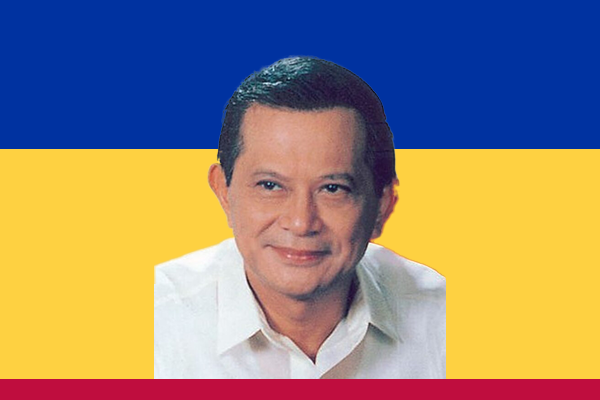
Early Life and Education
Salvador “Doy” Laurel was born on November 18, 1928, in Intramuros, Manila, into a prominent political family. His father, José P. Laurel, served as President of the Philippines during World War II, while his mother, Pacencia Hidalgo Laurel, influenced him with strong moral and nationalistic values. Laurel grew up surrounded by discussions of law, governance, and patriotism.
He pursued law at the University of the Philippines and ranked second in the 1952 Bar Examinations. He later earned advanced degrees from Yale University and the University of Michigan, where he deepened his understanding of constitutional law and governance.
Early Political Career
Laurel began his political career in 1967 when he won a seat in the Philippine Senate. He quickly earned respect for his intellect, integrity, and commitment to national reform. He chaired committees focused on justice and economic development and consistently advocated for transparency in governance.
When President Ferdinand Marcos declared Martial Law in 1972, Laurel opposed the dictatorship. Instead of seeking personal gain, he used his legal expertise and public platform to defend democratic principles. His courage during this period strengthened his reputation as a man of conviction.
Leadership in the Opposition Movement
During the 1980s, Laurel became a leading figure in the opposition against the Marcos regime. He founded the United Nationalist Democratic Organization (UNIDO), a coalition that united various political forces demanding change. Laurel tirelessly organized rallies, wrote speeches, and negotiated alliances among opposition leaders.
He later formed a strong partnership with Corazon Aquino, the widow of assassinated Senator Benigno “Ninoy” Aquino Jr. Together, they became the faces of the movement that fought for the restoration of democracy. Laurel initially sought the presidency in 1986 but agreed to run as vice president under Aquino for the sake of unity.
The 1986 People Power Revolution
In February 1986, millions of Filipinos joined the People Power Revolution to end Marcos’s authoritarian rule. Laurel stood beside Aquino throughout the peaceful uprising, offering both political and moral support. When the revolution succeeded, Aquino became president, and Laurel assumed the office of vice president.
His decision to place the nation’s welfare above personal ambition reflected his deep patriotism. As vice president, he also served as Secretary of Foreign Affairs, where he worked to restore the Philippines’ global credibility after years of political turmoil.
Service as Vice President
From 1986 to 1992, Laurel played an important role in rebuilding democratic institutions. He promoted national reconciliation and pushed for economic reforms. His foreign policy initiatives aimed to strengthen ties with Asian and Western countries.
Although he sometimes disagreed with President Aquino on policy matters, he always prioritized national unity over political rivalry. Laurel’s humility and professionalism set a standard for future leaders in Philippine politics.
Later Years and Legacy
After his term ended, Laurel continued to engage in national issues. He ran for president in 1992 but did not win. Despite this, he remained an influential voice in political and civic discussions. In his later years, he dedicated time to education and legal advocacy through the Laurel Foundation and the Lyceum of the Philippines, which his family established.
Laurel passed away on January 27, 2004, leaving behind a powerful legacy of integrity, courage, and service. Filipinos remember him not just as a vice president but as a patriot who sacrificed personal ambition for the country’s democratic ideals.
Conclusion
Vice President Salvador Laurel symbolized honor and dedication in public service. He fought for democracy when freedom seemed lost and stood firm in the face of dictatorship. His leadership inspired unity, justice, and progress for the Filipino people. Through his life’s work, Laurel proved that true patriotism means putting the nation above oneself.