Early Life and Education
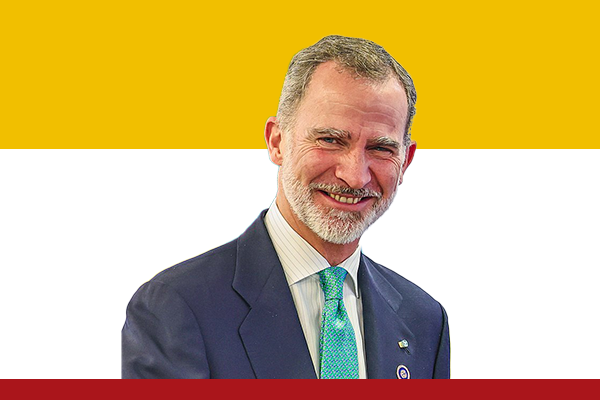
King Felipe VI was born on January 30, 1968, in Madrid, as the son of King Juan Carlos I and Queen Sofía. His upbringing prepared him for leadership from an early age. Felipe attended Santa María de los Rosales School in Madrid and later studied in Canada at Lakefield College School. He then earned a degree in Law from the Autonomous University of Madrid and obtained a master’s degree in international relations from Georgetown University in Washington, D.C. His academic path and global exposure helped him understand diplomacy, governance, and the complexities of international relations.
Military Training and Preparation for Leadership
King Felipe VI took an active role in his military training. He served in the Spanish Army, Navy, and Air Force, achieving officer rank in all three branches. His disciplined training fostered leadership qualities and a deep respect for Spain’s armed forces. Felipe also participated in official engagements alongside his father, gaining experience in state affairs. Through these roles, he developed a strong sense of responsibility and commitment to Spain’s democratic institutions.
Ascension to the Throne
King Felipe VI ascended to the throne on June 19, 2014, following the abdication of King Juan Carlos I. He addressed the nation with a clear vision of transparency, renewal, and unity. From the start, he sought to restore public confidence in the monarchy by setting ethical standards and reinforcing its constitutional role. He worked to ensure that the Crown reflected integrity and service to the people, distancing the institution from previous controversies.
Commitment to Democracy and National Unity
As King, Felipe VI actively defends Spain’s democratic principles and national unity. During political challenges, including the Catalan independence crisis, he stood firmly in support of the Constitution. He delivered a decisive message emphasizing the rule of law and Spain’s indivisibility. His leadership strengthened the bond between the monarchy and democratic governance. By engaging openly with government institutions, regional leaders, and citizens, Felipe promotes dialogue and cooperation across political divides.
Modernization of the Monarchy
King Felipe VI continuously works to modernize and adapt the monarchy to contemporary values. He reduced the royal family’s public budget and published financial transparency reports. He also redefined the royal household’s public role, focusing on professionalism and ethical conduct. His reforms enhanced public trust and made the monarchy more accountable. Through symbolic actions and modern communication, Felipe connects with younger generations and encourages civic responsibility.
Diplomacy and Global Presence
Felipe VI plays an active role in representing Spain internationally. He fosters strong relations with the European Union, Latin America, and global partners. His diplomatic efforts promote Spain’s cultural influence, trade, and cooperation on global issues such as climate change and human rights. By attending international summits and hosting foreign dignitaries, he strengthens Spain’s position on the world stage. His multilingual abilities and diplomatic background make him an effective ambassador of Spanish values and culture.
Personal Life and Family
In 2004, King Felipe VI married Letizia Ortiz Rocasolano, a former journalist. Together, they have two daughters, Princess Leonor and Infanta Sofía. Felipe and Letizia actively participate in cultural, educational, and humanitarian initiatives, setting an example of dedication and public service. Princess Leonor, as heir to the throne, follows her father’s footsteps through education and civic involvement, symbolizing the continuity of the modern Spanish monarchy.
Legacy and Vision for the Future
King Felipe VI envisions a monarchy that serves the people with transparency, honesty, and devotion. He promotes national pride while respecting Spain’s diverse cultural identities. His reign embodies a balance between tradition and progress, aiming to keep the monarchy relevant in the 21st century. Through his actions, Felipe VI strengthens Spain’s image as a united, democratic, and forward-looking nation.