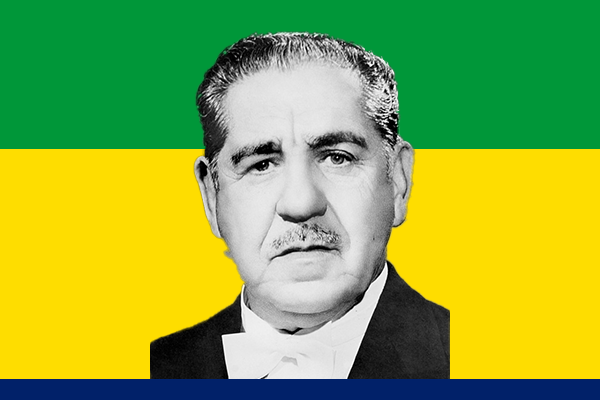
Early Life and Military Background
Artur da Costa e Silva was born on October 3, 1899, in Taquari, Rio Grande do Sul, Brazil. From an early age, he demonstrated discipline and a strong interest in national service. He joined the Brazilian Military Academy and built a distinguished career in the army. His military background shaped his leadership style, emphasizing order, discipline, and national unity. Throughout his service, he gained respect as a firm yet pragmatic officer.
Rise to Political Power
As political instability gripped Brazil in the early 1960s, Costa e Silva emerged as a trusted figure within the armed forces. After the 1964 military coup that removed President João Goulart, Costa e Silva took charge of the Ministry of War under President Castelo Branco. He used his position to strengthen the military’s role in governance and national defense. His dedication to security and modernization earned him strong support among senior officers, who later backed his candidacy for the presidency.
Leadership as President
In 1967, Costa e Silva assumed the presidency of Brazil, succeeding Humberto de Alencar Castelo Branco. He focused on strengthening the state’s authority and promoting economic growth. Instead of allowing political disorder, he enforced stricter control over civil institutions to maintain stability. He prioritized industrialization, infrastructure development, and the expansion of Brazil’s energy sector. By supporting modernization programs, he encouraged both public and private sectors to contribute to national progress.
Costa e Silva promoted the “Brazilian Miracle,” an early stage of rapid economic development. His government invested in highways, hydroelectric projects, and modernization of urban centers. He also sought to diversify Brazil’s international relations by improving diplomatic ties with neighboring countries and non-aligned nations. Through these policies, he aimed to position Brazil as a leading power in Latin America.
Institutional Act Number Five (AI-5)
In December 1968, Costa e Silva responded to growing political unrest by signing Institutional Act Number Five (AI-5). This decree granted the president extensive powers, including the ability to dissolve Congress, suspend political rights, and censor the press. He justified these measures as necessary to protect the nation from subversion and internal conflict. Although AI-5 intensified authoritarian control, Costa e Silva believed it would restore order and preserve national unity. His decision reflected his conviction that strong leadership was vital for stability.
Economic and Social Policies
During his tenure, Costa e Silva encouraged economic expansion through industrial development and state-led investment. He supported agricultural reforms to boost rural productivity and sought to improve education and technical training. By promoting modernization, he aimed to prepare Brazil for a competitive global economy. However, his strict political controls limited social freedoms, creating tension between growth and liberty.
Illness and the End of His Presidency
In 1969, Costa e Silva suffered a severe stroke that left him unable to govern. Instead of allowing a constitutional transfer of power, the military established a temporary junta to lead the country. His illness effectively ended his presidency, marking a turning point in Brazil’s political history. Costa e Silva passed away on December 17, 1969, in Rio de Janeiro.
Legacy
President Costa e Silva left behind a mixed legacy. Supporters praised him for strengthening national infrastructure and maintaining economic growth, while critics condemned his role in deepening authoritarianism. His leadership represented a period when Brazil sought both modernization and control. Although his rule curtailed democratic freedoms, it also set the stage for Brazil’s rapid industrial expansion in the following decade.