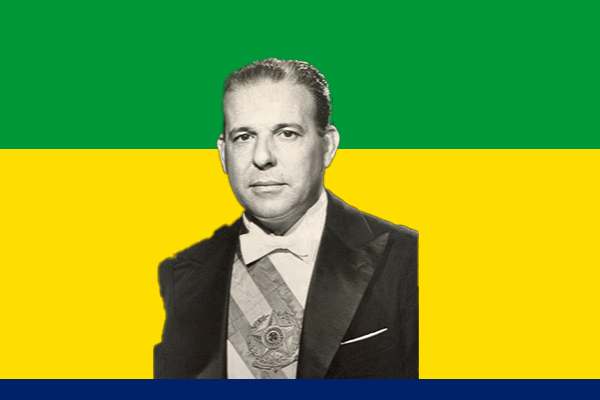
Early Life and Political Rise
João Goulart, born on March 1, 1919, in São Borja, Brazil, grew up in a wealthy ranching family. He studied law at the Federal University of Rio Grande do Sul and soon entered politics with strong support from Getúlio Vargas. Goulart joined the Brazilian Labor Party (PTB) and used his charisma to connect with workers and the poor. His focus on social justice helped him gain popularity among the masses.
In 1953, Vargas appointed Goulart as Minister of Labor, where he raised the minimum wage by 100%. This bold move strengthened his image as a defender of workers’ rights but alarmed the conservative elite. When Vargas died in 1954, Goulart continued promoting pro-labor policies and built a strong base within the PTB.
Vice Presidency and Leadership
In 1956, Goulart won the vice presidency under President Juscelino Kubitschek. He used his position to support industrial development and labor reforms. Despite tensions with conservatives, Goulart maintained his influence by balancing political alliances. He was re-elected vice president in 1960, even though his party lost the presidency to Jânio Quadros.
When Quadros suddenly resigned in 1961, Goulart—then visiting China—became the constitutional successor. However, Brazil’s military and conservative factions resisted his rise, fearing his leftist ideas. To prevent a civil conflict, Congress implemented a parliamentary system that limited his powers. Goulart returned home and accepted the compromise, showing his commitment to national unity.
Restoring Presidential Power
In 1963, a national referendum restored the presidential system, giving Goulart full authority. He immediately launched the “Basic Reforms” program to tackle inequality. He proposed land redistribution, tax reform, better education, and expanded voting rights. Goulart believed these measures would modernize Brazil and reduce poverty.
He reached out to trade unions and rural workers, encouraging them to participate in national development. His administration also worked to strengthen Brazil’s independent foreign policy, promoting relations with both the United States and socialist nations. Goulart aimed to make Brazil more self-reliant while maintaining democracy.
Opposition and Economic Challenges
Goulart’s reform agenda faced strong opposition from the military, the business elite, and conservative politicians. They accused him of leaning toward communism. Meanwhile, Brazil’s economy struggled with inflation and declining investor confidence. Industrialists and landowners resisted his land reform efforts, while middle-class Brazilians feared instability.
Despite the challenges, Goulart continued defending democracy and workers’ rights. He encouraged dialogue between social groups and opposed any form of authoritarianism. His speeches inspired laborers but worried conservatives who believed he was pushing the country toward socialism.
The 1964 Coup and Exile
In March 1964, mass protests erupted both in support of and against Goulart. As tensions peaked, the military launched a coup on March 31. Refusing to use violence against his own people, Goulart chose not to resist. He fled to Uruguay to avoid bloodshed, marking the end of Brazil’s democratic government and the beginning of a 21-year military dictatorship.
During his exile, Goulart continued advocating for democracy and social justice. He lived quietly in Argentina and Uruguay until his death on December 6, 1976. Many Brazilians later recognized his dedication to equality and his efforts to balance reform with peace.
Legacy of João Goulart
President João Goulart remains a symbol of Brazil’s democratic aspirations and social transformation. He fought for fair labor conditions, economic equality, and political freedom during one of the most turbulent periods in Brazilian history. Though his presidency ended in exile, his ideals influenced future generations seeking justice and democracy.
Goulart’s leadership showed that progress requires courage, vision, and compassion. His commitment to reform and peaceful change continues to inspire Brazil’s ongoing struggle for a more just society.