VICE PRESIDENTS OF BANGLADESH
Vice Presidents of Bangladesh
The position of Vice President in Bangladesh holds a unique place in the country’s political history. Although the role no longer exists in the current constitutional structure, it once served as an important office during periods of political transition, constitutional experimentation, and national reorganization. The Vice President acted as the second-highest executive authority and often played a key role during times of crisis, making the office historically significant.
LIST OF VICE PRESIDENTS OF BANGLADESH


Early Formation of the Office
Vice Presidents of Bangladesh introduced of under the 1972 Constitution. The Vice President’s primary responsibility was to support the President and be prepared to assume presidential duties if the office felt vacant. This position was particularly important in the early years of the nation when political stability was still developing after independence.
One of the earliest individuals to serve in this role was Muhammad Mansur Ali, a senior leader who briefly held the office. However, political events, including constitutional amendments, frequently changed the country’s executive structure. As Bangladesh shifted between parliamentary and presidential systems, the Vice Presidency was sometimes removed and later reinstated.
The Vice Presidency During the 1980s
The office gained renewed significance during the 1980s when Bangladesh operated under a presidential system. Notable among the Vice Presidents during this period was Justice Abdus Sattar, who served before becoming President himself. His rise illustrated how the Vice Presidency could act as a stepping stone to the highest office.
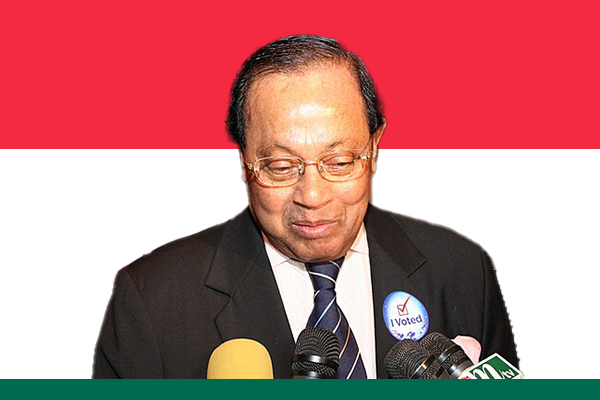
Another key figure was Moudud Ahmed, a prominent lawyer and political leader. His tenure as Vice President highlighted the role of the office in supporting executive decisions and representing the presidency during important state functions. The 1980s were marked by political changes, and the Vice Presidents often contributed to managing transitions between administrations.
Abolition of the Office
The Vice Presidency was ultimately abolished in 1991 when Bangladesh restored the parliamentary system through the Twelfth Amendment. Under this system, the President became a largely ceremonial figure, while the Prime Minister assumed executive authority. Consequently, the post of Vice President was no longer necessary within the new political structure.
Since then, Bangladesh has operated without a Vice President, relying instead on constitutional provisions that designate the Speaker of Parliament to act as President if the office becomes vacant.
Historical Significance
Even though the position no longer exists, the Vice Presidents of Bangladesh remain important figures in the country’s political narrative. They served during turbulent periods, upheld constitutional order, and shaped executive leadership during critical moments. Their contributions reflect the evolving nature of Bangladesh’s governance and the nation’s search for a stable and effective political framework.