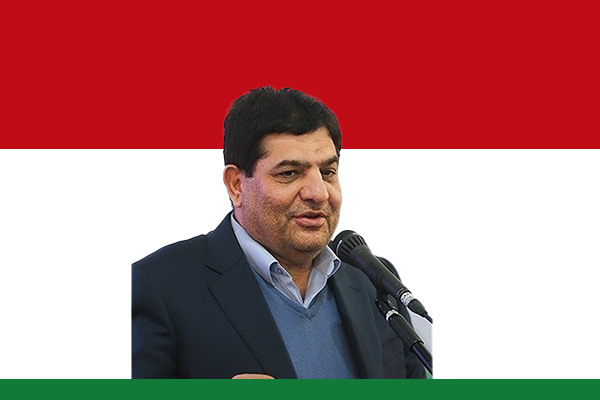
Early Life and Background
Mohammad Mokhber was born on September 1, 1955, in Dezful, in Khuzestan province. Over the years, he built a varied career: beginning with involvement in guerrilla operations during the pre-revolution era, then serving as a medical officer in the war period, and later moving into civil service and administration.
Rise Through Economic and Institutional Roles
In the 1990s, Mokhber led the Dezful Telecommunications Authority and served as deputy-governor of Khuzestan, showing early administrative and governance experience. He then became Vice President of the Mostazafan Foundation, a major Iranian economic and charitable trust. Later, he was appointed head of the Setad (the Headquarters for Executing the Order of the Imam), a powerful conglomerate that manages vast assets — many of them properties seized after the 1979 Revolution.
Under his leadership, Setad expanded into multiple sectors, including projects during the COVID-19 pandemic — among them, a state-backed vaccine initiative.
First Vice President (2021 onward)
On August 8, 2021, following the election of Ebrahim Raisi as President, Mokhber was appointed First Vice President — making him the most senior among multiple vice presidents.
In this capacity, he was responsible for coordinating executive affairs across Iran, overseeing aspects of domestic economic policy, and advancing the government’s strategic industrial plans.
Interim (Acting) President After Raisi’s Death
On 19 May 2024, following a fatal helicopter crash that killed President Raisi, Mokhber — under the approval of Ali Khamenei — was named as part of a three-person interim council to run the executive branch.
According to the constitution, this council — comprising the First Vice President, the Speaker of Parliament, and the Chief Justice — is mandated to organize a new presidential election within 50 days.
During this interim period, Mokhber oversaw day-to-day affairs of the government, ensuring continuity during a sensitive transitional phase.
Influence, Powers, and Controversies
As head of Setad and as Vice President, Mokhber controlled significant economic and institutional assets, giving him considerable influence over Iran’s economic and reconstruction policies.
Critics of Setad have raised concerns about its origins — many assets managed by Setad were properties seized after the 1979 revolution — and about lack of transparency in how wealth and resources are allocated.
Internationally, Mokhber’s tenure has not been without controversy: his past association with programs linked to strategic and defence-related industries contributed to his inclusion on a sanctions list by the European Union in 2010 — although he was later removed from that list.
Significance in Iran’s Power Structure
Mohammad Mokhber represents a archetype of Iran’s post-revolution elite: a figure with roots in revolutionary struggle and war, steady ascent through economic and institutional power centers, and consolidation of influence through roles in expansive state-controlled foundations. His appointment as First Vice President and subsequent brief incumbency as acting President underscores the trust placed in him by the Supreme Leader and the inner circles of power.