Mr. Roh Tae-woo
In Office: 25 February 1988 – 25 February 1993
Political Party: Democratic Justice
Home State: Daegu
Lifespan: 1932–2021
Country: South Korea
Image credits available here.
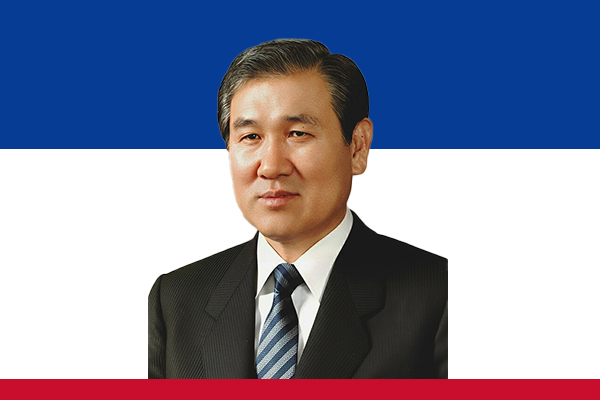
Early Life and Military Foundation
Roh Tae-woo was born on December 4, 1932, in Daegu, South Korea. He grew up during a turbulent period marked by Japanese colonial rule and the Korean War. He entered the Korea Military Academy and graduated alongside his close friend, Chun Doo-hwan. Roh built a steady military career and gained recognition as a disciplined and strategic officer. His military background shaped his worldview and later influenced his leadership style in politics.
Entry into Politics and Role in the Fifth Republic
Roh moved into politics when Chun Doo-hwan seized power in the early 1980s. Chun entrusted him with key positions, and Roh served as Minister of Sports, Minister of Home Affairs, and a leader within the Democratic Justice Party (DJP). He strengthened his political standing by leading major national events, including the successful 1986 Asian Games and the preparations for the 1988 Seoul Olympics. These roles helped him emerge as a public figure capable of managing large national responsibilities.
June 29 Declaration and Path to the Presidency
South Korea faced intense pro-democracy protests in 1987. Roh chose a strategic path and announced the historic June 29 Declaration. He accepted demands for constitutional reform, direct presidential elections, and expanded civil liberties. This move shifted the nation toward democratization and positioned him as a reformist leader. After the declaration, he contested the presidential election of 1987. Although the opposition vote split, Roh won and became South Korea’s first president elected under the new democratic constitution.
Presidency and Domestic Reforms
Roh Tae-woo took office in 1988 and worked to stabilize a rapidly transforming nation. He expanded political freedoms, allowed broader media activities, and encouraged social openness. His government launched the “Nordpolitik” policy, inspired by West Germany’s Ostpolitik, to improve relations with socialist countries. Domestically, he invested in infrastructure, advanced economic modernization, and promoted large-scale development projects that boosted urban growth and global visibility.
He also supported cultural initiatives and strengthened institutions to help South Korea emerge as a vibrant democracy. His leadership marked a clear shift from authoritarian rule to a more open and participatory political system.
Foreign Policy Breakthroughs
Roh achieved groundbreaking diplomatic successes. He normalized relations with the Soviet Union in 1990 and established ties with China in 1992. These moves expanded South Korea’s global presence and reshaped regional geopolitics. He also engaged North Korea through dialogue and agreements aimed at easing tensions. His foreign policy strengthened South Korea’s international status and opened the nation to new economic opportunities.
Controversies, Scandals, and Trial
Despite his achievements, Roh faced serious controversies. After leaving office, investigations revealed that he secretly maintained a large slush fund and played a role in the 1979–1980 political events linked to Chun Doo-hwan. In 1996, a court convicted him of corruption and mutiny-related charges. He received a long prison sentence, but President Kim Young-sam and President-elect Kim Dae-jung pardoned him in 1997 to promote national reconciliation.
His trial and punishment symbolized a new era in which former authoritarian leaders became accountable to democratic institutions.
Legacy and Historical Assessment
Roh Tae-woo left behind a mixed legacy. Supporters credit him for guiding South Korea peacefully toward democracy, strengthening diplomacy, and hosting the Seoul Olympics, which elevated the country’s global image. Critics highlight his early association with authoritarian rule and the scandals that followed him.