Mr. Lee Myung-bak
In Office: 25 February 2008 – 25 February 2013
Political Party: Liberty Korea
Home State: Osaka
Lifespan: born 1941
Country: South Korea
Image credits available here.
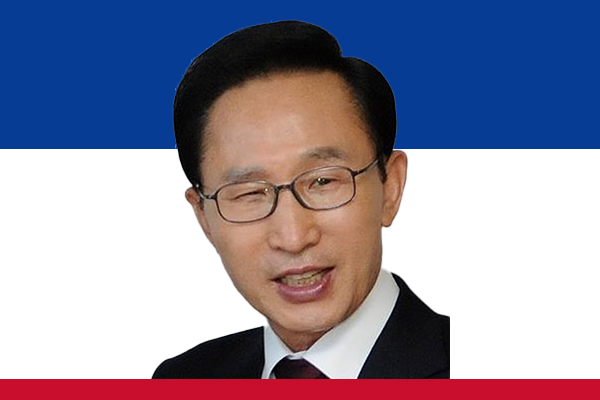
Early Life and Rise in Business
Lee Myung-bak was born on December 19, 1941, in Osaka, Japan, to a Korean family under Japanese rule. His family returned to Korea after World War II and settled in poverty. Lee grew up with hardship, but he embraced determination as a way forward. He studied hard and secured admission to Korea University, where he majored in business administration.
During his university years, he worked multiple jobs to support himself. He later joined Hyundai Engineering and Construction as an entry-level worker. Lee demonstrated exceptional discipline and strategic thinking, which helped him rise quickly through the corporate ranks. By his thirties, he had become one of the youngest CEOs in Hyundai’s history. His rapid rise earned him the nickname “The Bulldozer,” highlighting his bold and result-oriented approach.
Entry into Politics
Lee transitioned into politics in the early 1990s. He ran for a seat in the National Assembly and won, beginning his public career. He continued shaping his political identity through pragmatic policy ideas and development-oriented goals.
In 2002, he ran for Mayor of Seoul and won. As mayor, Lee pursued major infrastructure and urban renewal projects. He launched the Cheonggyecheon Restoration Project, which transformed a congested highway into a vibrant public stream and green space. This project boosted his national popularity and showcased his ability to deliver visible results.
Path to the Presidency
Lee announced his presidential bid in 2007. He campaigned on economic revival, job creation, and strong national security. He promised to increase South Korea’s global competitiveness and restore public trust in leadership. His business background and mayoral achievements strengthened his appeal among voters.
He won the 2007 election by a large margin and became South Korea’s 10th president in February 2008.
Economic Policies and Domestic Reforms
As president, Lee focused heavily on economic growth. He introduced the “MBnomics” strategy, which emphasized deregulation, large-scale development, and global expansion. He implemented stimulus measures to help South Korea recover from the 2008 global financial crisis. Under his leadership, the country stabilized quickly and returned to growth.
Lee also promoted renewable energy and green innovation through the “Low Carbon, Green Growth” policy. This initiative aimed to reduce emissions and create new technology-driven industries. His administration invested in high-speed rail, innovative water management systems, and advanced digital infrastructure.
Foreign Policy and Global Diplomacy
Lee strengthened South Korea’s position on the world stage. He deepened ties with the United States and increased cooperation on security and trade. He also expanded South Korea’s diplomacy in Southeast Asia, Europe, and the Middle East.
In 2010, he hosted the G20 Seoul Summit, which showcased South Korea as a leading global economic player. Lee also enforced a firm stance against North Korea, especially after the sinking of the Cheonan warship and the shelling of Yeonpyeong Island. He increased military readiness and international cooperation while maintaining pressure on Pyongyang.
Controversies and Later Years
Lee faced several domestic criticisms during his presidency, including debates on media reforms, protests over U.S. beef imports, and concerns about wealth inequality. After leaving office in 2013, controversies continued to follow him. In 2018, South Korean courts convicted him on corruption charges related to bribery and embezzlement. He served part of his sentence before receiving a pardon in 2022.
Despite the controversies, many South Koreans still associate him with development-driven leadership and rapid economic initiatives.
Legacy
Lee Myung-bak left a complex but influential legacy. Supporters praise him for economic stabilization, infrastructure growth, and confident diplomacy. Critics fault him for authoritarian tendencies and corruption scandals. Regardless of perspective, his presidency reshaped South Korea’s economic direction and global standing. His story reflects ambition, determination, and the challenges of leadership in a modern democracy.