Mr. Prayut Chan-o-cha
In Office: 24 August 2014 – 22 August 2023
Political Party: Independent
Home State: Nakhon Ratchasima
Lifespan: born 1954
Country: Thailand
Image credits available here.
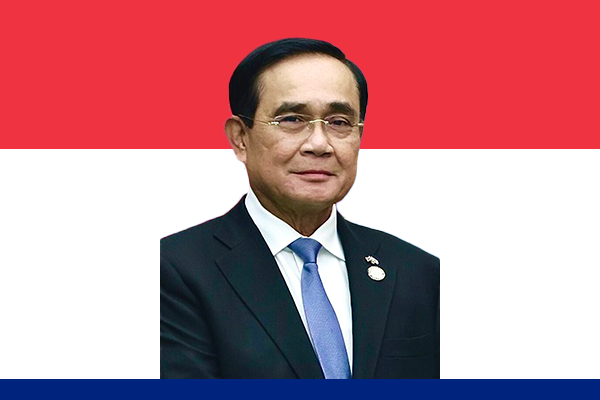
rayut Chan-o-cha, born on March 21, 1954, in Nakhon Ratchasima, Thailand, has played a significant role in Thailand’s political and military landscape. From an early age, he showed a strong inclination toward discipline and leadership. He enrolled in the Chulachomklao Royal Military Academy, where he honed his strategic and leadership skills. His military career advanced steadily, earning him respect and recognition within Thailand’s armed forces.
As a professional soldier, Prayut served in various key positions within the Royal Thai Army. His leadership and strategic thinking became evident when he held the post of Commander-in-Chief of the Royal Thai Army in 2010. During his tenure, he focused on modernizing the army and enhancing operational readiness. He cultivated strong relationships with both domestic and international military officials, boosting Thailand’s defense capabilities.
Prayut Chan-o-cha seized the national spotlight when political unrest surged in Thailand in 2014. Amid growing instability and street protests, he led a coup d’état on May 22, 2014, overthrowing the caretaker government. Immediately following the coup, Prayut assumed the role of the head of the National Council for Peace and Order (NCPO), effectively steering Thailand’s government. Under his command, the council implemented policies aimed at restoring stability, promoting national unity, and managing political tensions.
Following the military takeover, Prayut worked to transition from military rule to an official government leadership role. He introduced a roadmap for political reform, emphasizing economic development, education, and national security. In 2019, Prayut officially assumed the office of Prime Minister after Thailand held general elections. As Prime Minister, he prioritized policies that strengthened Thailand’s economic position in Southeast Asia and improved infrastructure and public services.
Prayut Chan-o-cha also played a pivotal role in foreign policy. He actively engaged with regional and global leaders, seeking to strengthen Thailand’s diplomatic relations. His government pursued trade agreements, investment opportunities, and security cooperation to ensure Thailand maintained a strategic position in ASEAN and beyond.
Despite his accomplishments, Prayut faced criticism for his governance style, particularly from pro-democracy activists and opposition parties. Critics accused him of curbing freedom of expression and delaying full democratic reforms. However, Prayut consistently defended his policies, arguing that his measures aimed to protect national stability and foster long-term growth.
Throughout his career, Prayut Chan-o-cha has remained a disciplined and strategic leader. From his early days as a military officer to his current role as Prime Minister, he has maintained a focus on national security, economic development, and political stability. His leadership has shaped Thailand’s modern trajectory, blending military precision with political strategy.
Prayut’s influence extends beyond politics. He continues to inspire discussions about governance, military involvement in politics, and Thailand’s future. His career highlights the complex balance between authority and democracy, and his decisions continue to affect the nation’s political and social landscape.