Mr. Hafez al-Assad
In Office: 12 March 1971 – 10 June 2000
Political Party: Syria Socialist Ba’ath
Home State: al-Qardaha
Lifespan: 1930–2000
Country: Syria
Image credits available here.
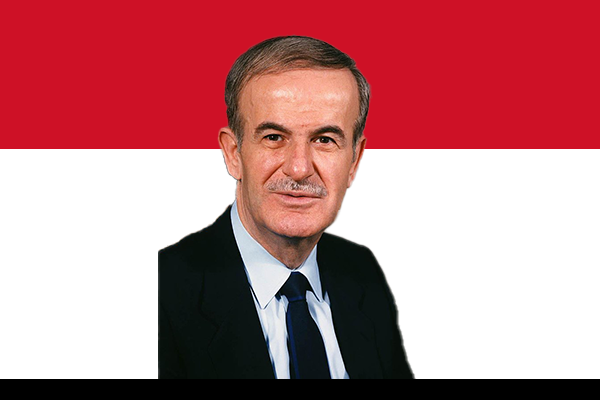
Early Life and Background
Hafez al-Assad was born on October 6, 1930, in Qardaha, a small town in the coastal mountains of Syria. Coming from an Alawite family, he faced the challenges of social and political marginalization in a country dominated by Sunni elites. Despite these obstacles, Assad pursued a military career, joining the Syrian Air Force in 1952. His determination and strategic mind quickly set him apart, laying the foundation for his future rise to power.
Military Career and Rise to Power
Assad’s military career advanced steadily, and he became known for his discipline and tactical expertise. During the 1960s, Syria experienced political instability with a series of coups and counter-coups. Assad played a crucial role in the 1963 Ba’ath Party coup that brought his party to power. Over time, he consolidated his influence within the military and the political apparatus, positioning himself as a central figure in Syrian governance. By November 1970, he led a bloodless coup known as the “Corrective Movement,” ultimately becoming the President of Syria.
Domestic Policies and Governance
As President, Hafez al-Assad emphasized stability and strong central authority. He implemented policies that strengthened the role of the Ba’ath Party and expanded the influence of the military and intelligence services. Assad prioritized economic modernization, infrastructure development, and public services while maintaining strict control over political dissent. His approach to governance was authoritarian, relying on a network of loyalty and surveillance to maintain order.
Under Assad, Syria witnessed relative social stability compared to the chaos of previous decades. He promoted secularism in government institutions, despite the sectarian diversity of the country. Assad also managed complex relationships among Syria’s various religious and ethnic groups, ensuring that no single faction dominated the political landscape.
Foreign Policy and Regional Influence
Hafez al-Assad’s foreign policy was characterized by assertiveness and strategic maneuvering. He focused on asserting Syria’s influence in the Middle East, particularly regarding the Arab-Israeli conflict. Assad maintained Syria’s position in Lebanon, establishing the country as a dominant force in Lebanese politics. He navigated complex alliances and rivalries in the region, balancing relationships with the Soviet Union and neighboring Arab states.
Assad’s leadership during conflicts, including the 1982 Hama uprising, demonstrated his commitment to maintaining authority, even at high human and political costs. He emphasized national sovereignty and resisted foreign intervention, positioning Syria as a key player in regional affairs throughout his presidency.
Legacy and Impact
Hafez al-Assad remained in power until his death on June 10, 2000, after nearly 30 years as President. His legacy is complex: he is credited with stabilizing Syria, modernizing aspects of the state, and enhancing the country’s regional presence, but his rule was also marked by authoritarianism and suppression of opposition. Assad’s political strategies created a system that would allow his son, Bashar al-Assad, to succeed him, shaping Syria’s trajectory into the 21st century.
Hafez al-Assad’s tenure reflects the challenges of leadership in a diverse and volatile region. His blend of military acumen, political strategy, and authoritarian governance left an indelible mark on Syria’s history, making him one of the most influential leaders of the modern Arab world.