Mr. Rifaat al-Assad
In Office: 11 March 1984 – 8 February 1998
Political Party: Arab Socialist Ba’ath
Home State: al-Qardaha
Lifespan: born 1937
Country: Syria
Image credits available here.
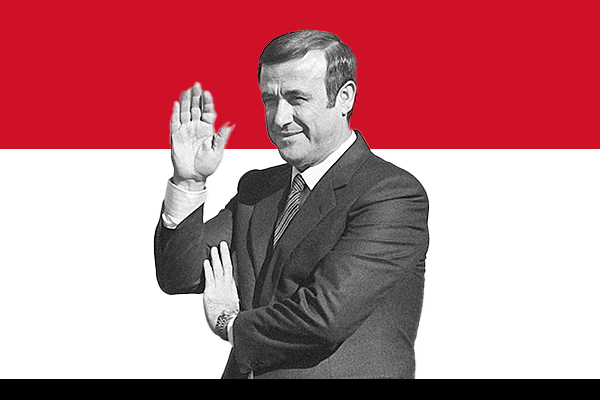
Rifaat al‑Assad: Controversial Syrian Vice President
Rifaat Ali al‑Assad is a prominent and divisive figure in modern Syrian history, best known for his tenure as Vice President of Syria and his role as a powerful military commander under his elder brother, President Hafez al‑Assad. Born on 22 August 1937, in the Alawite village of Qardaha in western Syria, Rifaat was part of a politically influential family that later produced Syria’s long‑time leader Hafez al‑Assad and his son, Bashar al‑Assad.
Rifaat’s early career was rooted in the military. He was educated at Damascus University and later furthered his studies at the Soviet Academy of Sciences, eventually rising to the rank of Major General in the Syrian Arab Army. As commander of the Defense Companies, an elite paramilitary force, he became one of the regime’s most fearsome figures during the height of Syria’s internal unrest and regional conflicts from the 1970s to the 1980s.
Role in the Hama Massacre and Rise in Power
One of the defining — and most brutal — moments of Rifaat’s career was his role in suppressing the 1982 Islamist uprising in the central Syrian city of Hama. The revolt, led by the Muslim Brotherhood against the Assad regime, ended in a devastating assault by Syrian forces. Rifaat is widely believed to have commanded the ground operations, which resulted in the deaths of thousands of civilians. Human rights groups and historians have described the event as one of the deadliest episodes in Syria’s modern history, earning Rifaat the grim nickname “the Butcher of Hama.”
In March 1984, Hafez al‑Assad appointed Rifaat as one of Syria’s vice presidents, a position he held until February 1998. This promotion was partly designed to neutralize his control over the Defense Companies and redirect his ambitions toward a political role. However, the post carried little real authority beyond its title, and tensions soon developed.
Failed Coup and Exile
The defining rupture in Rifaat’s career came later in 1984 when he attempted to seize power from his older brother in what is widely characterized as a failed coup attempt. Fearing that Rifaat was positioning himself to take control of the state, Hafez moved decisively to sideline him. Rifaat was effectively exiled from Syria, and he spent roughly 36 years living in Europe, primarily in France and Spain.
During his exile, Rifaat continued to cultivate a lavish lifestyle and significant influence among expatriate circles. However, he increasingly became entangled in legal and financial controversies far from Syrian shores.
Legal Troubles in Europe
Rifaat’s time in Europe was marred by extensive legal scrutiny. French authorities launched criminal investigations in the mid‑2010s into allegations of embezzling Syrian state funds and money laundering to build a substantial property empire in France and elsewhere. In 2020, a Paris court convicted him of tax fraud and laundering funds believed to have been diverted from Syria’s public purse. He was sentenced to four years in prison and faced the confiscation of properties associated with the case. His holdings reportedly included townhouses in Paris, vast estates, and a portfolio stretching into Spain — many of which were seized by authorities.
Further legal actions have continued. In Switzerland, federal prosecutors moved to try Rifaat for war crimes and crimes against humanity, focusing on his alleged command decisions during the 1982 Hama operations, in which tens of thousands were killed or injured.
Return to Syria and Later Years
Despite decades in exile, Rifaat unexpectedly returned to Syria in October 2021 after his legal entanglements in France intensified. The Syrian government, then led by his nephew Bashar al‑Assad, reportedly allowed his return partly to avert his imprisonment abroad. However, he was not expected to resume any formal political role.
Rifaat’s legacy in Syria is deeply contested. To supporters of the Assad regime, he was a loyal figure within the state’s security apparatus during turbulent times. To critics and human rights advocates, he symbolizes the brutal repression that defined Hafez al‑Assad’s rule and the enduring impunity of Syria’s elite. His life’s arc — from senior vice president and powerful military commander to exiled oligarch and convicted defendant — reflects both the inner dynamics of the Assad dynasty and the broader tragedies of modern Syrian history.