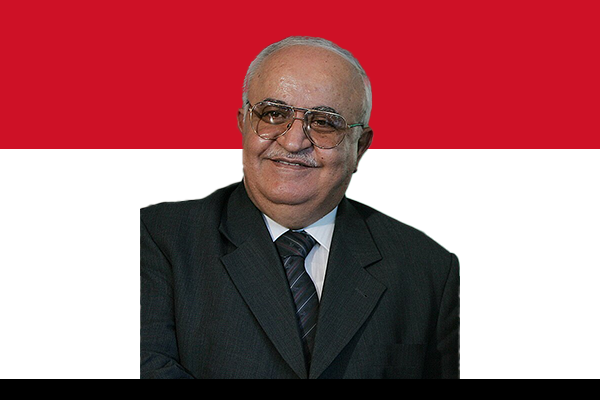
Early Life and Education
Muhammad Naji al-Otri was born in 1944 in the city of Aleppo, one of Syria’s most important cultural and economic centers. He pursued higher education in law, a background that strongly influenced his later political and administrative career. His legal training helped him develop a structured approach to governance, emphasizing state institutions, regulations, and administrative discipline. From an early stage, al-Otri showed interest in public service and national affairs, which eventually guided him toward politics.
Political Career and Rise
Al-Otri built his political career through steady involvement in the Syrian Arab Socialist Ba‘ath Party, the dominant political force in Syria. His loyalty to the party and reputation as a disciplined administrator helped him gain trust within the political establishment. Before becoming Prime Minister, he held various party and governmental positions that allowed him to understand both regional and national governance structures.
His close association with party leadership and his ability to manage responsibilities without controversy contributed to his rise. By the time he was appointed Prime Minister, al-Otri had already earned a reputation as a reliable and experienced political figure.
Tenure as Prime Minister of Syria
Muhammad Naji al-Otri served as Prime Minister of Syria from 2003 to 2011. His appointment came during a period when Syria aimed to balance political continuity with limited administrative reforms. As Prime Minister, al-Otri worked closely with President Bashar al-Assad, implementing government policies and overseeing daily administrative affairs.
His government focused on maintaining internal stability, managing public institutions, and responding to economic challenges. During his tenure, Syria faced international pressure and regional tensions, which shaped much of the government’s domestic and foreign policy approach. Al-Otri played a key role in coordinating ministries and ensuring that state policies aligned with presidential directives.
Economic and Administrative Policies
Economically, al-Otri’s government attempted cautious reforms while preserving state control over key sectors. The administration supported gradual market-oriented measures, encouraged limited private sector participation, and worked to modernize certain economic policies. However, reforms remained controlled and incremental, reflecting the government’s priority on stability over rapid change.
Administratively, al-Otri emphasized efficiency and discipline within state institutions. He supported efforts to improve public sector management and reduce bureaucratic inefficiencies, although deep structural reforms remained limited.
Challenges and Political Context
Al-Otri’s tenure coincided with increasing regional instability and growing internal pressures. International sanctions, diplomatic isolation, and economic constraints posed significant challenges for his government. Despite these difficulties, al-Otri maintained his position for several years, demonstrating the leadership’s confidence in his ability to manage complex political conditions.
In 2011, amid widespread unrest and political change in Syria, al-Otri’s term as Prime Minister came to an end. His resignation marked the conclusion of a long period of relative governmental continuity.
Legacy and Significance
Muhammad Naji al-Otri is remembered as a loyal and steady Prime Minister who served during a critical phase of Syrian politics. His leadership style reflected institutional stability, adherence to party principles, and close coordination with presidential authority. While his tenure did not bring dramatic reforms, it represented a period of controlled governance and administrative continuity in Syria’s modern history.