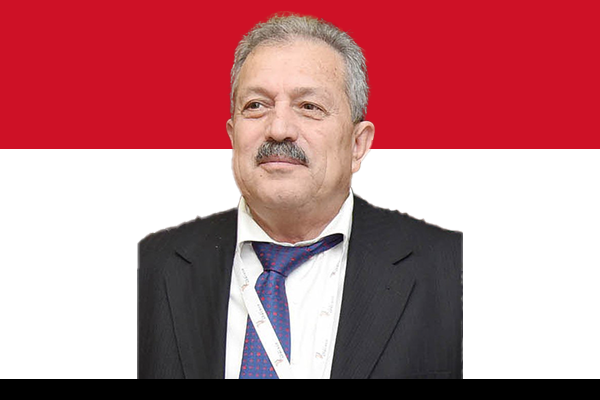
Early Life and Education
Hussein Arnous was born in 1953 in the Idlib Governorate of Syria. He pursued higher education in engineering, a background that strongly influenced his later career in public administration. Arnous graduated with a degree in civil engineering, which equipped him with technical expertise and a structured problem-solving approach. His educational foundation prepared him for roles that required planning, infrastructure management, and coordination across government sectors.
Early Career and Administrative Experience
Arnous began his professional career in Syria’s public sector, where he steadily rose through administrative ranks. He worked in several engineering and public works roles, gaining firsthand experience in infrastructure development and local governance. His career path demonstrated a focus on practical administration rather than ideological politics. Over time, Arnous earned a reputation as a disciplined official capable of managing complex bureaucratic systems.
Before becoming prime minister, he held key positions that strengthened his profile as a reliable state administrator. His work emphasized urban planning, transportation networks, and public service delivery, all of which are critical areas in a country affected by years of conflict and reconstruction needs.
Role as Governor of Damascus Countryside
One of the most significant stages of Arnous’s career was his appointment as Governor of the Damascus Countryside Governorate. In this role, he managed regions directly impacted by conflict, displacement, and infrastructure damage. Arnous focused on restoring basic services, rebuilding roads, and re-establishing government authority in stabilized areas. His performance as governor highlighted his ability to coordinate security, civil administration, and reconstruction efforts, which later contributed to his elevation to national leadership.
Appointment as Prime Minister of Syria
Hussein Arnous was appointed Prime Minister in 2020, following parliamentary elections. His appointment came at a time when Syria faced severe economic challenges, including inflation, currency depreciation, and the impact of international sanctions. As prime minister, Arnous assumed responsibility for overseeing the Council of Ministers and implementing government policies under the direction of the president.
His leadership style is characterized by continuity and pragmatism. Rather than introducing radical political changes, Arnous focused on stabilizing institutions, maintaining public services, and managing economic pressures affecting ordinary citizens.
Policies and Governance Approach
As prime minister, Arnous prioritized economic resilience, local production, and administrative efficiency. His government emphasized supporting agriculture and industry to reduce dependence on imports. He also stressed the importance of combating corruption, improving service delivery, and rationalizing subsidies amid limited state resources.
Arnous regularly highlighted the need for coordination between ministries and local authorities. His technocratic background influenced a management-oriented approach, focusing on implementation rather than political rhetoric.
Leadership During Ongoing Challenges
Hussein Arnous has led the Syrian government during a period marked by reconstruction efforts, humanitarian concerns, and international isolation. His tenure reflects the broader strategy of the Syrian state to preserve governance structures while adapting to long-term challenges. Although constraints remain significant, Arnous continues to play a central role in Syria’s executive administration.
Conclusion
Hussein Arnous stands as a key figure in contemporary Syrian politics, representing administrative continuity and technocratic governance. His career—from engineer to governor and prime minister—illustrates a focus on state management during crisis. As Syria navigates recovery and reform, Arnous’s leadership remains integral to maintaining governmental stability and addressing the country’s complex economic and social needs.