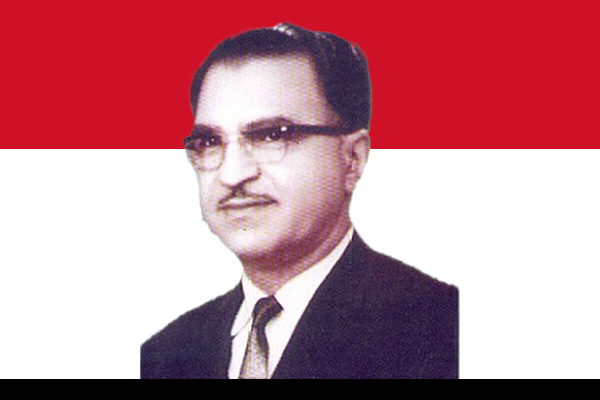
Early Life and Education
Abdul Rahman al-Bazzaz was born in Baghdad in 1913. He grew up in an environment that valued education and public service, which shaped his intellectual development. He pursued higher education in law and quickly distinguished himself as a talented jurist. Al-Bazzaz later continued his studies abroad, gaining exposure to international legal systems and political thought. This academic foundation helped him develop a strong belief in constitutional order, rule of law, and responsible governance.
Academic and Diplomatic Career
Before entering high-level politics, al-Bazzaz built a respected career as a professor of law and an author of legal and political studies. His scholarly work focused on international law and Arab political identity, earning him recognition across the Arab world. In addition to academia, he served Iraq in diplomatic roles, including as a representative to international organizations. These experiences strengthened his commitment to diplomacy over confrontation and reform over repression.
Rise to the Premiership
Al-Bazzaz became Prime Minister of Iraq in 1965 during the presidency of Abdul Salam Arif. At a time when Iraq was struggling with internal divisions, Kurdish unrest, and the dominance of the military in politics, his appointment was notable because he was a civilian rather than a military officer. His selection raised hopes among intellectuals and reformists that Iraq might move toward a more democratic and lawful political system.
Policies and Reform Efforts
As Prime Minister, Abdul Rahman al-Bazzaz worked to restore constitutional life and reduce the influence of the military in governance. He supported freedom of the press, political dialogue, and legal reforms aimed at strengthening state institutions. One of his most significant initiatives was his attempt to resolve the Kurdish issue through negotiation rather than force, proposing autonomy and peaceful coexistence within the Iraqi state.
Al-Bazzaz also emphasized Arab unity and constructive relations with neighboring countries, while advocating a balanced foreign policy. His leadership style relied on persuasion, legal reasoning, and gradual reform rather than coercion.
Challenges and Opposition
Despite his vision, al-Bazzaz faced strong resistance from powerful military figures and conservative political forces. His civilian background and reformist agenda threatened entrenched interests that benefited from authoritarian rule. Internal opposition, combined with ongoing political instability, weakened his position. Ultimately, his inability to fully control the military limited the scope of his reforms.
Removal from Office and Later Life
In 1966, Abdul Rahman al-Bazzaz was removed from office following political shifts within the ruling establishment. After leaving the premiership, he gradually withdrew from active politics. In later years, he faced marginalization and hardship, reflecting the broader decline of civilian political influence in Iraq during that era.
Legacy and Historical Significance
Abdul Rahman al-Bazzaz is remembered as one of Iraq’s most principled and intellectual prime ministers. His tenure symbolized a rare moment when civilian leadership attempted to steer the country toward constitutional governance and national reconciliation. Although his reforms were short-lived, his ideas continue to represent an alternative vision for Iraqi politics—one based on law, dialogue, and moderation rather than force.
Conclusion
Prime Minister Abdul Rahman al-Bazzaz remains a respected figure in Iraqi history for his integrity, intellect, and commitment to reform. His leadership demonstrated that even in times of turmoil, principled civilian governance was possible, leaving behind a legacy of hope for constitutional rule in Iraq.