Mr. Alihan Smaiylov
In Office: 11 January 2022 – 5 February 2024
Political Party: Amanat
Home State: Astana
Lifespan: born 1972
Country: Kazakhstan
Image credits available here.
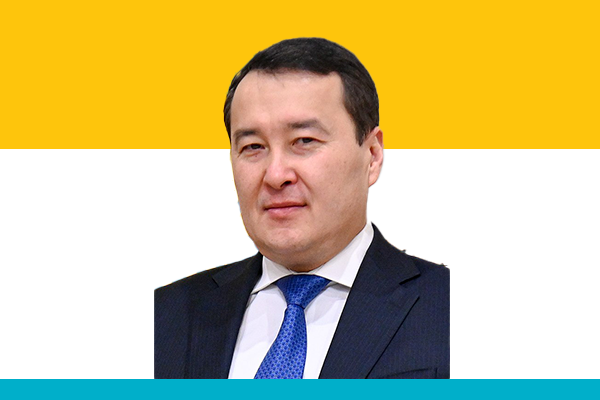
Early Life and Education
Älihan Smaiylov was born on 23 January 1972 in Alma-Ata (now Almaty), Kazakhstan. From a young age, he demonstrated a strong aptitude for economics and leadership. Smaiylov pursued higher education at Moscow State University, where he graduated with a degree in economics. His academic excellence laid the foundation for a career that would later impact Kazakhstan’s financial and political landscape.
Early Career in Public Service
Smaiylov began his career in public service in the mid-1990s. Initially, he worked in various capacities in the Ministry of Finance, where he focused on budget planning and financial regulation. His analytical skills and ability to navigate complex economic policies quickly earned him recognition among Kazakhstan’s top officials. Over time, he became a trusted advisor in economic and fiscal matters, positioning himself as a key figure in shaping national financial policies.
Rise to Prominence
In 2013, Smaiylov was appointed as First Deputy Prime Minister, a role in which he coordinated multiple government programs aimed at economic growth and development. He actively contributed to policies promoting investment, public-private partnerships, and infrastructure development. During this period, Smaiylov gained a reputation for efficiency, transparency, and pragmatic decision-making.
Appointment as Prime Minister
Älihan Smaiylov assumed office as the Prime Minister of Kazakhstan on 11 January 2022. His appointment came at a crucial time for the country, as Kazakhstan faced both economic challenges and social demands for reform. From the beginning, Smaiylov emphasized stability, economic modernization, and responsive governance. His leadership approach focuses on balancing fiscal discipline with social welfare, ensuring that Kazakhstan continues to develop sustainably while addressing the needs of its citizens.
Economic Policies and Achievements
As Prime Minister, Smaiylov has prioritized economic diversification to reduce Kazakhstan’s reliance on oil and gas revenues. He has advocated for the growth of sectors such as digital technology, manufacturing, and renewable energy. Under his leadership, the government launched programs to support small and medium-sized enterprises, improve foreign investment, and strengthen the financial sector. Smaiylov’s policies aim to create jobs, boost innovation, and integrate Kazakhstan more deeply into the global economy.
Social and Infrastructure Reforms
Smaiylov has also placed significant emphasis on social reforms and infrastructure development. His administration has implemented policies to improve healthcare, education, and housing for citizens. Infrastructure projects, including road construction, modernization of public transport, and urban development, reflect his commitment to improving living standards and enhancing connectivity across the country.
International Engagement
On the international stage, Älihan Smaiylov represents Kazakhstan with a focus on economic diplomacy and strategic partnerships. He has engaged with regional organizations, neighboring countries, and global investors to foster trade, cooperation, and development initiatives. His approach combines pragmatism with a vision for positioning Kazakhstan as a stable and economically vibrant nation in Central Asia.
Vision for the Future
Prime Minister Smaiylov envisions a modern Kazakhstan that balances economic growth with social progress. His long-term strategy emphasizes technological innovation, sustainable development, and the enhancement of public services. Through transparent governance and collaborative policymaking, Smaiylov continues to drive reforms that aim to secure Kazakhstan’s prosperity and stability for future generations.
Älihan Smaiylov’s journey from an economist to the Prime Minister of Kazakhstan illustrates a career dedicated to public service, economic reform, and national development. His leadership style reflects pragmatism, commitment, and a vision for a forward-looking, resilient Kazakhstan.