KAZAKHSTAN
Kazakhstan Flag
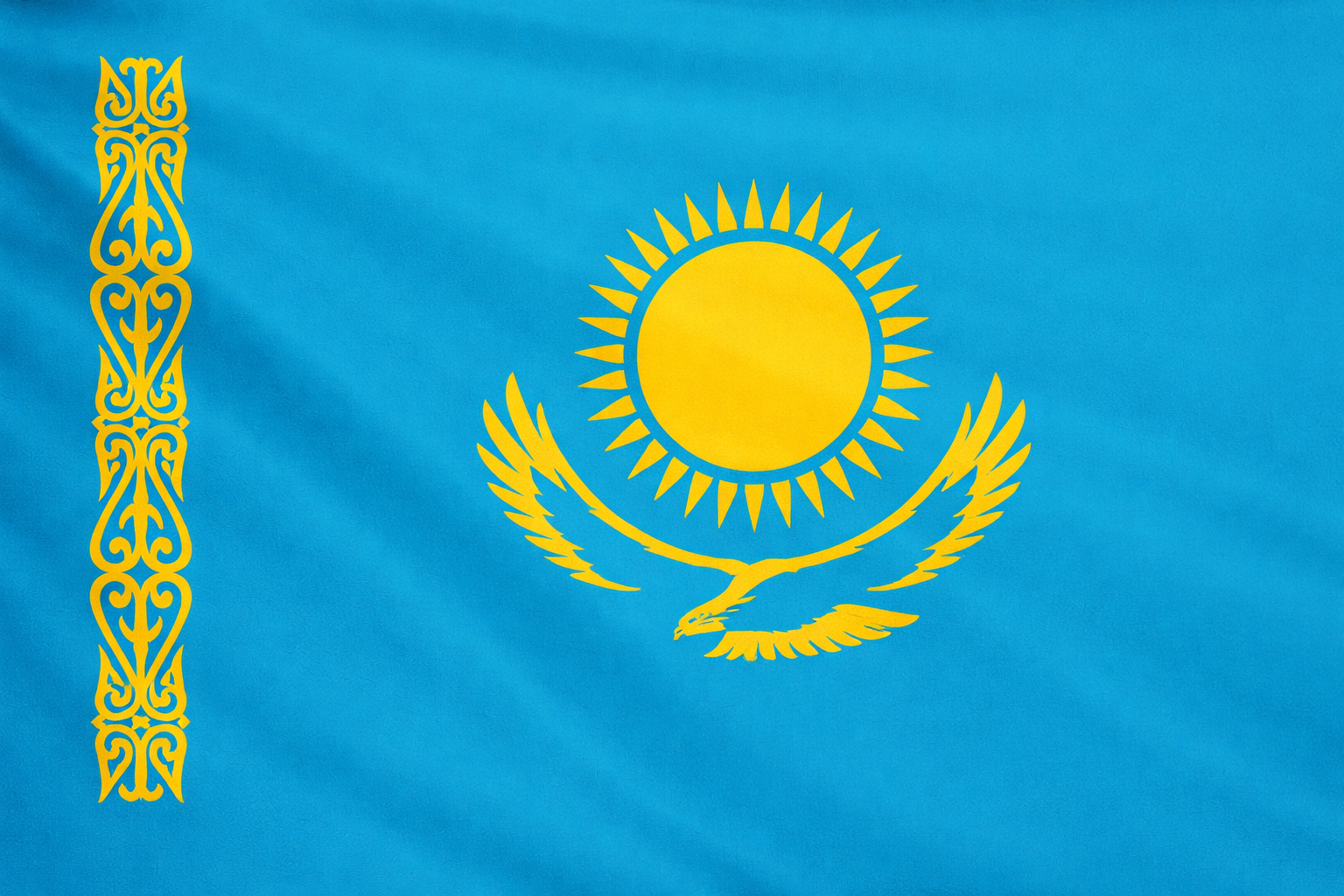
The flag of Kazakhstan features a sky-blue field that symbolizes peace, unity, and the vast sky. At the center appears a golden sun with 32 rays, representing life, energy, and abundance. Beneath the sun, a soaring golden steppe eagle reflects freedom, strength, and the nation’s future aspirations. Along the hoist side, a vertical golden ornamental pattern known as koshkar-muiz highlights Kazakhstan’s rich cultural heritage and traditional art.
Introduction
Kazakhstan is the world’s largest landlocked country and the ninth-largest nation by area. Located in Central Asia and partly in Eastern Europe, it connects East and West through geography, history, and culture. With vast steppes, rich natural resources, and a rapidly developing economy, Kazakhstan plays a significant role in regional and global affairs.
Geography and Natural Features
Kazakhstan covers a diverse landscape that includes endless grasslands, deserts, mountains, and lakes. The Kazakh Steppe dominates much of the country and has shaped the traditional nomadic lifestyle of its people. In the southeast, the Tian Shan and Altai mountain ranges add dramatic scenery, while the Caspian Sea borders the country to the west. Major rivers such as the Irtysh, Ural, and Syr Darya support agriculture and settlements. Kazakhstan also possesses abundant natural resources, including oil, natural gas, uranium, and minerals, which form the backbone of its economy.
History and Independence
The history of Kazakhstan stretches back thousands of years, influenced by nomadic tribes, the Silk Road, and powerful empires. In the 19th century, the region became part of the Russian Empire and later the Soviet Union. Kazakhstan declared independence in 1991 following the collapse of the USSR. Since independence, the country has focused on nation-building, economic reforms, and establishing its identity on the international stage.
Political System and Governance
Kazakhstan is a republic with a strong presidential system. The capital city is Astana, known for its modern architecture and planned urban development, while Almaty remains the largest city and cultural center. The government has emphasized political stability, gradual reforms, and foreign policy balance, maintaining relations with major global powers and neighboring countries.
Economy and Development
Kazakhstan has the strongest economy in Central Asia. Its growth largely depends on energy exports, mining, and heavy industry. Agriculture also plays an important role, especially wheat and livestock production. In recent years, Kazakhstan has invested in infrastructure, education, and digitalization to diversify its economy and reduce dependence on natural resources.
Culture and Society
Kazakh culture reflects a blend of nomadic traditions and modern influences. Hospitality, respect for elders, and strong family ties remain central values. The population is ethnically diverse, with Kazakhs, Russians, Uzbeks, Ukrainians, and others living together. Kazakh is the state language, while Russian is widely spoken. Traditional music, cuisine, and festivals continue to be celebrated alongside contemporary lifestyles.
Conclusion
Kazakhstan stands as a bridge between tradition and modernization. With its strategic location, rich resources, and cultural heritage, the country continues to shape its future as a key nation in Central Asia and an emerging player on the global stage.