Mr. Souvanna Phouma
In Office: 21 November 1951 – 20 October 1954
21 March 1956 – 13 December 1960
Political Party: National Progressive Party
Home State: Luang Prabang
Lifespan: 1901–1984
Country: Laos
Image credits available here.
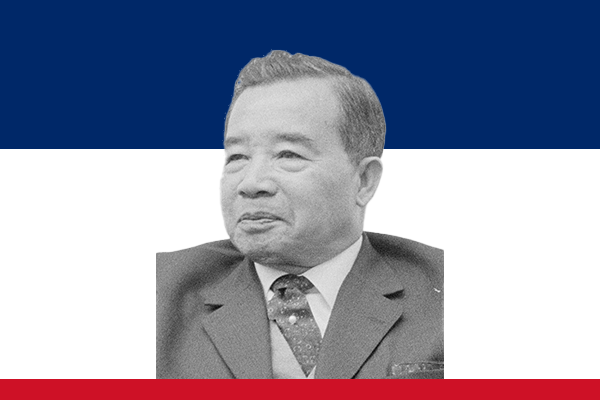
Early Life and Education
Souvanna Phouma was born on 7 October 1901 in Luang Prabang into the Lao royal family. His background gave him early exposure to leadership and governance. He pursued higher education in France, where he studied civil engineering. This Western education shaped his worldview and influenced his belief in modernization, infrastructure development, and balanced diplomacy. Unlike many traditional leaders of his time, he believed that Laos could progress by adopting modern administrative systems while preserving its cultural identity.
Entry into Politics
After returning to Laos, Souvanna Phouma entered public service and gradually moved into politics. He became involved in national affairs during the final years of French colonial rule. As Laos moved toward independence, he emerged as a key leader who sought to guide the country through a peaceful transition. His technical background and calm personality earned him respect among both domestic leaders and foreign observers.
Tenure as Prime Minister
Souvanna Phouma served multiple terms as Prime Minister between 1951 and 1975. His leadership coincided with one of the most unstable periods in Lao history. The country faced internal divisions among royalists, neutralists, and communist forces, as well as external pressure from global Cold War powers.
As Prime Minister, Souvanna Phouma consistently promoted a policy of neutrality. He believed Laos should avoid aligning fully with either Western or communist blocs. This position aimed to protect national sovereignty and reduce foreign interference. However, maintaining neutrality proved extremely difficult due to regional conflicts and internal power struggles.
Neutralism and the Cold War
Souvanna Phouma is best remembered for his neutralist ideology. During the Cold War, Laos became a strategic battleground because of its location in Southeast Asia. He worked tirelessly to present Laos as an independent and neutral nation on the international stage. His efforts included forming coalition governments that attempted to balance rival factions.
Although these coalitions were fragile, they represented a genuine attempt to achieve national reconciliation. Souvanna Phouma believed that compromise was essential for peace, even when it meant negotiating with ideological opponents.
Challenges and Decline of Influence
Despite his dedication, Souvanna Phouma faced continuous challenges. Coups, civil war, and foreign intervention weakened his authority. Over time, the communist Pathet Lao gained strength, while neutralist and royalist forces lost influence. By the mid-1970s, the political balance shifted decisively.
In 1975, when the monarchy was abolished and the Lao People’s Democratic Republic was established, Souvanna Phouma stepped away from active political power. His long political career ended as Laos entered a new ideological era.
Legacy
Souvanna Phouma remains a significant figure in Lao history. He symbolized moderation, diplomacy, and the hope for peaceful coexistence during a time of extreme polarization. While his neutralist vision ultimately failed to prevent conflict, it demonstrated a sincere effort to protect national unity and independence. His life reflects the complexities faced by small nations caught between powerful global forces.