LAOS
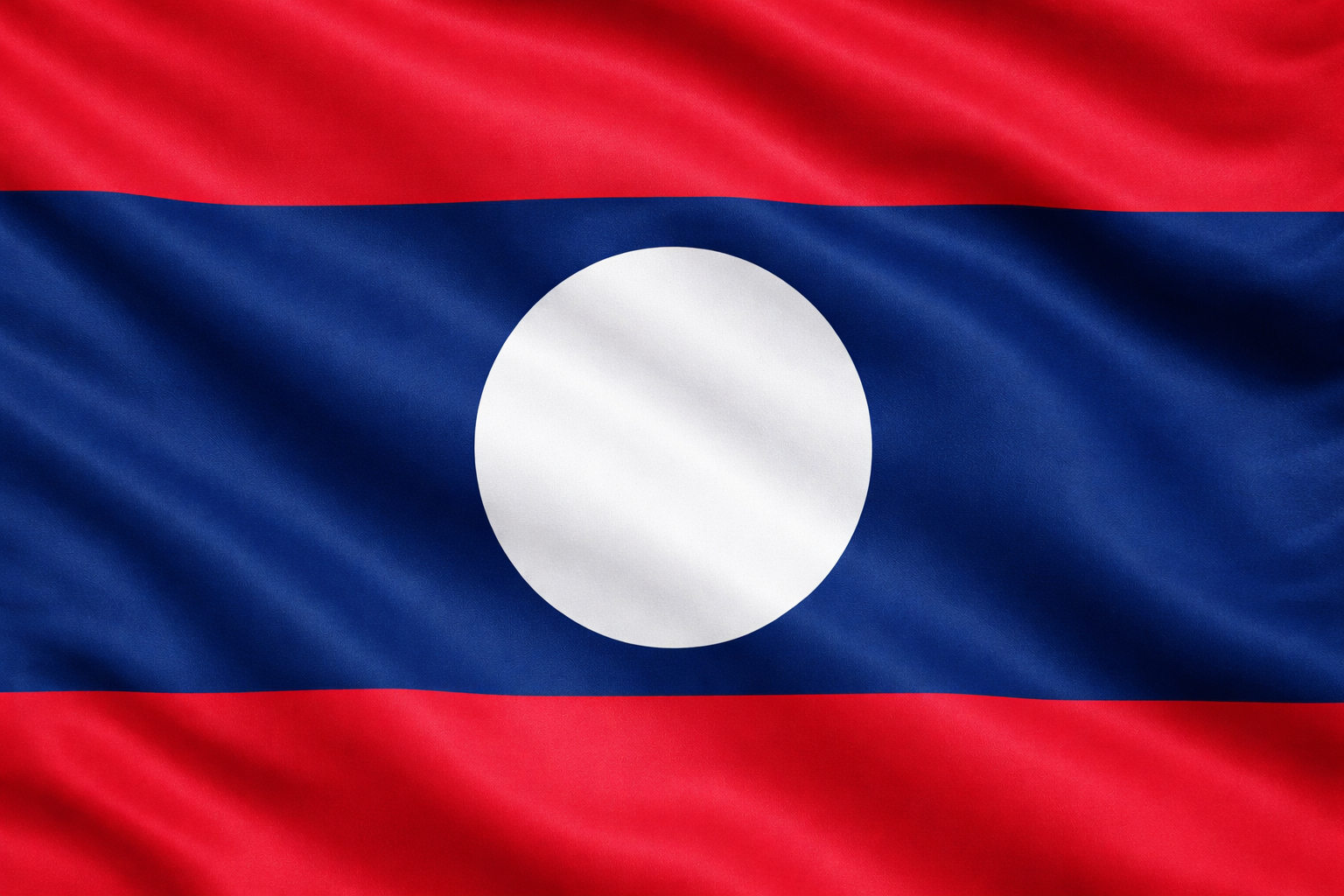
Laos Flag
The flag of Laos features three horizontal stripes: red at the top and bottom, and a wider blue stripe in the center. In the middle of the blue band is a white circle. The red stripes symbolize the blood shed for independence, while the blue represents the Mekong River and prosperity. The white circle stands for national unity and the bright future of the Lao people. This flag was officially adopted in 1975.
Laos: A Comprehensive Country Overview
Laos, officially known as the Lao People’s Democratic Republic (Lao PDR), is a landlocked country located in Southeast Asia. It is bordered by China to the north, Vietnam to the east, Cambodia to the south, Thailand to the west, and Myanmar to the northwest. With a rich cultural heritage, diverse ethnic communities, and a strong connection to nature, Laos presents a unique identity within the region.
Geography and Climate
Laos is dominated by mountainous terrain and dense forests, with the Mekong River playing a central role in the country’s geography and daily life. The river flows along much of the western border and supports agriculture, transportation, and fishing. The climate of Laos is tropical monsoon, characterized by a rainy season from May to October and a dry season from November to April. This climate supports rice cultivation, which is the staple food and main agricultural product of the country.
History and Political System
Laos has a long history influenced by ancient kingdoms, colonial rule, and modern political change. It was once part of the Lan Xang Kingdom, known as the “Land of a Million Elephants.” In the late 19th century, Laos became part of French Indochina. After World War II and years of struggle, the country became fully independent in 1953. In 1975, Laos adopted a socialist political system and became a one-party state governed by the Lao People’s Revolutionary Party.
Economy and Development
The economy of Laos is primarily based on agriculture, hydropower, mining, and forestry. In recent years, hydropower development has become a key driver of economic growth, earning Laos the title of the “Battery of Southeast Asia.” Tourism also plays an important role, with visitors attracted to the country’s natural beauty, temples, and traditional lifestyle. Despite steady progress, Laos remains a developing nation and continues to face challenges related to infrastructure, education, and healthcare.
Culture and Society
Laotian culture is deeply influenced by Buddhism, which shapes daily life, festivals, and social values. The country is home to multiple ethnic groups, each with its own language, customs, and traditional dress. Festivals such as Boun Pi Mai (Lao New Year) reflect the importance of community, respect, and spiritual beliefs. Traditional music, dance, and handicrafts remain an essential part of cultural expression in Laos.
Education and Language
The official language of Laos is Lao, and education is steadily expanding across the country. While access to education has improved, rural and remote areas still face limitations. The government continues to focus on improving literacy and skill development to support long-term national growth.
Conclusion
Laos is a nation of natural beauty, cultural depth, and historical significance. As it continues on the path of development, the country balances modernization with the preservation of its traditions and environment, making it a distinctive and meaningful part of Southeast Asia.