CAMBODIA
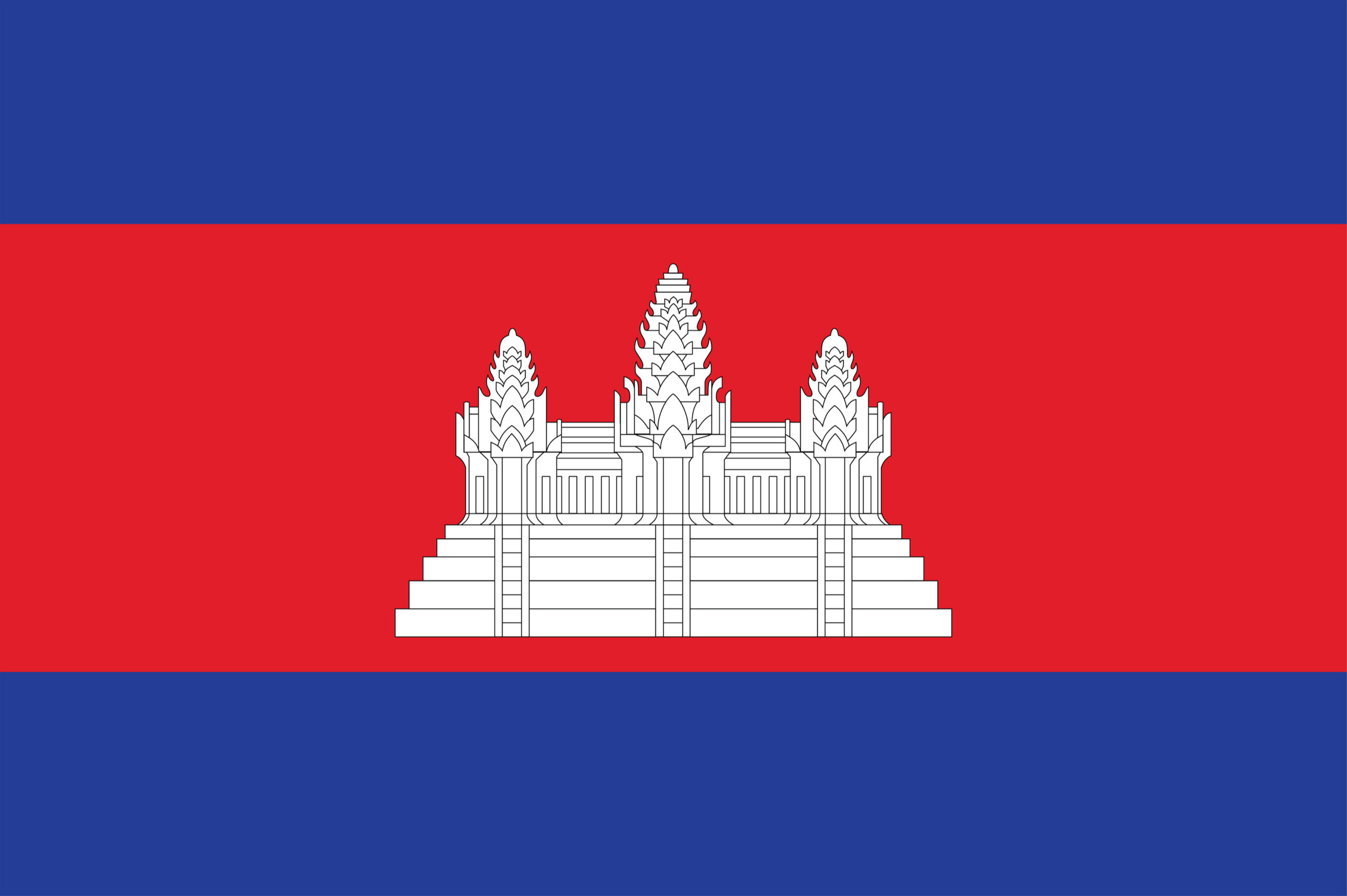
Cambodia Flag
The national flag of Cambodia features three horizontal bands: blue at the top and bottom, and a wider red band in the center. At the heart of the red band stands Angkor Wat in white, symbolizing heritage, religion, and national pride. The blue represents royalty, cooperation, and brotherhood, while red signifies bravery and strength. Cambodia’s flag is unique as it is the only national flag to depict a historic monument, reflecting the nation’s rich cultural legacy.
Introduction
Cambodia is a Southeast Asian nation known for its rich history, cultural depth, and remarkable resilience. Located in the southern portion of the Indochina Peninsula, Cambodia shares borders with Thailand, Laos, and Vietnam, while the Gulf of Thailand lies to its southwest. The country blends ancient traditions with gradual modernization, making it an important cultural and historical center in the region.
Geography and Climate
Cambodia features diverse geography, including fertile plains, rivers, mountains, and coastal areas. The Mekong River is the lifeline of the country, supporting agriculture and daily life. The Tonlé Sap Lake, the largest freshwater lake in Southeast Asia, plays a crucial role in fishing and food security. Cambodia experiences a tropical monsoon climate with two main seasons: the rainy season from May to October and the dry season from November to April.
Historical Background
Cambodia’s history dates back thousands of years, with the Khmer Empire standing as its most glorious period. From the 9th to the 15th century, the empire built Angkor, one of the world’s greatest archaeological complexes. In the 20th century, Cambodia faced immense hardship during civil war and the Khmer Rouge regime, which deeply affected the nation. Despite these challenges, Cambodia has worked steadily toward peace, reconstruction, and national unity.
Government and Politics
Cambodia functions as a constitutional monarchy with a king as the head of state and an elected government managing daily administration. The political system includes a prime minister and a National Assembly. Over recent decades, the country has focused on maintaining stability, strengthening institutions, and promoting national development.
Economy and Development
Cambodia’s economy has shown steady growth, driven by agriculture, garment manufacturing, construction, and tourism. Rice remains the staple crop and a major export product. Tourism, especially visits to Angkor Wat, significantly contributes to national income. In recent years, Cambodia has also attracted foreign investment, supporting infrastructure development and urban expansion.
Culture and Society
Cambodian culture is deeply rooted in Buddhism, which influences daily life, festivals, and social values. Traditional dance, music, and art reflect centuries-old customs. The Khmer language unites the population, while family and community play a central role in society. Cambodian cuisine, known for its balanced flavors, is an important part of cultural identity.
Conclusion
Cambodia stands as a nation shaped by history, tradition, and resilience. While honoring its ancient heritage, the country continues to move forward with economic growth and social development. Cambodia’s journey reflects both the challenges it has endured and the hope that guides its future.