Mr. Saparmurat Niyazov
In Office: 27 October 1991 – 21 December 2006
Political Party: Democratic Party
Home State: Gypjak
Lifespan: 1940–2006
Country: Turkmenistan
Image credits available here.
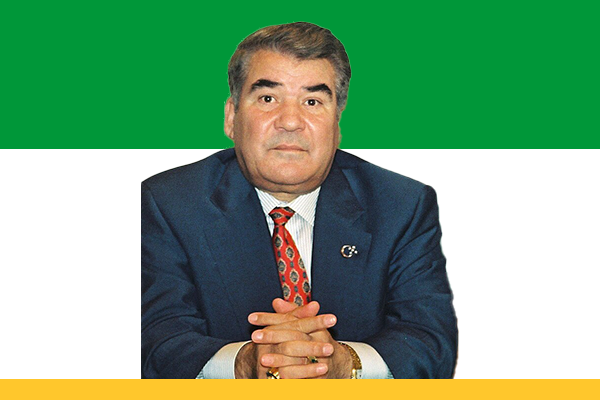
Early Life and Political Rise
Saparmurat Niyazov was born on February 19, 1940, in Ashgabat, then part of the Turkmen Soviet Socialist Republic. Orphaned at a young age after losing his parents during World War II, he grew up in a state orphanage. He later studied engineering in Leningrad and entered politics through the Communist Party of the Soviet Union.
By the 1980s, Niyazov had risen steadily within the party ranks. In 1985, he became the First Secretary of the Communist Party of Turkmenistan. When the Soviet Union began to collapse, Niyazov positioned himself as the central authority in the republic, ensuring continuity of power during the transition.
President of Independent Turkmenistan
Following Turkmenistan’s independence in 1991, Niyazov became the country’s first president. He consolidated power rapidly, eliminating political opposition and establishing a one-party system. Elections and referendums consistently extended his rule, and in 1999 he was declared president for life.
Niyazov justified his leadership style as necessary for stability in a newly independent state. Under his presidency, Turkmenistan remained officially neutral in foreign affairs and avoided involvement in regional conflicts.
Personality Cult and Governance
One of the most notable aspects of Niyazov’s rule was the extensive personality cult surrounding him. His image appeared on banknotes, buildings, and monuments across the country. Statues of Niyazov were erected in prominent locations, including a famous gold-plated rotating statue in Ashgabat.
He renamed months of the year and days of the week after himself, his family members, and national concepts. His book, Ruhnama, became mandatory reading in schools and institutions and was presented as a moral and spiritual guide for the nation.
Domestic Policies and Social Impact
Niyazov maintained strict control over the media, education, and religious institutions. Independent journalism was not permitted, and public dissent was harshly suppressed. While Turkmenistan possesses large natural gas reserves, the benefits were unevenly distributed.
At the same time, the government provided certain social benefits such as free gas, water, and electricity for citizens. These measures helped maintain public support, particularly in rural areas, but long-term economic development remained limited due to isolation and centralized decision-making.
Foreign Relations
Internationally, Niyazov pursued a policy of permanent neutrality, which was recognized by the United Nations. Turkmenistan maintained limited engagement with major global powers, focusing mainly on energy exports. While this policy kept the country out of major conflicts, it also contributed to diplomatic isolation.
Death and Legacy
Saparmurat Niyazov died suddenly on December 21, 2006. His death marked the end of an era in Turkmenistan’s history. Although some of his policies and symbols were later reversed, his influence on the country’s political culture remains significant.
Niyazov’s legacy is complex. Supporters credit him with preserving national unity and sovereignty, while critics highlight authoritarianism, human rights abuses, and economic mismanagement. His presidency continues to shape discussions about leadership and governance in Turkmenistan.