TURKMENISTAN
Turkmenistan Flag
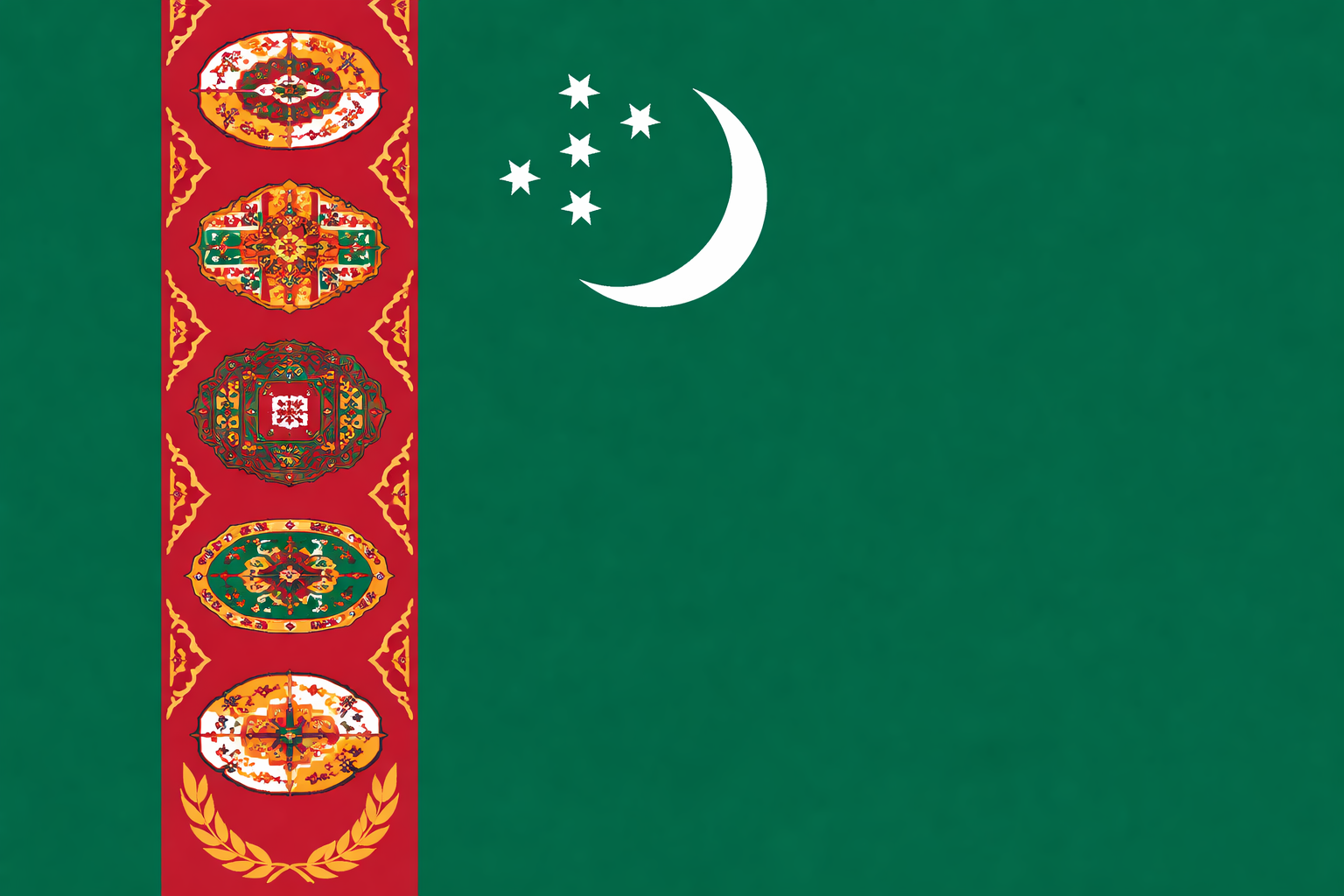
The flag of Turkmenistan features a deep green field symbolizing Islam and prosperity. Along the hoist runs a vertical red stripe bearing five traditional carpet guls, representing the nation’s major tribes and rich weaving heritage. Olive branches cross beneath the guls, reflecting Turkmenistan’s policy of permanent neutrality. To the fly side appears a white crescent moon and five stars, signifying a bright future and the country’s regions. The design blends history, culture, and national identity and symbolism worldwide today globally.
Turkmenistan: Country Overview
Turkmenistan is a landlocked country located in Central Asia, bordered by Kazakhstan to the northwest, Uzbekistan to the north and east, Afghanistan to the southeast, Iran to the south, and the Caspian Sea to the west. It occupies a strategic position along historic trade routes that once connected East and West. Ashgabat is the capital and largest city, known for its distinctive white-marble architecture and wide avenues.
Geography and Climate
A large part of Turkmenistan is covered by the Karakum Desert, one of the largest sand deserts in the world. The country has an arid to semi-arid climate, with extremely hot summers and cold winters. Rainfall is limited, making water management a crucial national issue. The Caspian Sea coastline provides access to maritime resources and plays an important role in energy transportation and regional trade.
History and Independence
Turkmenistan has a long and rich history influenced by Persian, Turkic, and Islamic civilizations. The region was part of the Silk Road, which contributed to cultural exchange and economic development. In the 19th century, it became part of the Russian Empire and later the Soviet Union. Turkmenistan gained independence in 1991 following the dissolution of the USSR and established itself as a sovereign nation with a unique political and social system.
Political System
Turkmenistan is a presidential republic with a highly centralized form of governance. The President serves as both head of state and government. The political structure emphasizes stability, national unity, and state control over key sectors. The country follows a policy of “permanent neutrality,” officially recognized by the United Nations, which guides its foreign relations and limits military alliances.
Economy and Natural Resources
The economy of Turkmenistan is heavily dependent on its vast natural gas reserves, among the largest in the world. Natural gas exports form the backbone of national income, along with oil production and petrochemicals. Agriculture also plays a role, particularly the cultivation of cotton and wheat. The government maintains strong control over economic planning and major industries, aiming for self-sufficiency and gradual modernization.
Culture and Society
Turkmen culture is deeply rooted in traditions, tribal heritage, and Islamic values. Carpet weaving is one of the most famous cultural symbols of the country and is internationally recognized for its intricate designs. Traditional music, poetry, and horse breeding—especially the Akhal-Teke horse—are sources of national pride. The Turkmen language is the official language, and Russian is also widely understood.
Conclusion
Turkmenistan is a country defined by its desert landscape, energy wealth, and strong sense of national identity. With its policy of neutrality, rich cultural heritage, and strategic location in Central Asia, Turkmenistan continues to follow a distinct path in regional and international affairs.