PRESIDENTS OF TURKMENISTAN
Presidents of Turkmenistan
Turkmenistan, a Central Asian nation that emerged as an independent state after the dissolution of the Soviet Union in 1991, has had a limited number of presidents. Since independence, the country’s political leadership has been highly centralized, with strong presidential authority shaping governance, national identity, and foreign policy. The presidency in Turkmenistan has played a decisive role in defining the country’s political system and state ideology.
LIST OF PRESIDENTS OF TURKMENISTAN
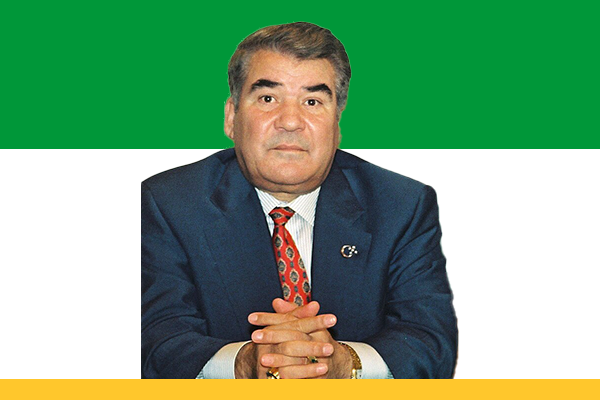
Saparmurat Niyazov (1991–2006)
Saparmurat Niyazov was the first President of Turkmenistan and remains one of the most influential figures in the country’s history. Originally the leader of the Turkmen Communist Party, he became president when Turkmenistan gained independence in 1991. Niyazov later adopted the title “Turkmenbashi,” meaning “Leader of the Turkmen,” reflecting the personality cult that developed during his rule.
His presidency was marked by strict political control, limited political freedoms, and the absence of genuine opposition. Niyazov introduced the Ruhnama, a spiritual and ideological book he authored, which became compulsory reading in schools and government institutions. Despite international criticism for authoritarian practices, his government invested heavily in grand infrastructure projects and promoted a policy of permanent neutrality in foreign affairs. Niyazov remained president until his death in December 2006.
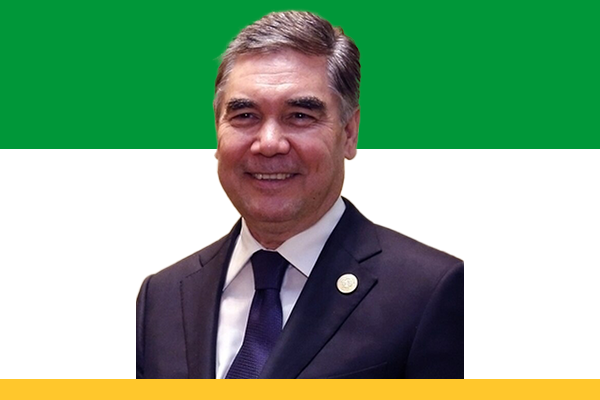
Gurbanguly Berdimuhamedow (2007–2022)
Following Niyazov’s death, Gurbanguly Berdimuhamedow assumed office and was formally elected president in 2007. His leadership initially signaled cautious reforms, including changes in education and healthcare policies. Some of the more extreme aspects of Niyazov’s personality cult were reduced, though strong centralized control remained a defining feature of governance.
Berdimuhamedow focused on economic development driven by Turkmenistan’s vast natural gas reserves. He promoted modernization projects, improved diplomatic relations with neighboring countries, and continued the policy of neutrality. Over time, however, his presidency also developed its own elements of glorified leadership, with extensive state media coverage highlighting his activities. He served as president until 2022.
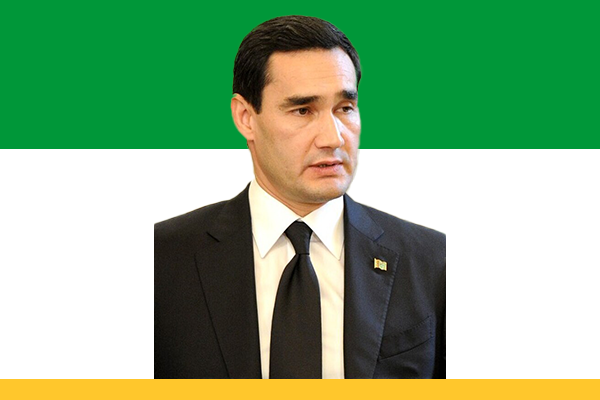
Serdar Berdimuhamedow (2022–Present)
In 2022, Serdar Berdimuhamedow, the son of Gurbanguly Berdimuhamedow, became the President of Turkmenistan, marking the first hereditary-style transfer of power in the country’s history. His election represented generational change while maintaining continuity in political direction.
As president, Serdar Berdimuhamedow has emphasized stability, economic development, and technological modernization. He continues to uphold Turkmenistan’s neutral foreign policy and strong state control over political life. While he represents a younger leadership, the overall governance structure and centralized authority remain largely unchanged.
Conclusion
Since independence, Turkmenistan has had three presidents, each shaping the nation in distinct yet interconnected ways. From Niyazov’s highly personalized rule to the Berdimuhamedow era’s focus on continuity and stability, the presidency has remained the central institution in Turkmenistan’s political system.