Mr. Gurbanguly Berdimuhamedow
In Office: 21 December 2006 – 19 March 2022
Political Party: Democratic Party
Home State: Gypjak
Lifespan: born 1957
Country: Turkmenistan
Image credits available here.
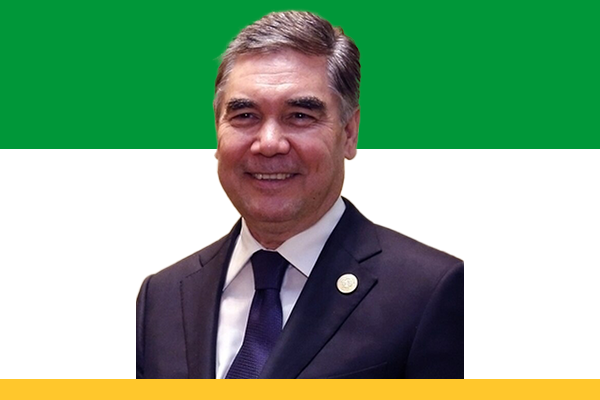
Early Life and Education
Gurbanguly Berdimuhamedow was born on June 29, 1957, in Babarap, a village near Ashgabat in the Turkmen Soviet Socialist Republic. He was trained as a medical professional and graduated from the Turkmen State Medical Institute. Before entering high-level politics, he worked as a dentist and later held academic and administrative roles in the medical sector. His professional background in healthcare influenced his early political career and public image as a technocrat rather than a traditional party ideologue.
Rise to Power
Berdimuhamedow rose to national prominence during the presidency of Saparmurat Niyazov, Turkmenistan’s first leader after independence. He served as Minister of Health and Medical Industry and later as Deputy Prime Minister. Following Niyazov’s death in December 2006, Berdimuhamedow emerged as a consensus candidate among the political elite. He won the presidential election in February 2007, officially beginning his long tenure as head of state.
Presidency and Domestic Policies
As president, Gurbanguly Berdimuhamedow maintained a strong presidential system with centralized authority. While he preserved many structural features of his predecessor’s rule, he introduced limited reforms in education, healthcare, and administration. He reopened libraries and educational institutions, revised some school curricula, and emphasized professional training in science and medicine.
Berdimuhamedow also promoted large-scale infrastructure projects, including new government buildings, highways, and urban development in Ashgabat. His administration placed significant emphasis on state symbolism, national pride, and cultural heritage. The image of the president was widely present in public life, reinforcing a personality-centered political culture.
Economic and Energy Policy
Turkmenistan’s economy under Berdimuhamedow remained heavily dependent on natural gas exports. His government focused on diversifying export routes and strengthening energy cooperation with neighboring countries. Major pipeline projects and long-term gas supply agreements became central to economic policy. At the same time, the state retained tight control over key industries, and economic liberalization remained limited.
Foreign Policy and Neutrality
One of the defining aspects of Berdimuhamedow’s presidency was Turkmenistan’s policy of permanent neutrality. He consistently emphasized non-alignment and peaceful cooperation in international affairs. Turkmenistan maintained balanced relations with major regional powers while avoiding military alliances. Berdimuhamedow often presented the country as a mediator and advocate for regional stability, particularly in Central Asia.
Transition of Power and Later Role
In 2022, Gurbanguly Berdimuhamedow stepped down as president, and his son, Serdar Berdimuhamedow, was elected as his successor. This marked the first familial transfer of power in Turkmenistan’s history. After leaving the presidency, Gurbanguly Berdimuhamedow assumed a leading role in the upper chamber of parliament, allowing him to remain influential in state affairs.
Legacy
Gurbanguly Berdimuhamedow’s legacy is defined by political continuity, strong state control, and an emphasis on sovereignty and neutrality. Supporters credit him with stability and development, while critics point to limited political freedoms and centralized governance. Regardless of perspective, his impact on Turkmenistan’s modern political landscape remains significant.