Mr. Serdar Berdimuhamedow
Assumed Office: 19 March 2022 – Incumbent
Political Party: Democratic Party
Home State: Ashgabat
Lifespan: born 1981
Country: Turkmenistan
Image credits available here.
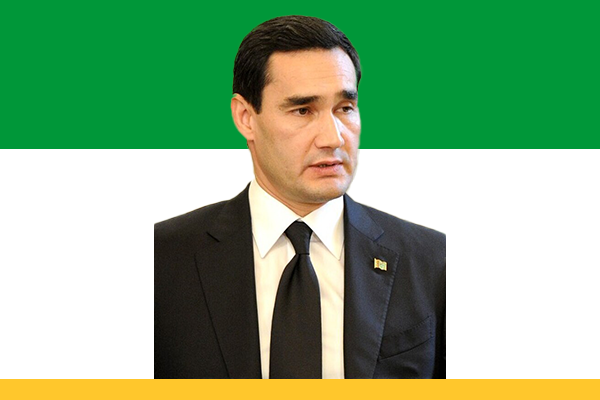
Early Life and Education
Serdar Gurbangulyyevich Berdimuhamedow was born on 22 September 1981 in Ashgabat, the capital of Turkmenistan. Coming from a politically influential family, he received a strong formal education that prepared him for public service. He studied at the Turkmen Agricultural University, later expanding his academic background through studies and training abroad. His education in international relations and economics helped shape his technocratic image and provided him with exposure to administrative and diplomatic practices.
Political Career Before the Presidency
Before becoming president, Serdar Berdimuhamedow held several key government positions that steadily built his political profile. He served in the Ministry of Foreign Affairs, worked as a diplomat, and later became a member of parliament. He also held posts as governor (hakim) of Ahal Province and as a deputy prime minister. These roles allowed him to gain experience in domestic administration, regional governance, and economic management, particularly in sectors such as agriculture and industry.
Rise to the Presidency
Serdar Berdimuhamedow was elected president in February 2022 following early elections. His candidacy was widely viewed as a continuation of the existing political order, with strong institutional support. After officially taking office, he emphasized themes of stability, unity, and gradual reform. His leadership transition was presented domestically as a smooth and orderly process, reinforcing the image of continuity in governance.
Domestic Policies and Governance
As president, Serdar Berdimuhamedow has focused on maintaining political stability while promoting state-led development. His administration has continued large-scale infrastructure projects, urban development initiatives, and social welfare programs. Economic diversification remains a stated priority, with attention given to reducing dependence on natural gas exports by developing agriculture, manufacturing, and transport sectors. Governance under his leadership remains centralized, with limited political pluralism and strong state oversight.
Foreign Policy Approach
In foreign affairs, President Berdimuhamedow has upheld Turkmenistan’s long-standing policy of permanent neutrality. He has sought balanced relations with neighboring Central Asian states, major regional powers, and international organizations. His foreign policy emphasizes economic cooperation, energy diplomacy, and regional stability, while avoiding military alliances or confrontational positions. This cautious and pragmatic approach reflects continuity with previous administrations.
Leadership Style and Public Image
Serdar Berdimuhamedow is often portrayed as a reserved and disciplined leader, contrasting with the more charismatic style of his father. His public appearances highlight professionalism, technological development, and youth engagement. The government-controlled media emphasizes his role as a modernizing figure committed to national progress while respecting traditional values.
Conclusion
President Serdar Berdimuhamedow’s tenure symbolizes a generational shift within a firmly established political system. While his presidency has largely continued existing policies and governance structures, it also reflects an effort to project modernization and efficiency. As Turkmenistan navigates economic challenges and regional dynamics, Serdar Berdimuhamedow’s leadership will play a key role in shaping the country’s future within a framework of stability and continuity.