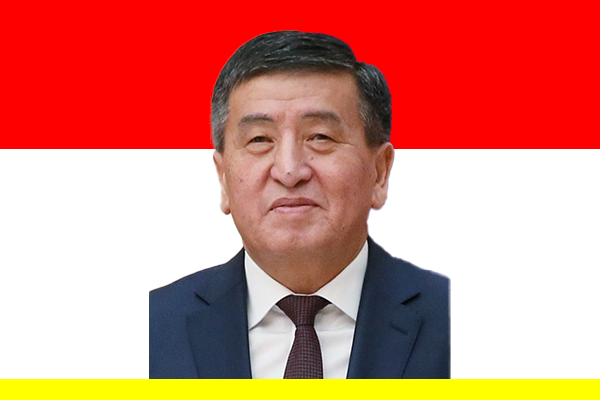
Mr. Sooronbay Jeenbekov
In Office: 13 April 2016 – 22 August 2017
Political Party: Social Democratic Party
Home State: Bishkek
Lifespan: born 1958
Country: Kyrgyzstan
Image credits available here.
Early Life and Education
Sooronbay Jeenbekov was born on November 16, 1958, in the Osh Region of southern Kyrgyzstan. He was raised in a rural environment, which influenced his understanding of agricultural and regional development issues. Jeenbekov pursued higher education in agriculture, graduating from the Kyrgyz Agricultural Institute. His academic background prepared him for a career in public administration, particularly in sectors related to rural development and state management.
Early Political and Administrative Career
Before becoming prime minister, Jeenbekov built a long career in public service. He worked in various administrative roles, including positions in local government and regional administration. Over time, he gained experience as a manager and policymaker, especially in southern Kyrgyzstan.
Jeenbekov later served as governor of Osh Region, where he was responsible for overseeing local administration, economic planning, and social stability. His performance in regional leadership roles strengthened his reputation as a disciplined and reliable administrator, which helped him advance within national politics.
Appointment as Prime Minister
Sooronbay Jeenbekov was appointed Prime Minister of Kyrgyzstan in April 2016. His appointment came during the presidency of Almazbek Atambayev, at a time when the country was seeking political continuity and administrative efficiency. Jeenbekov replaced Temir Sariyev and was seen as a loyal and capable leader who could ensure smooth governance.
As prime minister, Jeenbekov headed the executive branch and was responsible for implementing government policies, coordinating ministries, and managing the national budget. His leadership style emphasized stability, discipline, and cooperation with the presidency.
Key Policies and Governance
During his tenure as prime minister, Jeenbekov focused on economic management, public administration reforms, and social welfare issues. His government worked on improving tax collection, strengthening state institutions, and supporting infrastructure development. Agriculture and regional development remained important areas of attention, reflecting his professional background.
Jeenbekov also oversaw efforts to maintain political stability in a country that had experienced multiple revolutions and frequent changes in leadership. While his term did not introduce dramatic reforms, it was marked by steady governance and continuity.
Resignation and Transition to Presidential Politics
In August 2017, Sooronbay Jeenbekov resigned from the position of prime minister in order to participate in the presidential election. His resignation followed constitutional norms and demonstrated a formal approach to political transition.
Later that year, Jeenbekov won the presidential election and succeeded Almazbek Atambayev, becoming the President of Kyrgyzstan. His experience as prime minister played a crucial role in establishing his credibility as a national leader capable of governing the country.
Legacy as Prime Minister
Although Sooronbay Jeenbekov’s time as prime minister lasted just over a year, it served as an important foundation for his later presidency. His tenure is remembered for administrative stability, loyalty to constitutional processes, and effective coordination with other branches of government.