Mr. Ishenbai Kadyrbekov
In Office: 24 March 2005 – 25 March 2005
Political Party: Independent
Home State: Naryn
Lifespan: born – 1949
Country: Kyrgyzstan
Image credits available here.
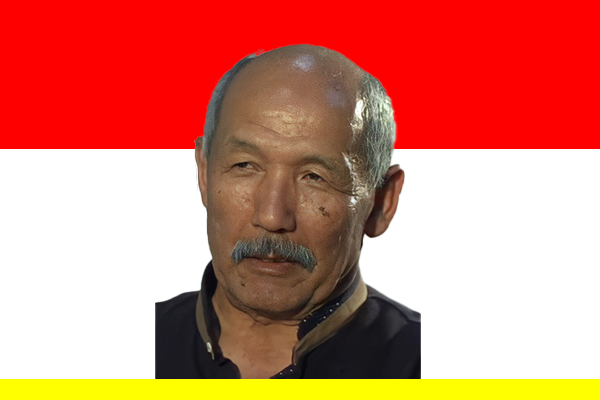
Early Life and Background
Ishenbai Kadyrbekov was born in Kyrgyzstan during the Soviet era, a time when political careers often developed through state administration, party structures, and public service institutions. Like many officials of his generation, he gained experience within governmental and administrative roles before Kyrgyzstan became an independent state in 1991. This background provided him with a working knowledge of governance, bureaucracy, and state management, which later proved valuable during moments of political uncertainty.
Before rising to national prominence, Kadyrbekov built a reputation as a disciplined administrator rather than a charismatic political figure. He was known more for his practical approach to governance than for ideological leadership, which made him a suitable choice during a transitional phase when compromise and order were more important than long-term political vision.
Political Career
Kadyrbekov’s political career unfolded largely behind the scenes, within the structures of the Kyrgyz government. Over the years, he served in various administrative and governmental capacities, gaining trust among political elites and state institutions. His experience in public administration positioned him as a reliable figure during times when institutional continuity was essential.
By the early 2000s, Kyrgyzstan was facing increasing public dissatisfaction over corruption, economic difficulties, and authoritarian governance. These tensions culminated in the Tulip Revolution of March 2005, which led to the overthrow of President Askar Akayev. During this upheaval, the existing political order collapsed rapidly, creating a temporary vacuum of executive authority.
Role as Acting Prime Minister
In March 2005, amid widespread protests and political instability, Ishenbai Kadyrbekov was appointed Acting Prime Minister of Kyrgyzstan. His tenure was extremely short, lasting only a few days, but it occurred at a critical juncture. The primary responsibility of his interim government was to maintain basic state functions, prevent administrative collapse, and ensure that essential services continued to operate.
Kadyrbekov’s leadership during this time focused on restraint and stability. Rather than pursuing major reforms or political initiatives, he emphasized the importance of law, order, and continuity. This approach helped reduce uncertainty while political forces negotiated the formation of a new government under emerging leadership.
Challenges and Limitations
The circumstances surrounding Kadyrbekov’s appointment limited what he could realistically achieve. The country was in the midst of mass demonstrations, power struggles, and rapid political realignments. With no popular mandate and only temporary authority, his role was inherently transitional.
Despite these limitations, Kadyrbekov avoided actions that might have intensified political conflict. His neutral stance allowed different factions to continue negotiations without fearing immediate repression or radical policy shifts. In this sense, his brief premiership served as a bridge between the old regime and the new political order.
Legacy and Historical Significance
Although Ishenbai Kadyrbekov did not leave behind a long list of policies or reforms, his significance lies in the timing of his service. Acting prime ministers in transitional periods often receive little public recognition, yet their role in maintaining state continuity can be crucial.
Kadyrbekov’s tenure illustrates how technocratic leadership can contribute to political stability during crises. He is remembered as a caretaker leader who prioritized national calm over personal ambition. In the broader narrative of Kyrgyzstan’s political development, his brief premiership represents the fragile moments when the future direction of the state was still undecided.
Conclusion
Ishenbai Kadyrbekov’s time as Acting Prime Minister may have been short, but it occurred at a decisive moment in Kyrgyzstan’s history. His calm, administrative approach helped ensure continuity during the upheaval of the 2005 Tulip Revolution. While not a transformative leader, he remains an important figure in understanding how Kyrgyzstan navigated one of its most critical political transitions.