Mr. Almazbek Atambayev
In Office: 1 December 2011 – 24 November 2017
Political Party: Social Democratic Party
Home State: Bishkek
Lifespan: born – 1956
Country: Kyrgyzstan
Image credits available here.
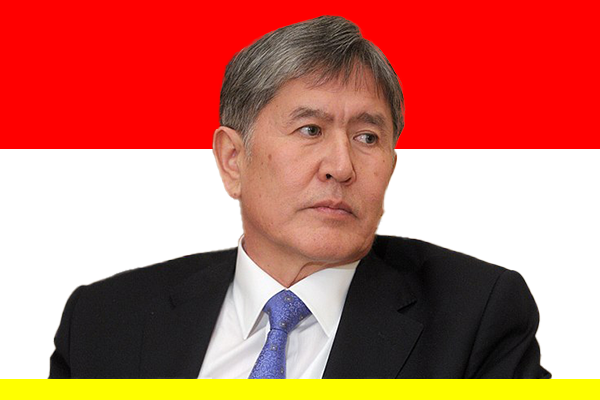
Early Life and Political Background
Almazbek Atambayev was born on September 17, 1956, in the Chüy Region of Kyrgyzstan. He pursued higher education in economics, which later influenced his views on market reforms and state management. Before entering high-level politics, Atambayev worked in business and gradually became involved in public life, gaining recognition as a reform-minded leader.
His political career began in earnest during the 1990s, when Kyrgyzstan was navigating the difficult transition from a Soviet republic to an independent nation. Atambayev became associated with opposition politics and reform movements, positioning himself as a critic of authoritarian practices and economic mismanagement.
Term as Prime Minister
Almazbek Atambayev served as Prime Minister of Kyrgyzstan from March 2012 to September 2012, though he had also held the position earlier in 2007 for a brief period. His later term came after the 2010 revolution, which had overthrown the previous government and ushered in a new parliamentary system. This context made his leadership particularly significant, as the country was still recovering from political unrest and ethnic tensions.
As Prime Minister, Atambayev focused on restoring stability and strengthening state institutions. He worked closely with parliament under the new constitutional framework, which limited presidential powers and increased the role of the legislature. His government emphasized cooperation and consensus, reflecting the parliamentary nature of governance at the time.
Economic Policies and Governance
Economic reform was a central aspect of Atambayev’s agenda as Prime Minister. Kyrgyzstan faced persistent challenges, including budget deficits, unemployment, and heavy reliance on remittances from abroad. Atambayev supported policies aimed at improving fiscal discipline, attracting foreign investment, and modernizing infrastructure.
His administration also paid attention to social issues, particularly wages and pensions, recognizing the economic hardships faced by ordinary citizens. While progress was gradual and constrained by limited resources, his government sought to balance economic reform with social protection.
Foreign Policy Orientation
During his time as Prime Minister, Atambayev advocated for a balanced foreign policy. Kyrgyzstan’s strategic location in Central Asia required careful management of relations with major powers. Atambayev emphasized cooperation with neighboring states and regional partners while maintaining Kyrgyzstan’s sovereignty and national interests.
This pragmatic approach helped stabilize external relations during a sensitive period and reinforced Kyrgyzstan’s role as an active participant in regional diplomacy.
Political Legacy
Although Atambayev’s term as Prime Minister was relatively short, it was politically important. It demonstrated his ability to operate within a parliamentary system and manage coalition politics. His leadership during this phase increased his national profile and contributed to his successful presidential bid later in 2011.
Atambayev’s time as Prime Minister is often viewed as a bridge between revolutionary change and institutional consolidation. Supporters credit him with promoting democratic norms and political stability, while critics argue that deeper structural reforms were needed. Nevertheless, his premiership remains a key chapter in Kyrgyzstan’s contemporary political history.
Conclusion
Almazbek Atambayev’s role as Prime Minister came at a decisive moment for Kyrgyzstan. Faced with political transition and economic uncertainty, he focused on stability, reform, and parliamentary governance. While challenges persisted, his tenure helped shape the country’s post-revolutionary direction and solidified his place as one of Kyrgyzstan’s most influential political leaders.