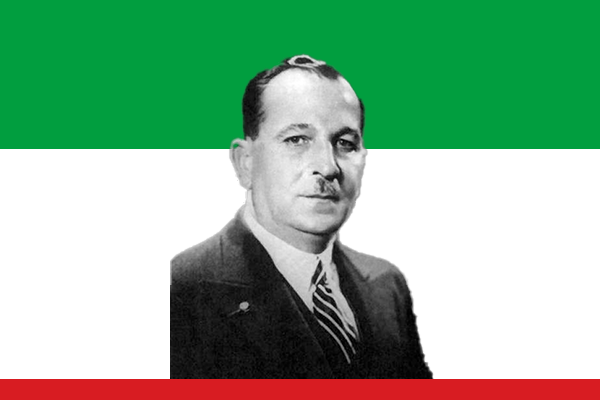
Sami Solh was an influential Lebanese statesman who served as Prime Minister of Lebanon several times during a critical period in the country’s modern history. Born in 1888 into the well-known Solh political family of Sidon, Lebanon, Sami Solh grew up in an environment deeply connected to public service and national leadership. The Solh family produced several notable politicians, and Sami Solh became one of the most prominent among them.
Solh pursued his education in Beirut and later became involved in political and national movements during the final years of Ottoman rule. As the Ottoman Empire weakened and the Middle East underwent significant political transformation after World War I, Solh emerged as a supporter of Arab independence and Lebanese self-governance. His early political involvement helped shape his reputation as a committed nationalist.
Following the establishment of the French Mandate over Lebanon, Sami Solh continued his political activities. He became a strong advocate for Lebanese independence and constitutional governance. His political career gained momentum after Lebanon achieved independence in 1943. During this era, Lebanon adopted a unique political system based on confessional power-sharing among religious communities. Solh worked within this framework and became known for his ability to negotiate and maintain political balance.
Sami Solh served as Prime Minister for the first time in 1942, during the final years of the French Mandate. However, his most significant roles came after independence. He went on to serve multiple terms as Prime Minister throughout the 1940s and 1950s. His leadership coincided with a time of regional instability, including the Arab-Israeli conflict and internal political challenges within Lebanon.
One of Solh’s key responsibilities was managing Lebanon’s delicate sectarian balance. The Lebanese political system required cooperation among different religious communities, including Christians, Sunni Muslims, Shi’a Muslims, and Druze. As a Sunni Muslim leader, Solh worked closely with Maronite Christian presidents and other political figures to preserve national unity. His diplomatic skills and experience helped him navigate periods of tension and disagreement.
During his terms in office, Solh focused on strengthening state institutions and supporting economic development. Lebanon in the mid-20th century was emerging as a regional center for trade, finance, and tourism. Beirut became known as the “Paris of the Middle East.” Solh’s governments supported policies aimed at maintaining stability and encouraging investment, which contributed to economic growth during that period.
However, his tenure was not without controversy. Like many leaders of his era, Solh faced criticism from political rivals and opposition groups. Lebanon’s political environment was often characterized by rivalry among prominent families and shifting alliances. Despite these challenges, Solh remained a central figure in Lebanese politics for many years.
Sami Solh also played a role in Lebanon’s foreign policy. He supported Arab cooperation and maintained close ties with neighboring Arab states. At the same time, he sought to protect Lebanon’s sovereignty and unique political system. Balancing regional pressures while maintaining internal stability was one of the defining challenges of his leadership.
In addition to his political career, Solh was known for his dedication to public service and his commitment to Lebanon’s independence and constitutional order. His long service reflected both his personal influence and the trust placed in him by political leaders of his time.
Sami Solh passed away in 1968, leaving behind a legacy as one of Lebanon’s significant early prime ministers. His career illustrates the complexities of Lebanese politics and the efforts made by early leaders to build and preserve a diverse and independent nation. Today, he is remembered as a key figure in Lebanon’s formative decades.