LEBANON
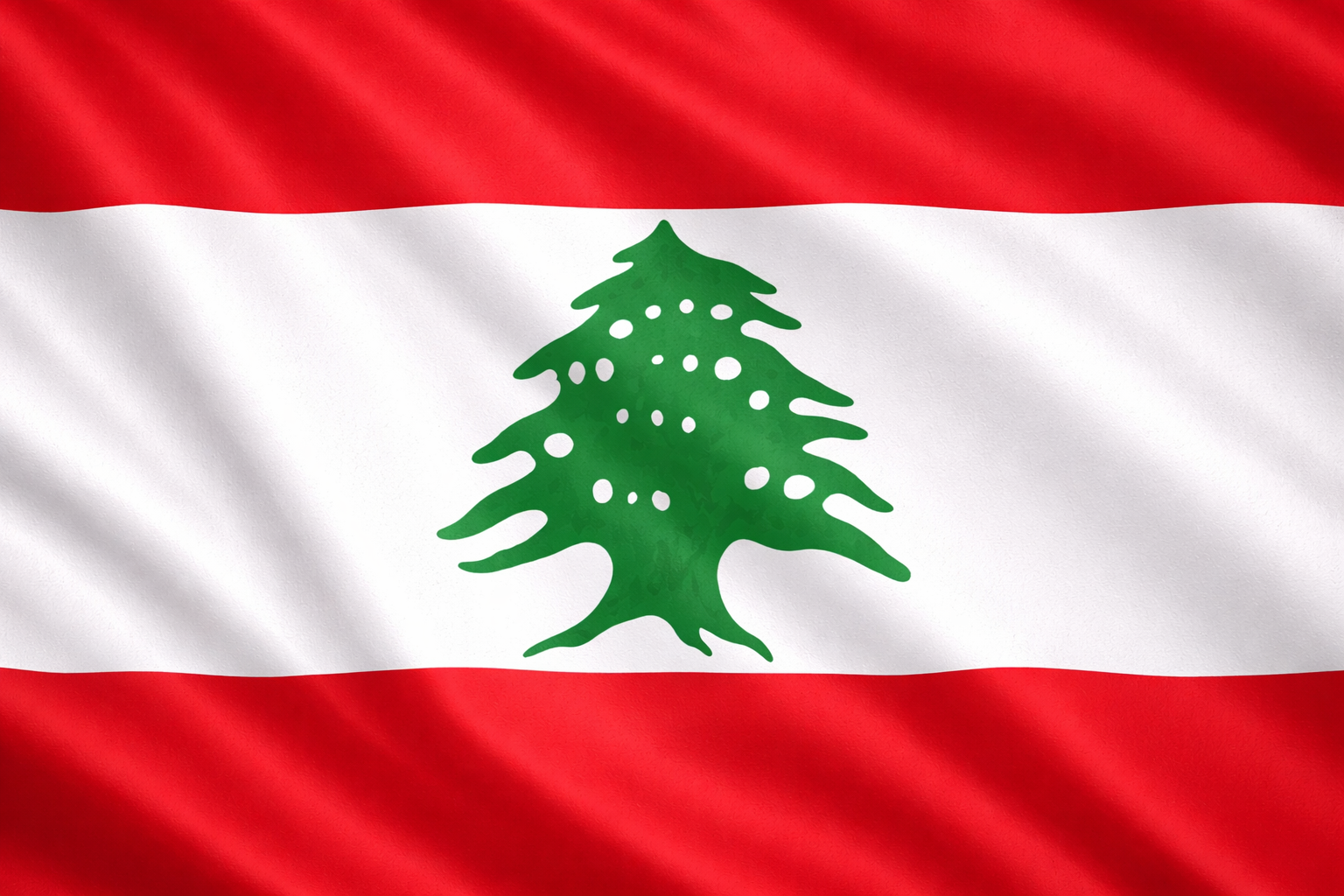
Lebanon Flag
The national flag of Lebanon features two horizontal red stripes at the top and bottom, with a wider white stripe in the center. In the middle of the white band stands a green cedar tree, known as the Cedar of Lebanon. The red stripes symbolize the blood shed for independence, while white represents peace and purity. The cedar tree reflects strength, holiness, and eternity, and is a historic symbol deeply connected to Lebanon’s identity and heritage.
Introduction
Lebanon is a small but historically rich country located in the Middle East along the eastern shore of the Mediterranean Sea. It shares borders with Syria to the north and east and Israel to the south. Despite its small size, Lebanon has played a significant role in regional history, culture, and trade for thousands of years. Its capital city, Beirut, is known for its vibrant culture, educational institutions, and historical landmarks.
Geography and Natural Features
Lebanon’s landscape is diverse and beautiful. The country features the Lebanon Mountain range, fertile valleys such as the Bekaa Valley, and a long Mediterranean coastline. The climate is typically Mediterranean, with hot, dry summers and mild, rainy winters. Snowfall is common in the mountains during winter, making Lebanon one of the few Middle Eastern countries with ski resorts. The country’s famous cedar trees, especially the Cedars of God, are national symbols and appear on the Lebanese flag.
History
Lebanon has a long and complex history. In ancient times, it was home to the Phoenicians, skilled sailors and traders who established colonies across the Mediterranean. Over centuries, Lebanon came under the control of various empires, including the Roman, Byzantine, and Ottoman Empires. After World War I, it was placed under French mandate and finally gained independence in 1943.
In modern history, Lebanon experienced a devastating civil war from 1975 to 1990, which deeply affected its political and social systems. Since then, the country has worked toward rebuilding and maintaining stability, though it continues to face political and economic challenges.
Government and Society
Lebanon has a unique political system based on power-sharing among religious communities. The president is traditionally a Maronite Christian, the prime minister a Sunni Muslim, and the speaker of parliament a Shia Muslim. This system aims to maintain balance among the country’s diverse religious groups, which include Christians, Sunni Muslims, Shia Muslims, and Druze.
Arabic is the official language, but French and English are widely spoken. Lebanon is known for its educational institutions and cultural diversity. Its people have contributed greatly to literature, music, business, and arts across the Arab world.
Economy and Challenges
Lebanon’s economy traditionally relied on banking, tourism, agriculture, and trade. However, in recent years, the country has faced severe economic crisis, currency devaluation, and political instability. The 2020 Beirut port explosion caused widespread damage and loss of life, worsening the economic situation.
Despite these challenges, Lebanon remains culturally vibrant. Its cuisine, music, and hospitality are famous worldwide. The Lebanese diaspora is large and influential, contributing significantly to the country’s economy through remittances.