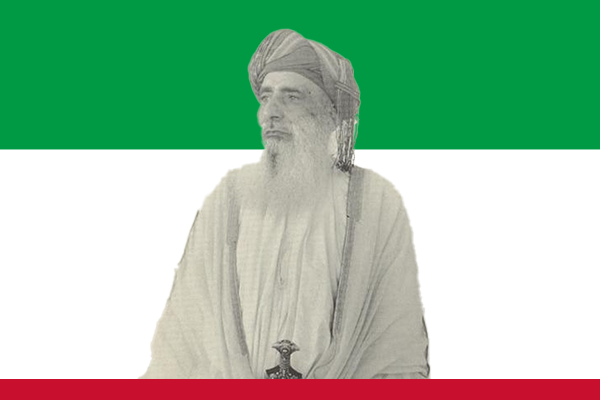
Early Life and Background
Azzan bin Qais belonged to the Al-Busaidi dynasty, the ruling family of Oman. This dynasty had governed Oman and its overseas territories, including parts of East Africa such as Zanzibar, for many years. However, by the mid-19th century, internal conflicts and foreign interference had weakened their control.
Azzan bin Qais was known for his religious devotion and strong leadership qualities. He was respected by tribal leaders and religious scholars, especially followers of the Ibadi sect of Islam, which has historically been dominant in Oman.
Rise to Power
In 1868, Azzan bin Qais led a rebellion against the ruling Sultan Salim bin Thuwaini. Many Omanis were unhappy with Salim’s rule, believing he was weak and ineffective. With support from tribal leaders and religious authorities, Azzan successfully overthrew him and became Sultan.
Unlike some previous rulers, Azzan was elected Imam as well as Sultan. This gave him both political and religious authority. His leadership was seen as legitimate because it followed traditional Omani practices, where religious leaders and tribes had a role in choosing the ruler.
Policies and Achievements
During his rule, Azzan bin Qais worked to strengthen Oman internally. He focused on improving administration and reducing corruption. He also tried to restore peace among tribes and unify the country.
One of his main goals was to reduce foreign influence, especially from the United Kingdom, which had strong political and economic interests in Oman and the region. Azzan believed Oman should remain independent and governed by its own people.
He also attempted to regain control over coastal areas that had become unstable. His leadership brought a period of stability and renewed national pride.
Conflict and Death
Despite his popularity among many Omanis, Azzan faced opposition from rival members of the ruling family. His cousin, Turki bin Said, challenged his authority with support from external allies.
In 1871, Turki bin Said defeated Azzan’s forces. Azzan bin Qais was killed in battle that same year. After his death, Turki became the new Sultan of Oman.
Legacy
Although his reign lasted only about three years, Azzan bin Qais left a lasting legacy. He was remembered as a ruler who tried to restore traditional Islamic leadership and protect Oman’s independence.
Many historians consider him one of the last Imams who ruled Oman with both religious and political authority. His efforts represented resistance against increasing foreign influence during that period.
Today, Azzan bin Qais is remembered as a symbol of national pride, religious leadership, and political reform in Omani history.